


¡Hola profes! How are you doing? I can’t believe we are nearing the end of January already! It seems like just yesterday we were leaving school for winter break in December. Time is flying by!
I don’t know about you, profes, but the third marking period is in full swing at my school, and some days, my students are TIRED. Maybe it’s the cold winter weather, or the fact that our next long break is months away, but there are days where my students just need a change in the routine to reignite their interest in what we’re learning.
Does that sound familiar? Are you experiencing days like this in your classroom at this point in the year, more than you were during the first semester?
If so, don’t panic – I’ve got some activity ideas that are sure to add fun, increase student engagement, and best of all, help students practice your content in a sneaky way, one where they’re enjoying themselves so much they don’t realize how much they’re learning!
#1: Jeopardy Games
When your go-to activities are feeling a little stale in class, playing Jeopardy is a surefire way to get students interested in class topics again! My students tend to get very competitive and work well with their teammates so that they can win!
What I love most about Jeopardy games is that they can be customized to practice virtually any topic. Once you have a template or a game-play format that works for you, you can simply edit it to meet your needs!
I personally use PowerPoint to create and play Jeopardy games. You can find numerous templates online if you want to make your own games! Fill in your questions and your answers, and you are set!
So, how does game play work? I have tried many different ways of playing Jeopardy, and this is the one I find to be the most effective and engaging:
- Classroom set-up: I like to divide my desks into rows for this game. On the first desk of each row, I put the following items: a mini white board, a dry-erase marker, and an eraser.
- I divide my students into teams of 3-5. Each team gets their own row. The person who is sitting at the front desk is responsible for writing down the answer to the question for their team for that round. Students can ask for and offer help to their team members, but the first person has to be the writer.
- I project the game board slide with the game categories and points values on my Smart Board so that all students can see it. Next, I decide which team gets to pick the first category/points value. (I usually have teams try to guess a number that I have written down on a piece of paper, and the team that is closest without going over gets to choose.)
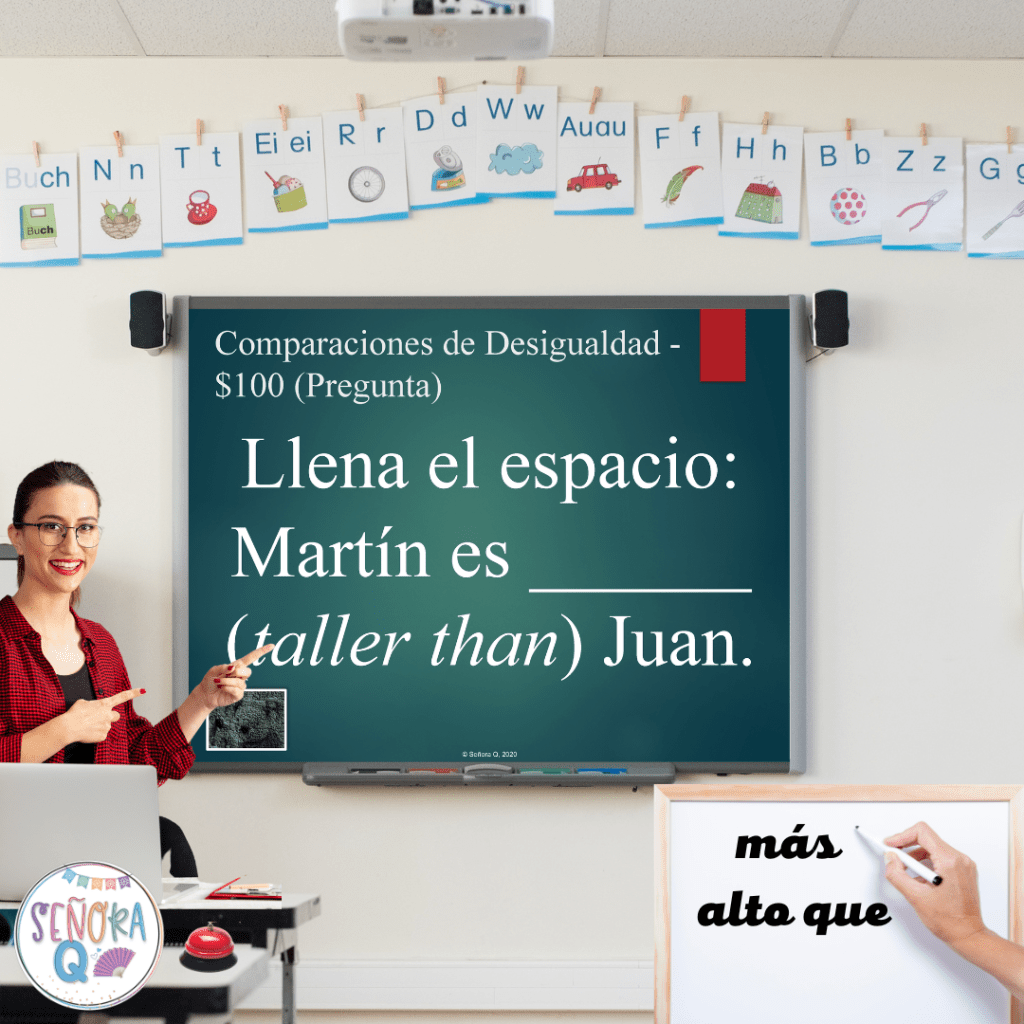
- When the team has selected their category/points value, I show the question or prompt. Students write their responses on their mini white boards. The first team to hold up the correct answer wins the points. If none of the teams respond correctly, no points are awarded. I keep track of the teams’ points on the board.
- Return to the game board screen. I have my students rotate so that the first student, the one who wrote the last answer, moves to the back of the row and all other team members move up one seat. The team that won the points on the first questions chooses the next category/points value.
- Game play continues in this fashion until all questions on the game board have been attempted.
- Students then complete Final Jeopardy. Teams make a wager that will be added to their points totals if they answer correctly and subtracted if they answer incorrectly. You can decide if you want to give your students a time limit or impose any other restrictions!
- Finally, I add up the teams’ final points and award a winner! I usually offer a small prize for the winning team – a piece of candy or a bonus point on an upcoming test are my go-to prizes.
Game play usually takes a full 45-minute class period for me from start to finish.
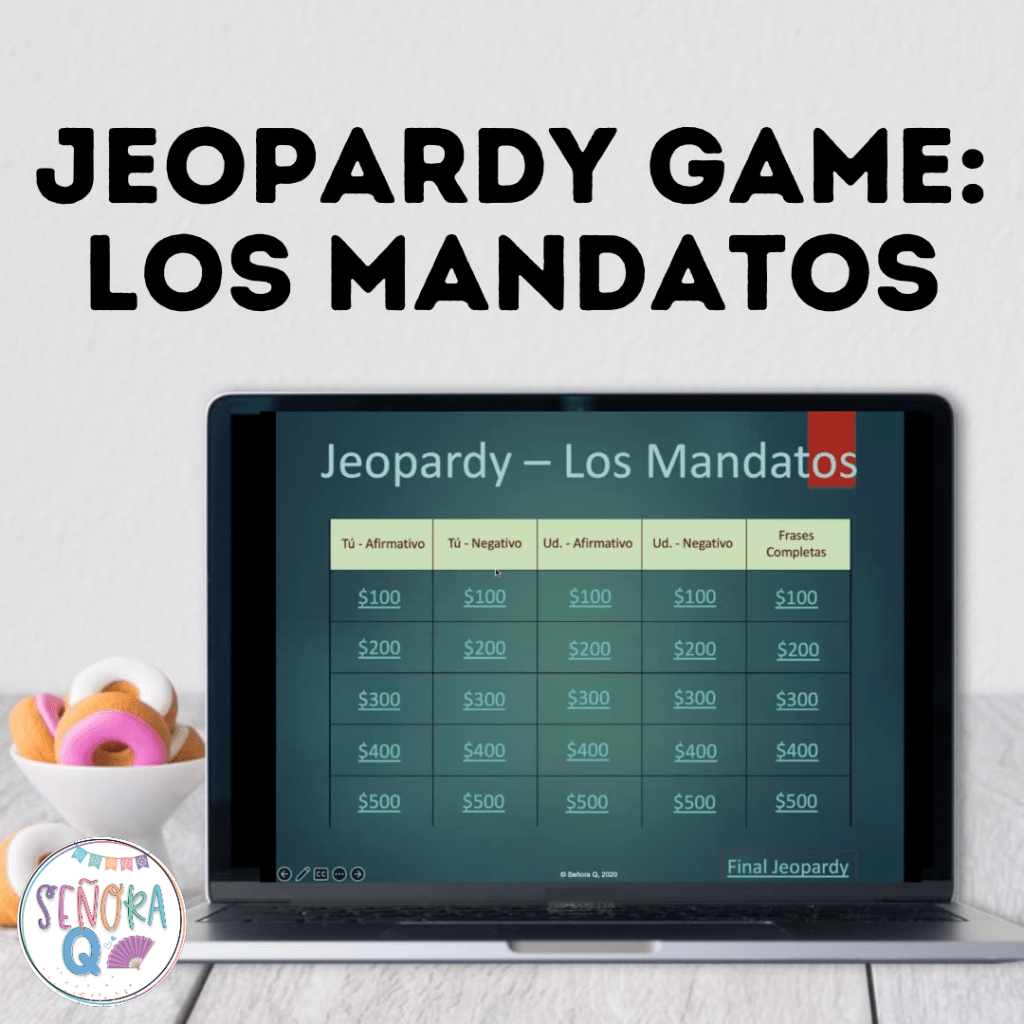
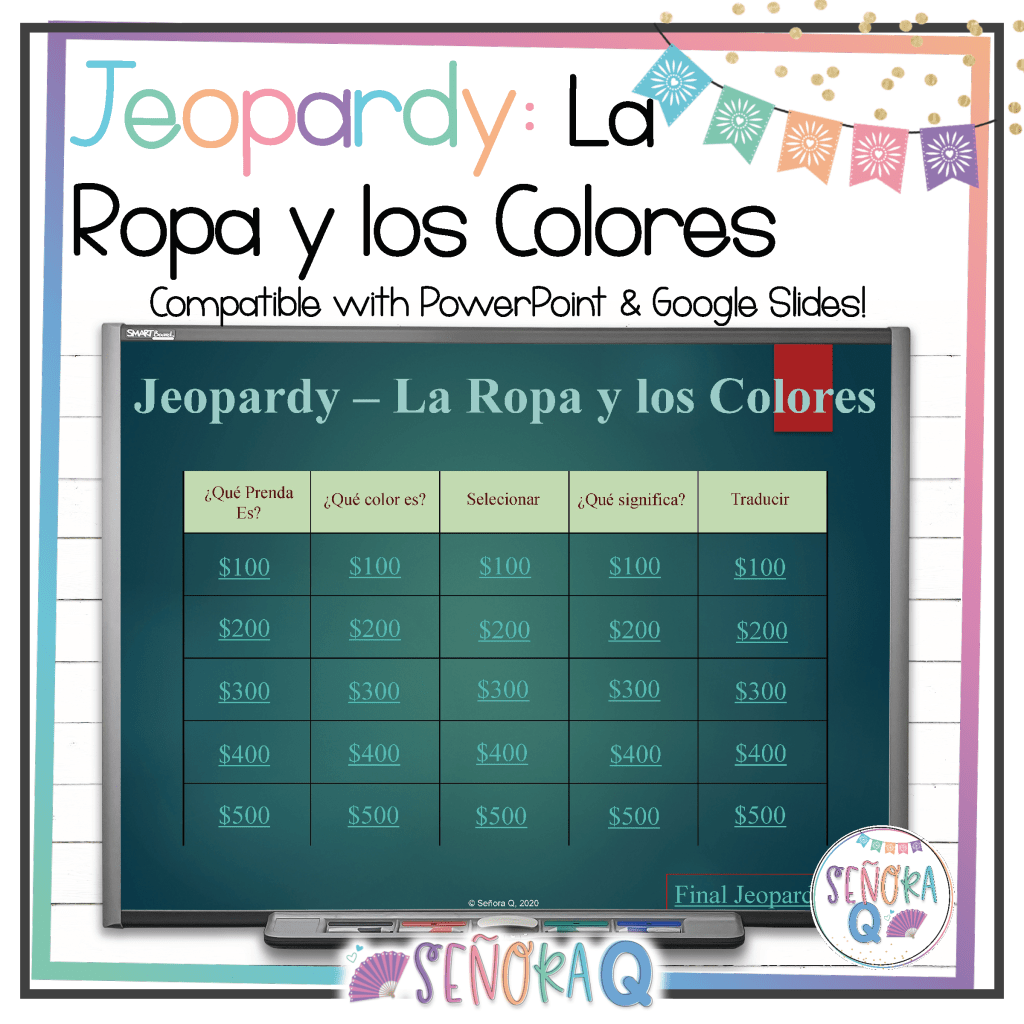
Interested in trying a Jeopardy-style trivia game in your classroom? Here are some of my favorites, or browse ALL my games here!


#2: Scrambled Sentences Puzzles
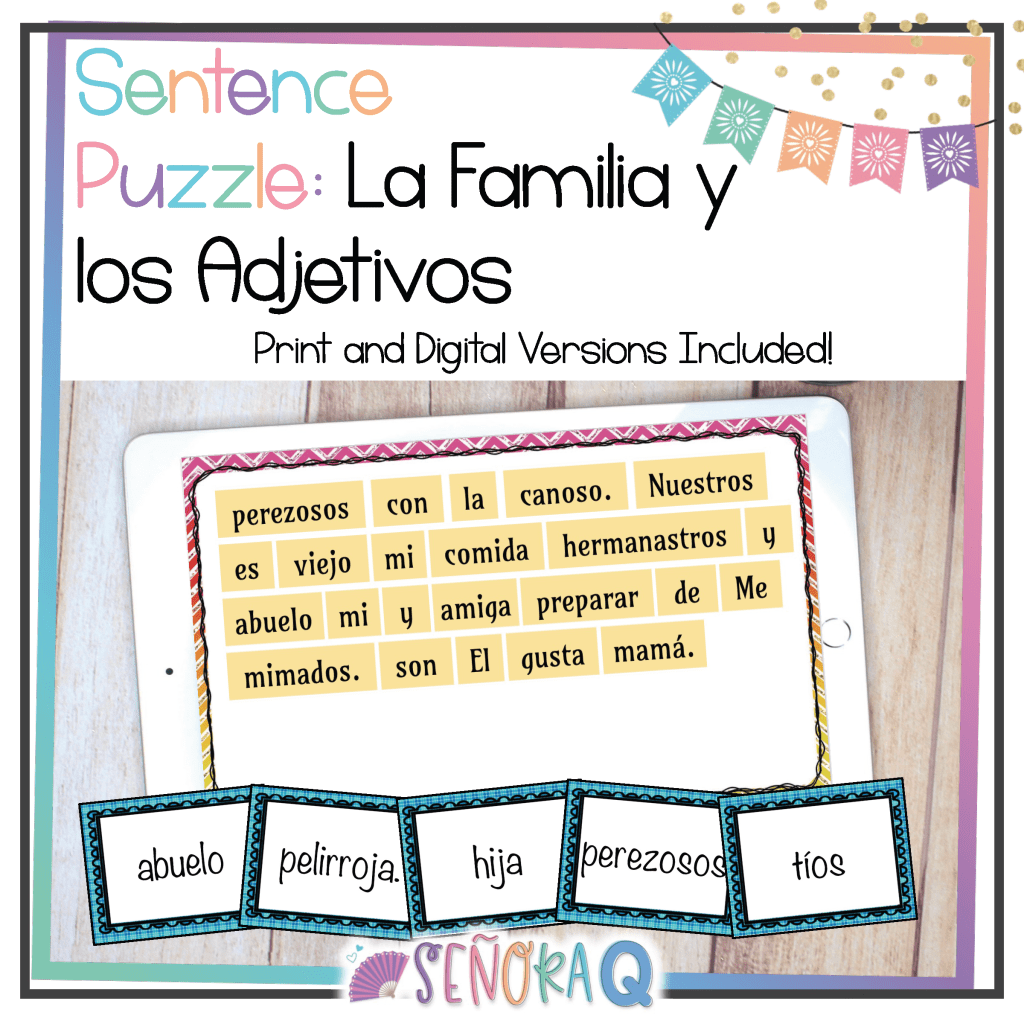
Another interactive, hands-on activity that is sure to engage your students is scrambled sentence puzzles. I love this activity because there are so many ways it can be used! Full disclosure, though: there is some prep work required at the beginning, but once you have your puzzles made, you’ll have them for years to come!
Making scrambled sentences puzzles is easy, if a bit time-consuming – all you have to do is write some (6-9) sentences in Spanish pertaining to the topics you’ve been studying. The sentences can be as simple or complex as you like, as appropriate for your students! Then, you type them up in large font, print as many sets as you’ll need for your class, laminate them, and cut out each individual word. Pro tip: Print each set on different color card stock. This will help keep you organized! Place each set of mixed-up sentences into a plastic baggie or an envelope for safe-keeping.
In my classroom, this is a group activity – I think groups of 3 are ideal, but you can make this work with groups of 2 or 4 as well. When you are ready to have your students do the activity, have groups put their desks together (if they do not already sit in groups) so that they have a large surface area to work with, or have them sit on the floor so they can spread out. Students should open the plastic baggies or envelopes and get out all of the words they’ll use to form their sentences. Then, it is their job to unscramble the sentences you wrote and put them back together!
One of the reasons I like this activity so much is that, as students work together with their groups, you’ll see them reason together why sentences are right or wrong. For example, if you’re studying family and adjectives, one student in a group could put this together: “Mi hija es alto.” However, another group member will likely point out that “alto” will not work because “mi hija” is a girl, and so another adjective needs to be used. This is excellent to review the concepts that you’re studying (or topics that you’ve studied previously) in class!
Variation: Sometimes, especially in lower-level classes, I don’t have my students unscramble all the sentences. I might ask them to come up with 3-4 awesome sentences using whatever they find in the baggie. This is a nice confidence booster for novice-level students as they see that they can create with the language! Students also enjoy this variation because they like to see who can come up with the funniest or most original sentences.
Want to try a scrambled sentences puzzle in your classroom? Check out all of my ready-to-use scrambled sentences puzzles here – AND they have digital options for Google Slides included too!



#3: Board Games
Who doesn’t love a board game? Board games are great ways for sneaking in learning – students are getting practice that they need to master the concepts you’re studying, but they’re having so much fun, they don’t realize that they’re learning! What’s more, board games can be used with virtually any topic you’re studying!
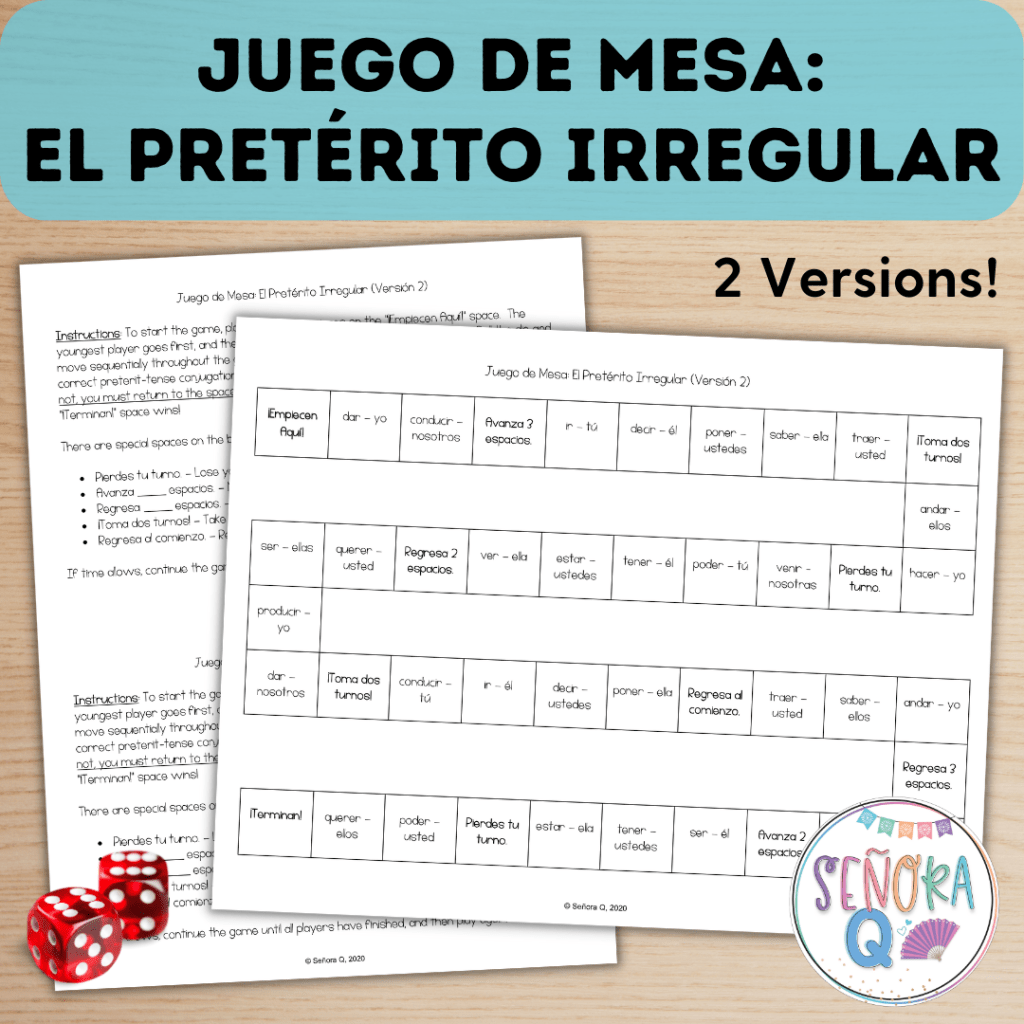
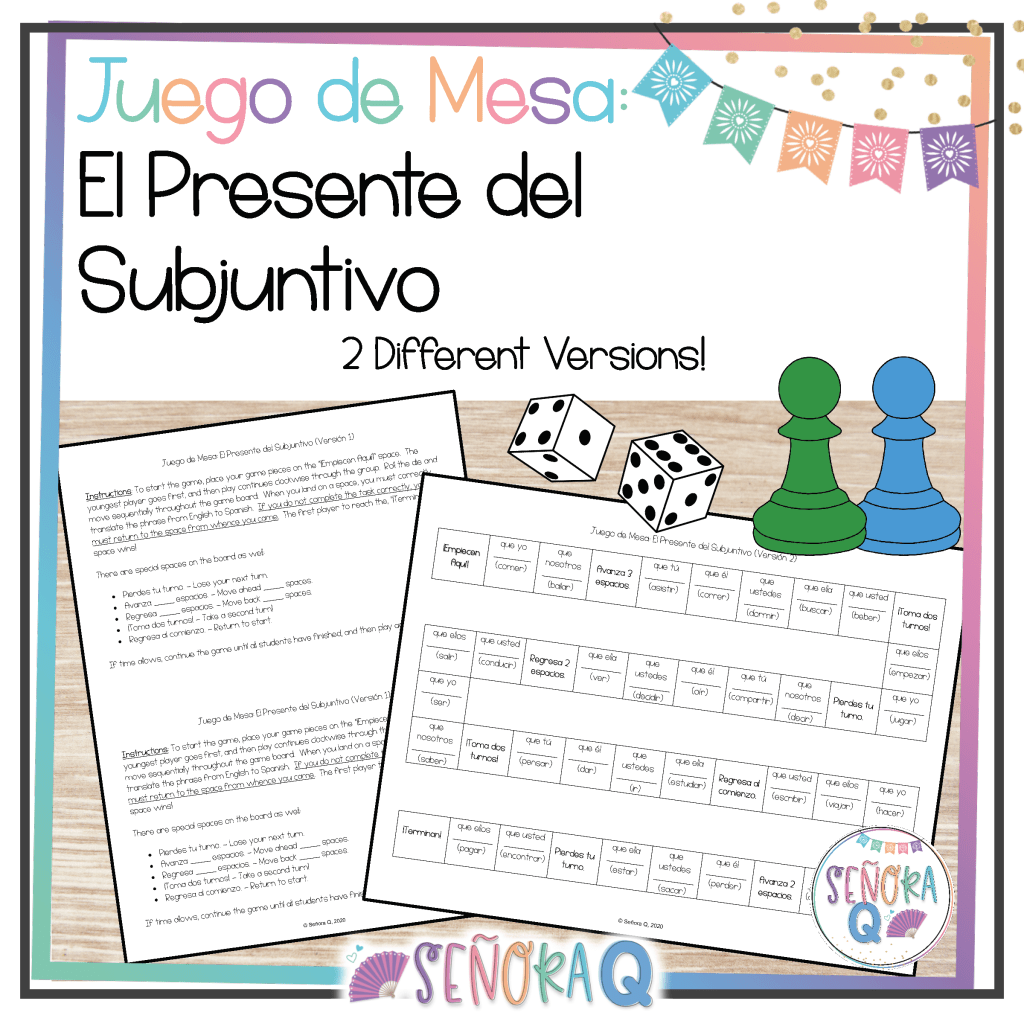
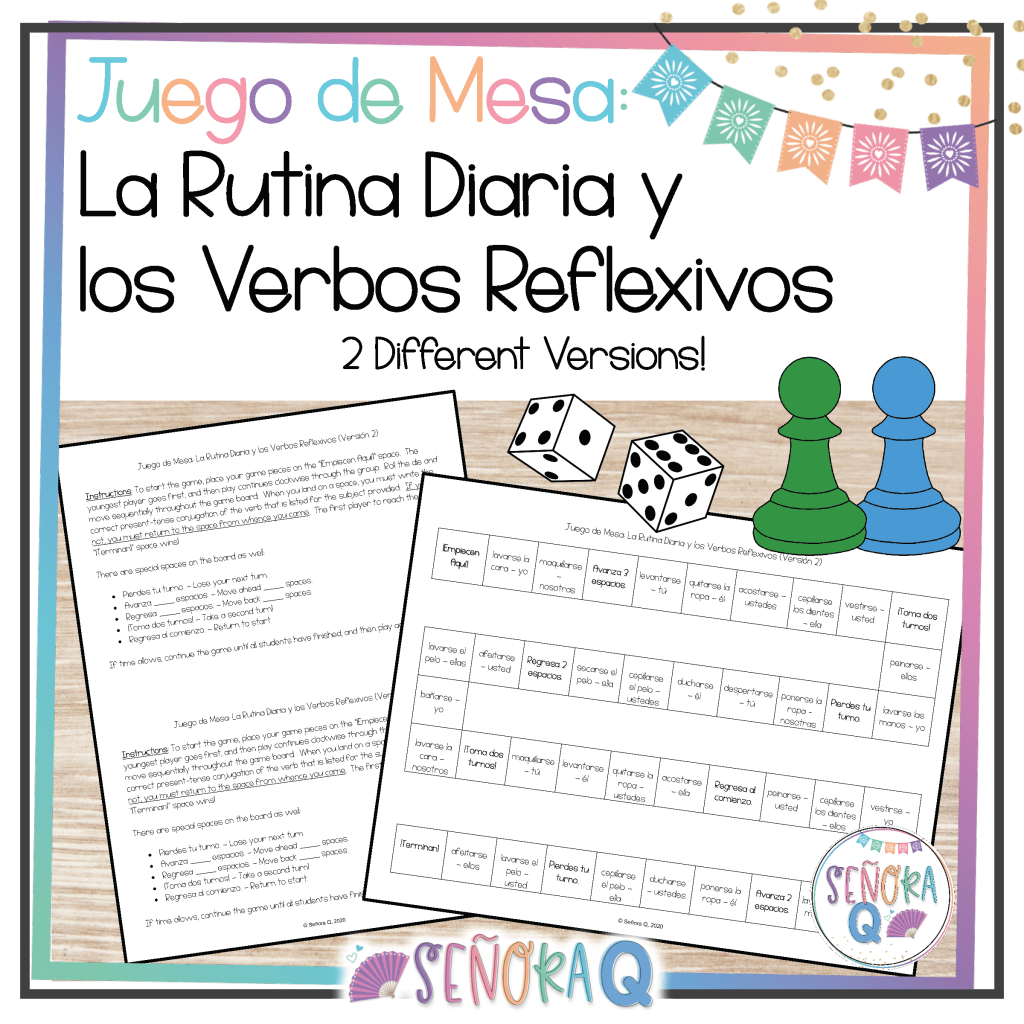
The first thing you’ll need is a template. You can make one yourself by hand or on your computer, or you can find premade ones online. Then, fill the spaces with a verb to conjugate, a sentence with a blank to fill in, a question to answer, a picture to identify, or whatever will reinforce the content of the unit! I also like to add special spaces, like “Lose a turn” or “Move _____ spaces forward/back.”
Optional: To help make game play easier, you could give students an instruction sheet that tells them how they should move through the game board and how to win. If you keep your game templates the same, you can reuse these instruction sheets over and over again!
To play board games, I recommend placing students in groups of 3-4. Each group gets a game board, an instruction sheet, game pieces, and dice. You can raid your own board game collection at home for game pieces and dice if you like, or you can purchase them – they’re pretty inexpensive on Amazon! Students move through the board and complete the task on each space. I tell my students that they have to answer correctly in order to remain on the space (otherwise, they have to go back to the space where they started their turn), but you can make your own rules!
To make this a speaking activity, have your students verbally give the answers. If you prefer written practice, I have each group use a mini white board where players should record the answers. Group members should confirm if each answer is correct or not. I circulate throughout the room to settle any disputes or answer any questions about this!
Board games typically take about 15 minutes to play in my classroom. If you want the game to last longer, students could always play again – it’s likely they will land on new spaces and have the chance to correctly answer questions they got wrong the first time they played!
If the idea of board games intrigues you but the idea of making them does NOT, feel free to check out my full collection of games here. Here are some ready-made options that you may enjoy:


#4: Creative Projects
Another way to get students engaged and actively using course content is through creative projects. I think you’ll find that students really enjoy being creative, and incorporating projects can be a great way to provide these opportunities for them. Students also like being in control of how they want to use the language, and some of their best work can come from completing a project!
Note: I know I’ve said this before, but it’s worth repeating: I do NOT assign projects outside of class time. This is because I want my students to turn to me with questions, not Google, their older sibling who took my class three years ago, or their neighbor who takes college-level Spanish. Making projects in-class-only assignments will increase the probability of your students producing the best, most authentic, and most original results possible.
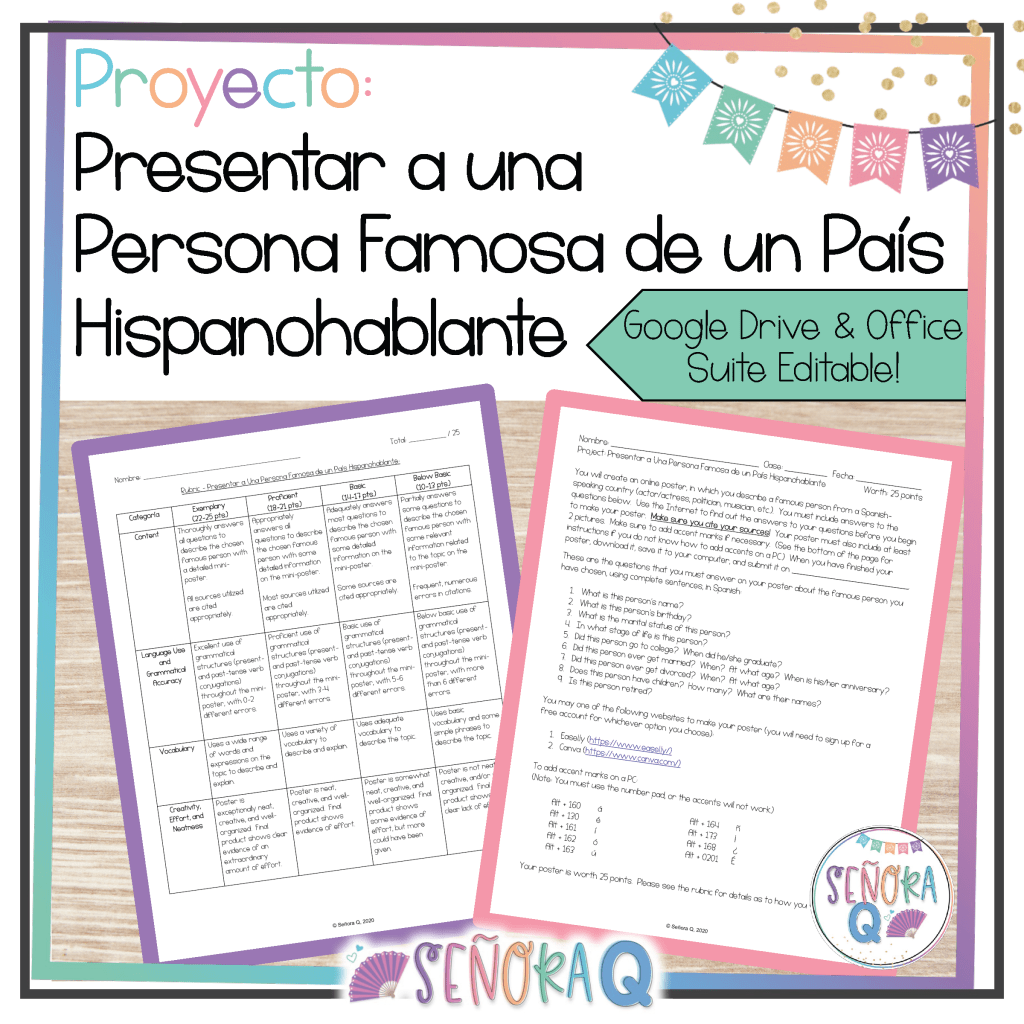
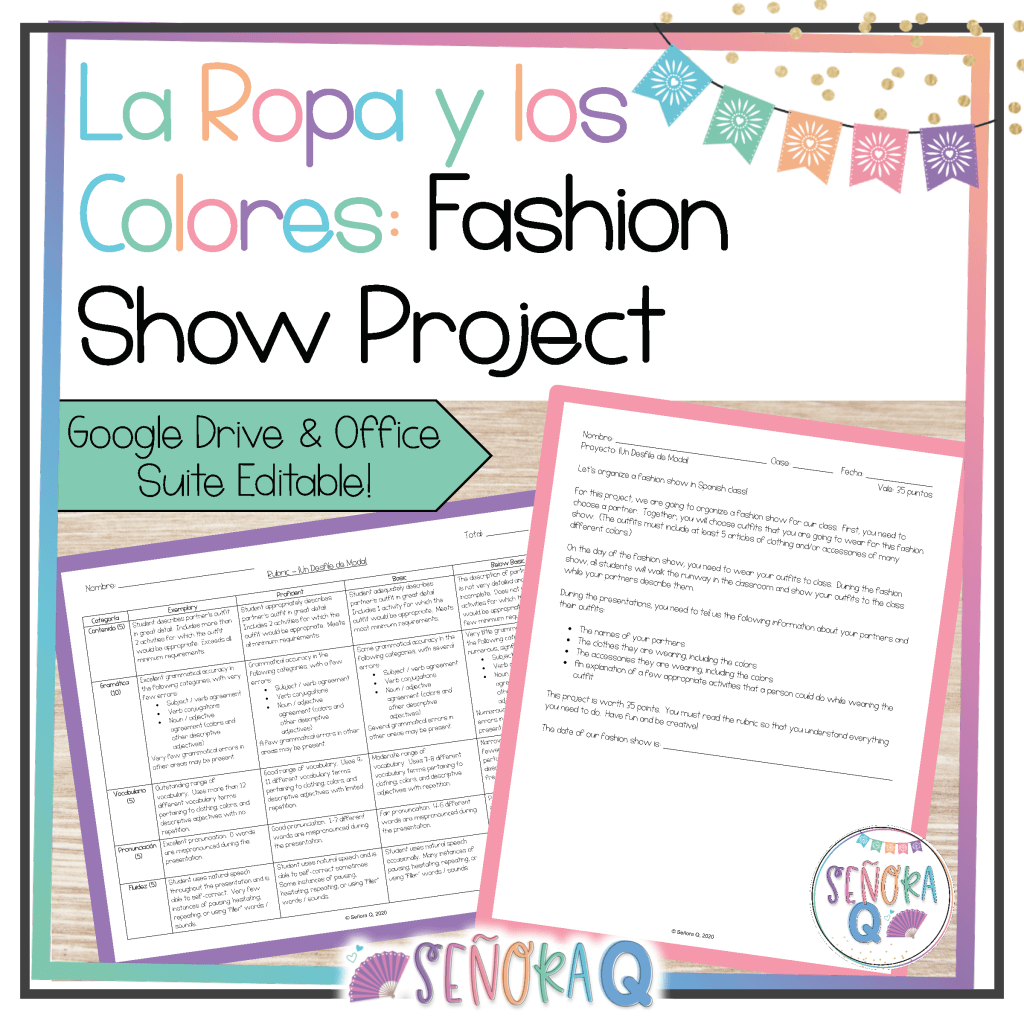
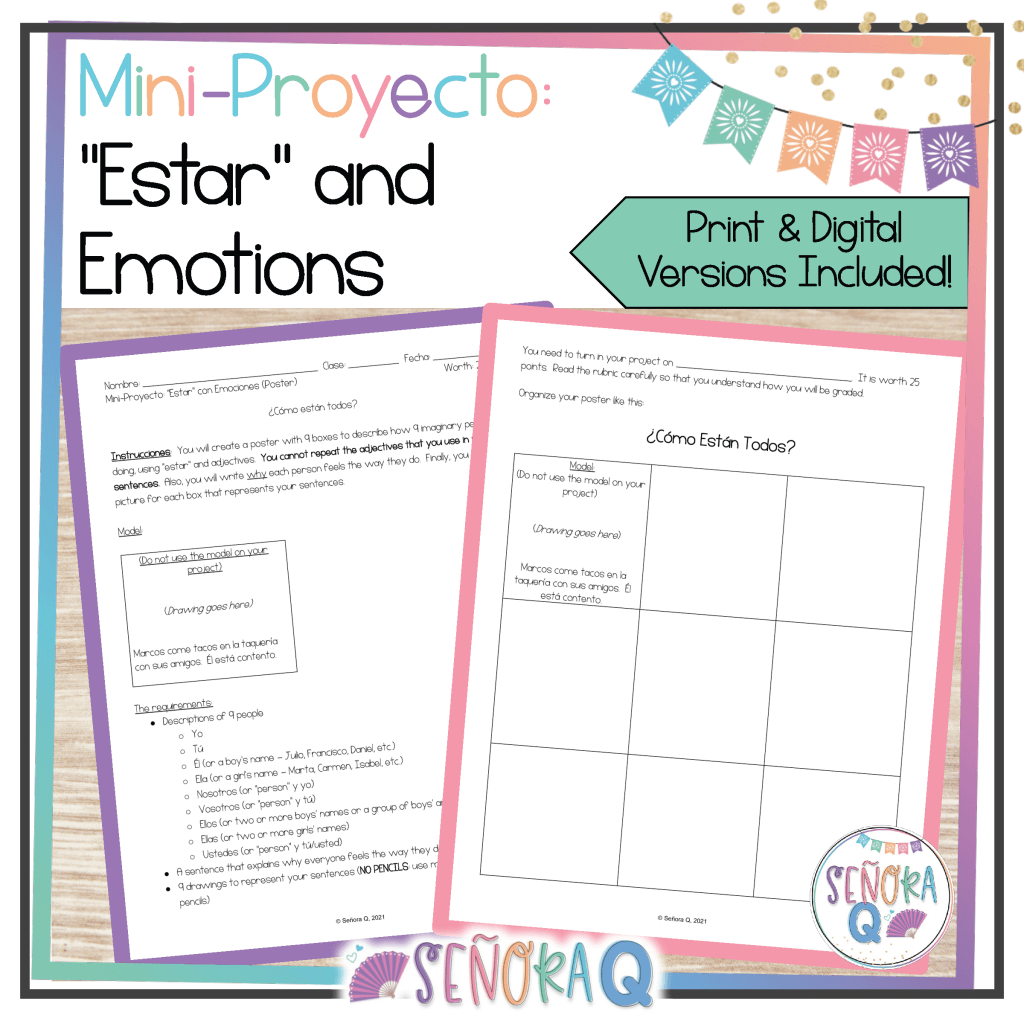
So, what do you need for a good project? The good news is that it’s not a lot: just a set of instructions outlining what you want your students to do, and a rubric or checklist that tells students how you are going to assess them. Once you have these in place, the students will do the rest!
When coming up with my ideas for my unit projects, I ask myself how my students would use the material we’re studying in a real-life scenario, and try to create a project that gives students the chance to use Spanish in a similar way. When we study the preterite vs. the imperfect, I have my students write a children’s story in which they will use these two tenses to narrate past events. In real-world settings, students would have to understand the difference between these tenses when telling a story to others, and so this project mimics this task and helps improve students’ abilities to use these tenses to communicate outside of the classroom.
I also look for ways to make the projects personal, so that students will connect with them. For example, when we study the imperfect tense, I have my students create a slideshow about their childhoods: what they used to be like, what they used to do, etc. Students really enjoy reminiscing about the things they used to do, the toys they used to play with, and the places they used to go. During the presentations, they love seeing their classmates’ baby pictures or seeing the similarities and differences between themselves and their peers.
What should you include in your rubric? That’s totally up to you! Ask yourself what you really want your students to show you by completing this project, and put those points on the rubric. Do you want them to use certain themed vocabulary? Add it to the rubric! How about checking for a grammar point you’re studying? Make it another category! How about comprehensibility or fluidity of language? Category #3! Task completion or group processes (if applicable)? Definitely! You could also use proficiency-based rubrics for presentational speaking and/or writing, depending on your project!
Here are some of my favorite projects that I use in my classroom (with rubrics!):


I hope this was helpful and that you got some ideas you can use in your classroom! If you have any questions, please feel free to leave a comment or send me an email. Have a wonderful week, profe!
 Señora Q