


¡Hola profe! How was your winter break? I hope it provided you with the opportunity to rest and recharge and come back to school, ready to tackle the new year!
Now that January is here, it means that the second semester is upon us. (Side note: How is it possible that the school year is nearly halfway over??) That means that, for many secondary teachers, it’s time for midterm or final exams!
At first, it can seem like a daunting task to create manageable, yet comprehensive, exams for students, and to put review materials together to help them prepare. But don’t worry! I’ve got some ticks, tricks, and resources that will hopefully help make this process as painless for you and your students as possible! Let’s dive in!
Part 1: Review Activities
Since midterms and finals tend to be longer exams that focus on more material than a typical test or quiz, reviewing for these exams is definitely recommended! I typically spend three or four 45-minute class periods reviewing, and these are some of my (and my students’) favorite activities to practice the material we have studied throughout the course of the semester:
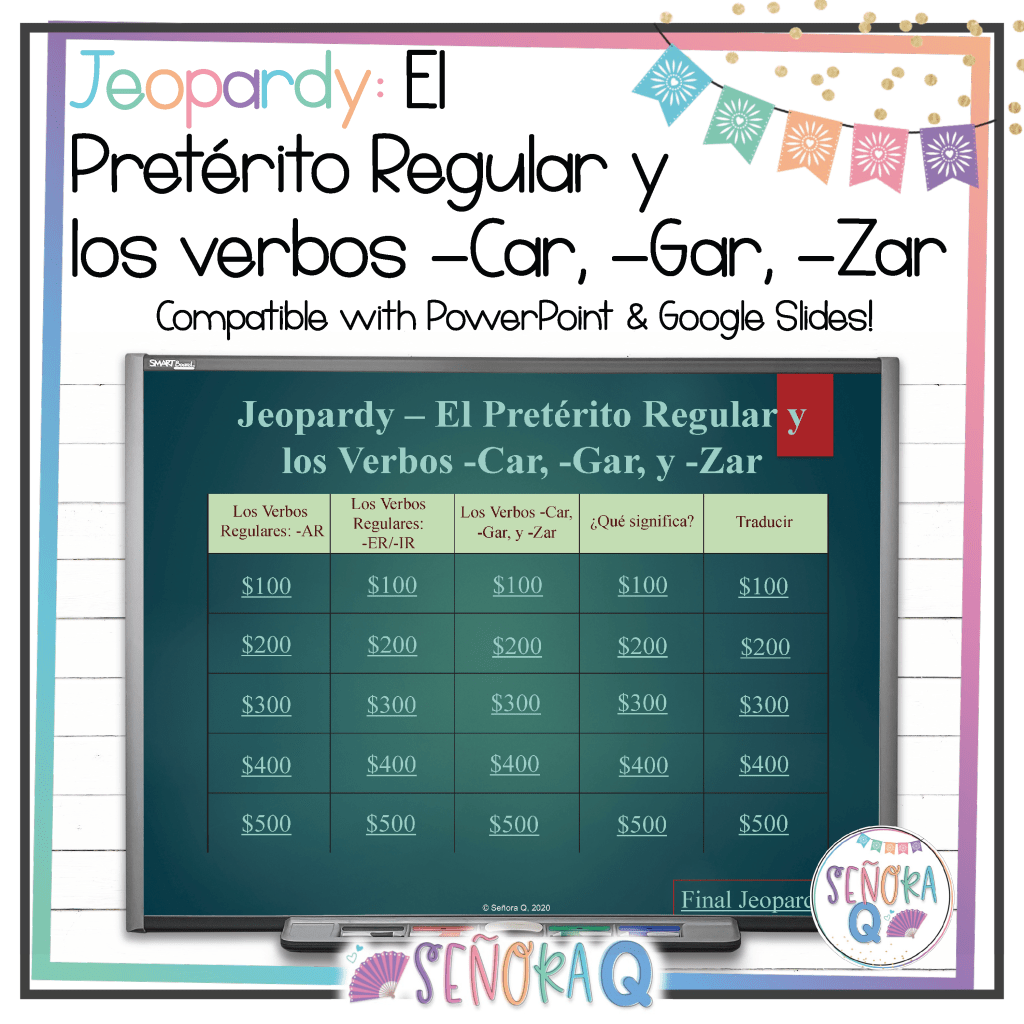
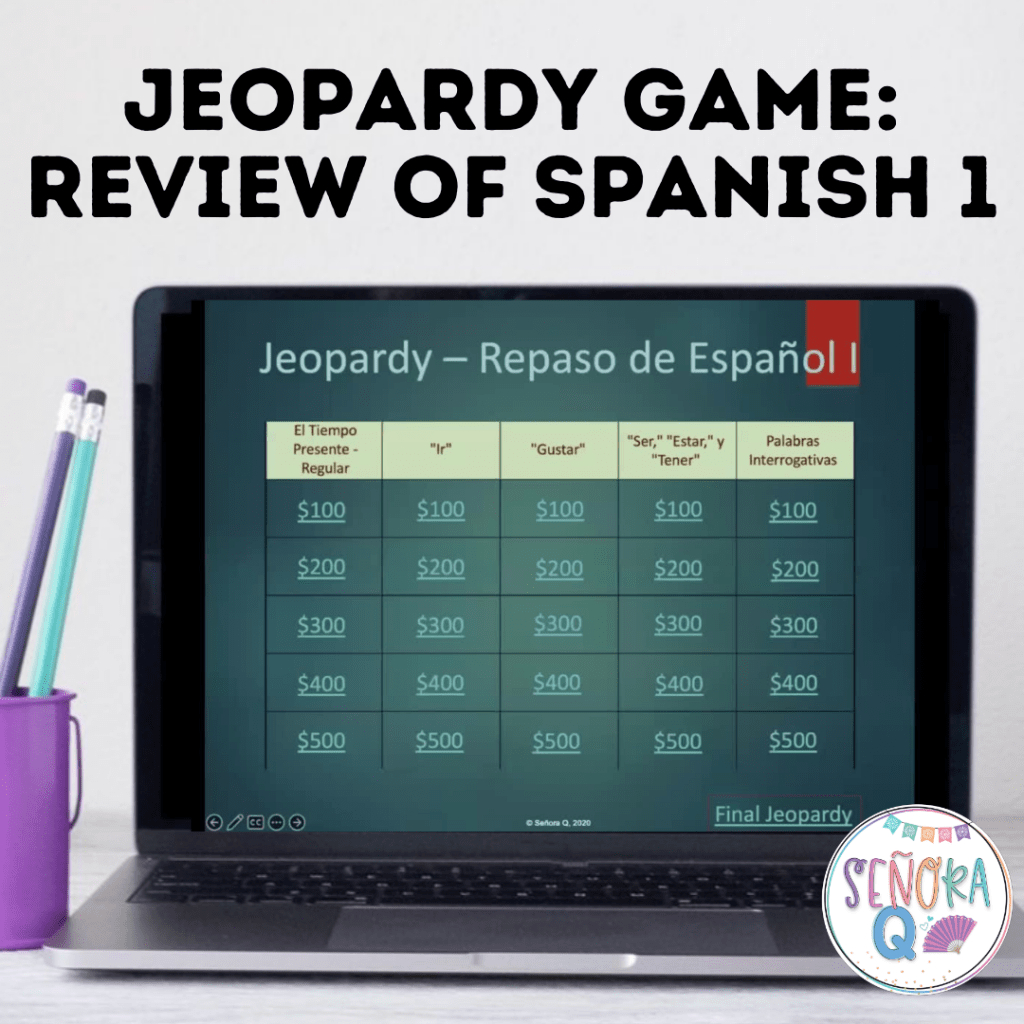
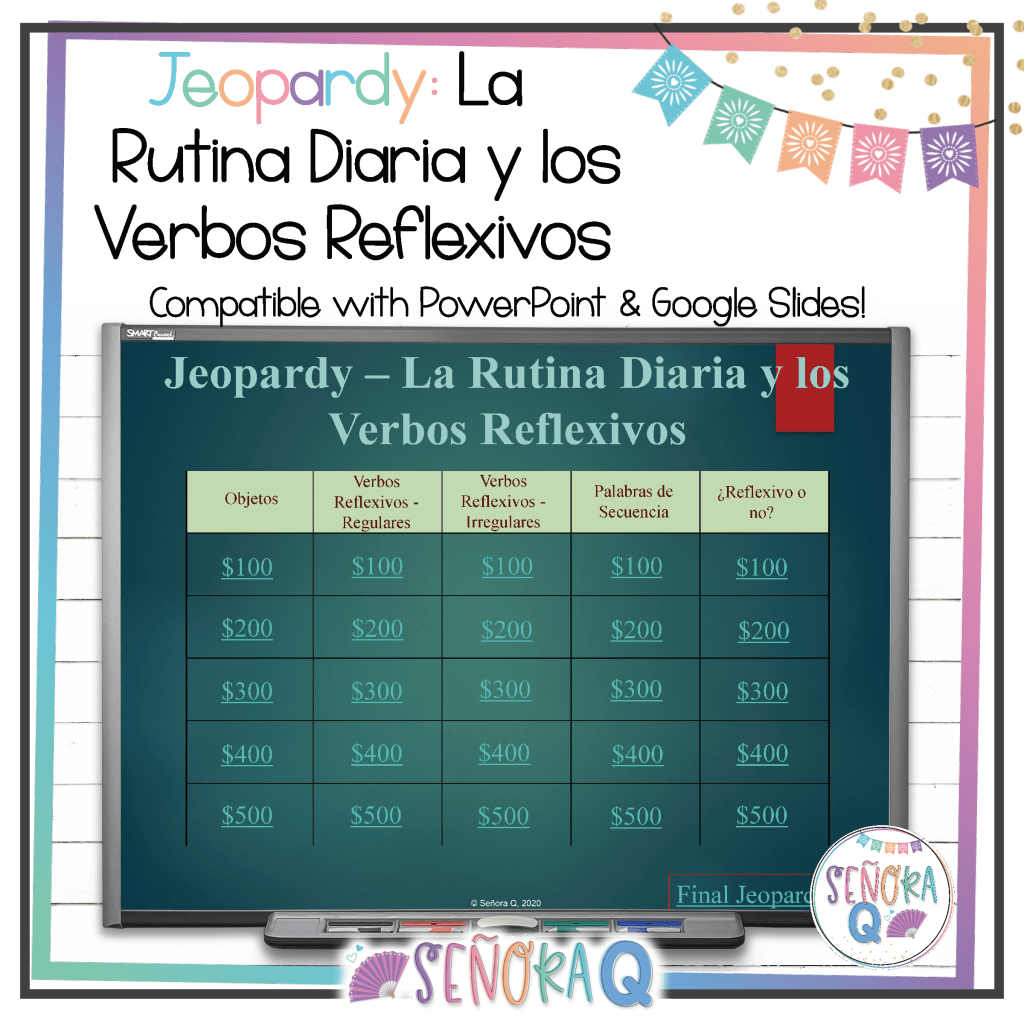
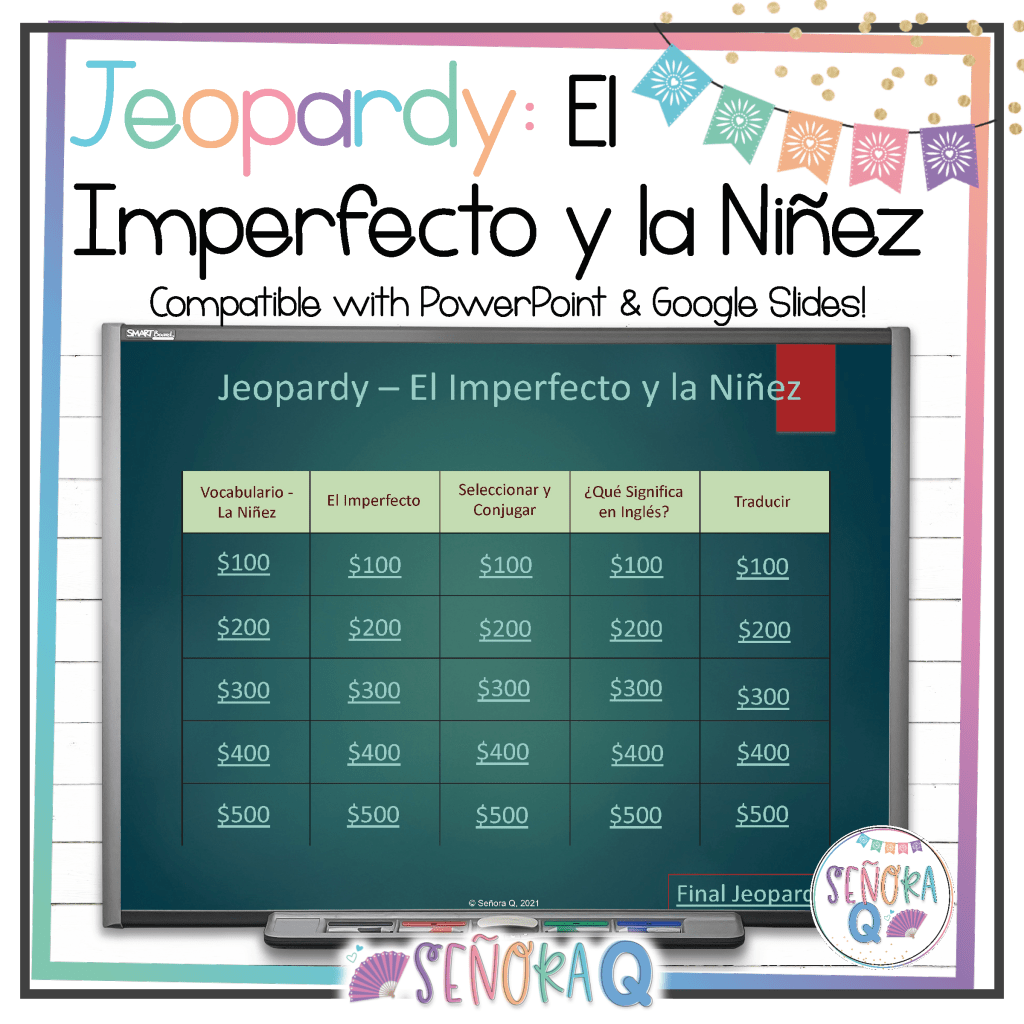
Jeopardy-Style Trivia Games
My students LOVE to play Jeopardy-style trivia games as a review! They get very competitive and work well with their teammates so that they can win!
Like board games, these trivia games can be customized to review virtually any topics. This versatility is one of the major draws of this activity, in my opinion – once you have a template that works for you, you can edit it to meet your needs!
I personally use PowerPoint to create and play trivia games. You can find numerous templates online if you want to make your own games! Fill in your questions and your answers, and you are set!
Now, onto game play during class time. Check out this blog post for a detailed explanation of how I like to play trivia games in my classroom!
Game play usually takes a full 45-minute class period for me from start to finish.
Interested in trying a Jeopardy-style trivia game in your classroom? Here are some of my favorites, or browse ALL my games here!

Board Games
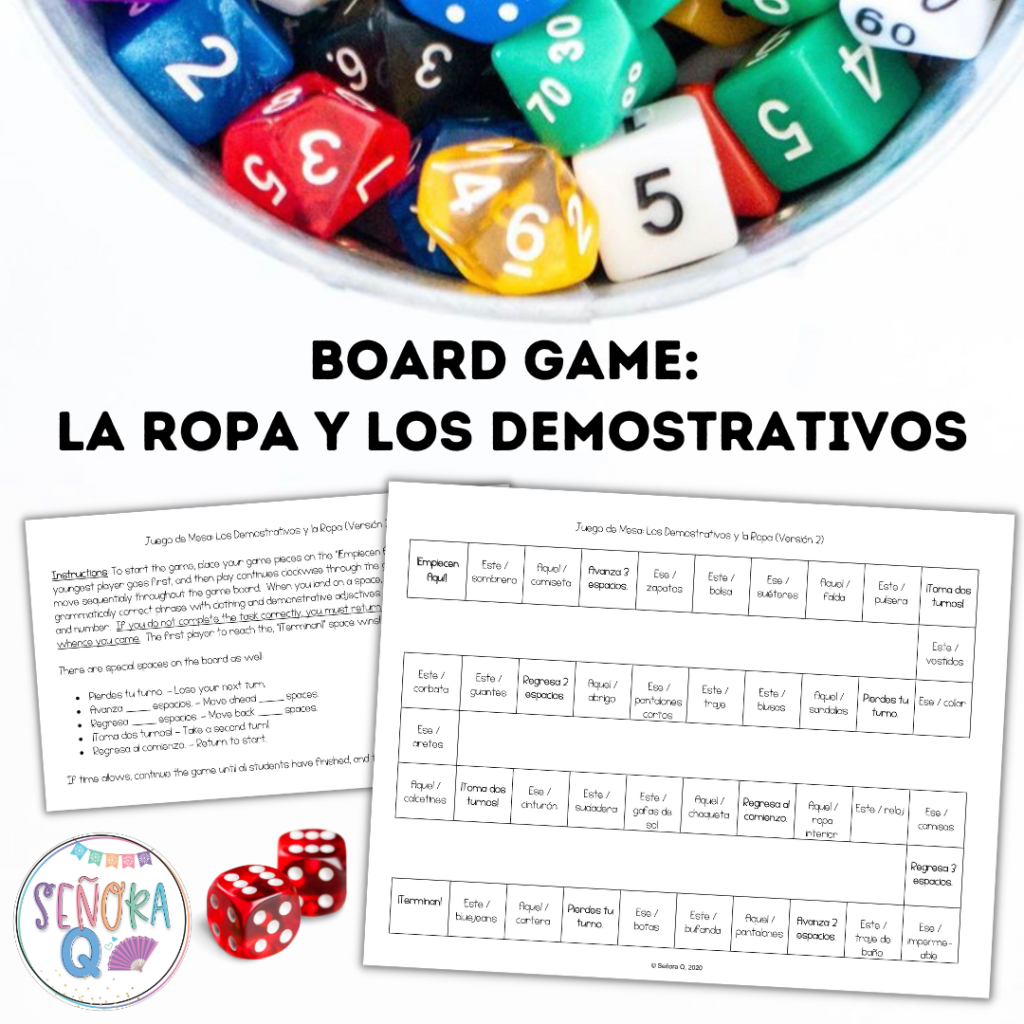
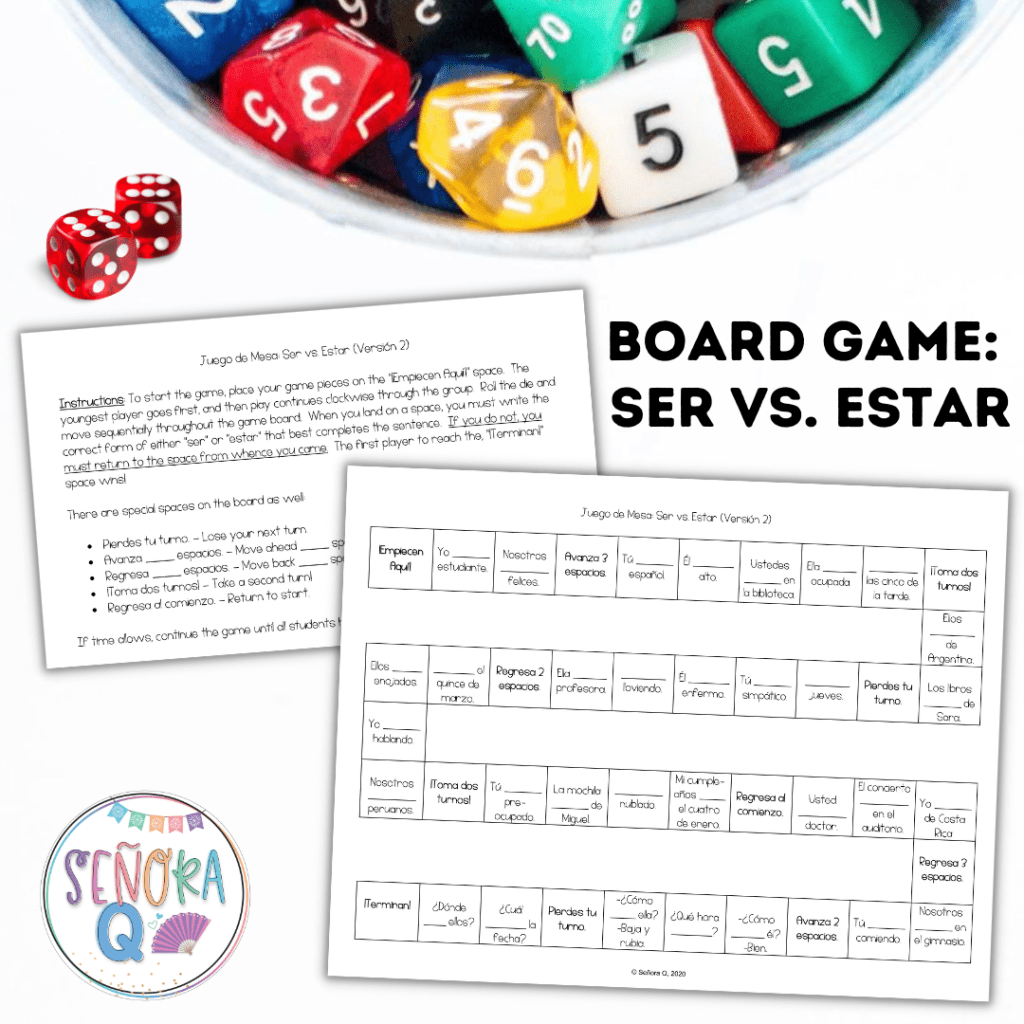
Board games have been a fantastic way for students to practice virtually any concept!! Many years ago, I created a template on Microsoft Word by creating a table and removing the gridlines of the boxes I didn’t want to use until I made a winding path. Then, I fill the spaces with a verb to conjugate, a sentence with a blank to fill in, a question to answer, a picture to identify, or whatever will reinforce the content of the unit! I also add special spaces, like “Lose a turn” or “Move _____ spaces forward/back.”
To help make game play easier, I also have an instruction sheet that tells students how they should move through the game board and how to win. Since I usually keep my games the same, I can reuse these instruction sheets over and over again!
To play the game, I place students in groups of 3-4. Each group gets a game board, an instruction sheet, game pieces, and dice. You can raid your own board game collection at home for game pieces and dice if you like, or you can purchase them. Students move through the board and complete the task on each space. I tell my students that they have to answer correctly in order to remain on the space (otherwise, they have to go back to the space where they started their turn), but you can make your own rules!
Board games typically take about 15 minutes to play in my classroom. If you want the game to last longer, students could always play again – it’s likely they will land on new spaces and have the chance to correctly answer questions they got wrong the first time they played!
If the idea of board games intrigues you but the thought of making them does NOT, feel free to check out my favorites below, or click here to see my full collection!



Task Cards
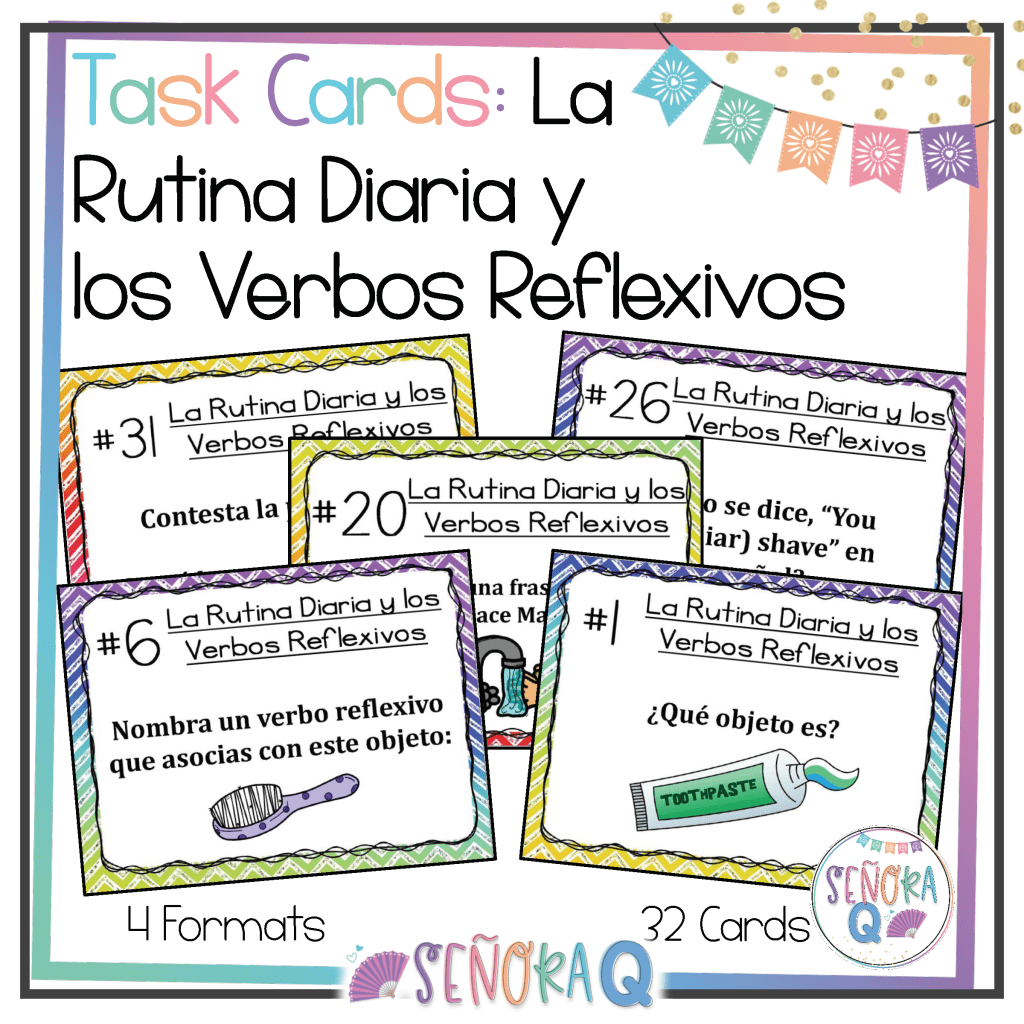
There are SO MANY different ways to use task cards to review! If you have never used task cards before, they are easy to make! Basically, you take an index card and write a question or prompt on it that is related to the topics you’ve been studying. That’s all! If you want, you can also type them and print them out – this is a great option if you want to add images, but don’t want to draw them yourself! I recommend numbering your task cards – this is helpful for organizational and review purposes! Personally, I think 30-40 is a good number of cards to have.
Here are my top 3 ways to use task cards for review:
- Hang task cards up around your classroom or in the hallway outside your classroom. Have students move around and write down the answers to the questions. You can make it so that different students have different questions to answer at certain times (for example, boys answer odd numbers and girls answer even numbers, then have them switch after a set amount of time) – this can help avoid crowding at the cards.
- Put students in pairs. Divide up your task cards and distribute a few to each pair. Students should hold up a card for their partner to answer. (For this, is it helpful if you have the answer, or if it is an open-ended question, the way the answer could be structured, on the back or on a separate sheet of paper, so that students can be sure their partners are responding correctly.)
- Tape the task cards to your board to make a Jeopardy-style trivia game. Assign each card a points value. Divide students into teams, and then have students come up to the board and take a card to earn points for their teams.
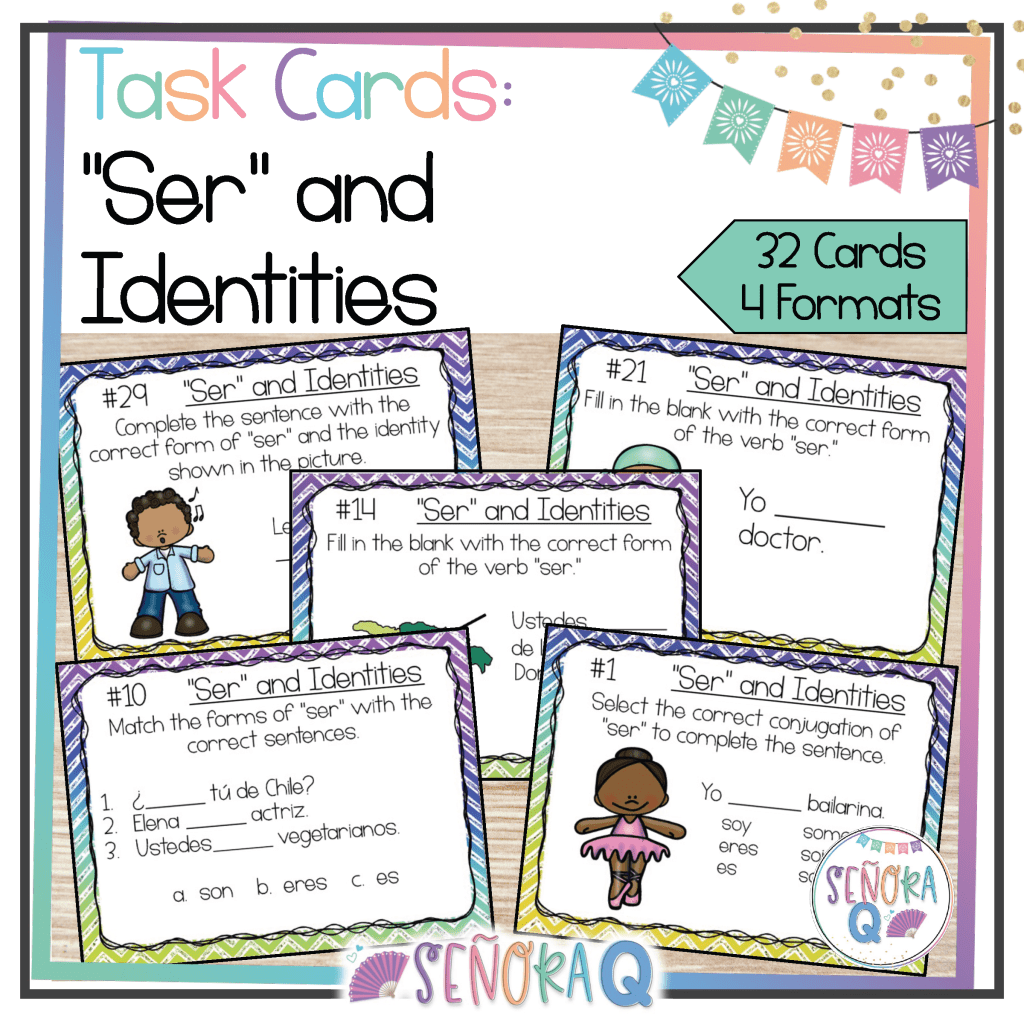
If you like the idea of task cards, let me save you time, energy, and stress! Check out my favorite ready-to-print task card sets below!


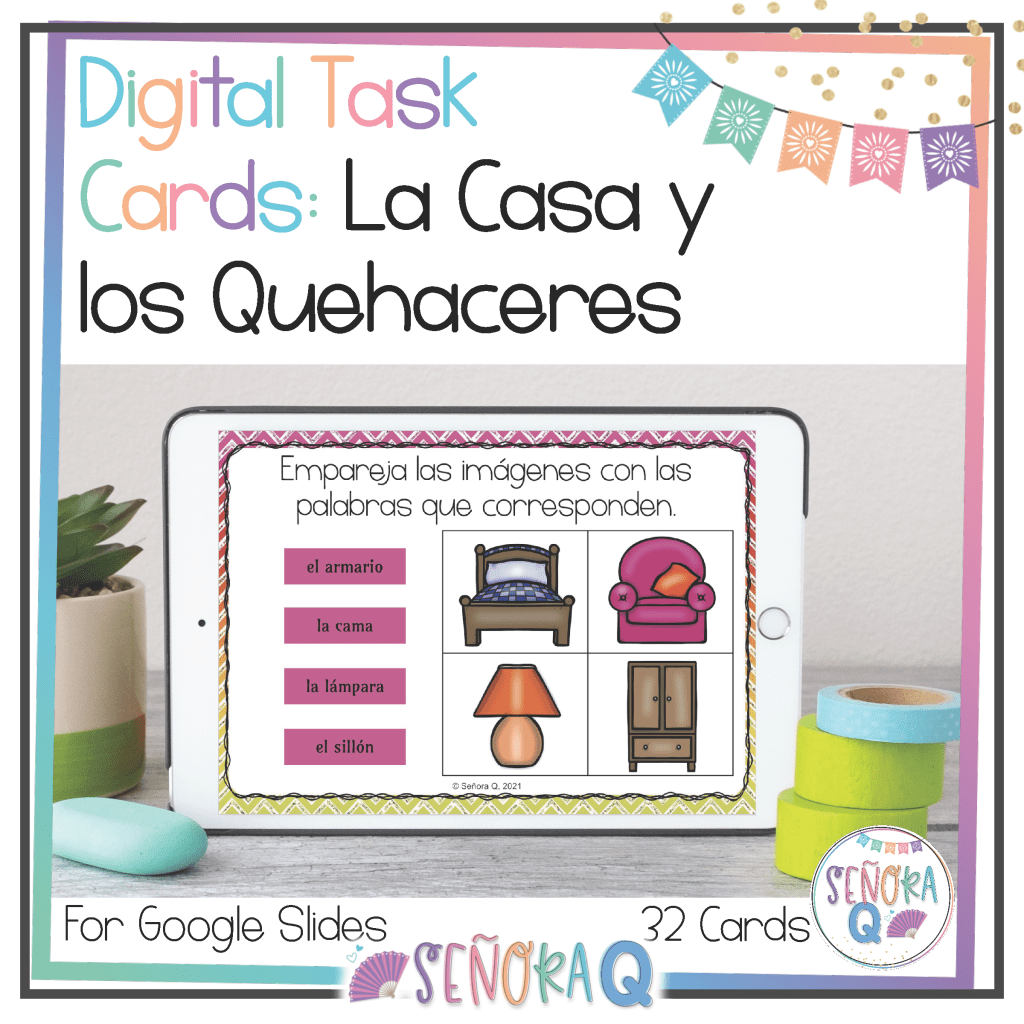
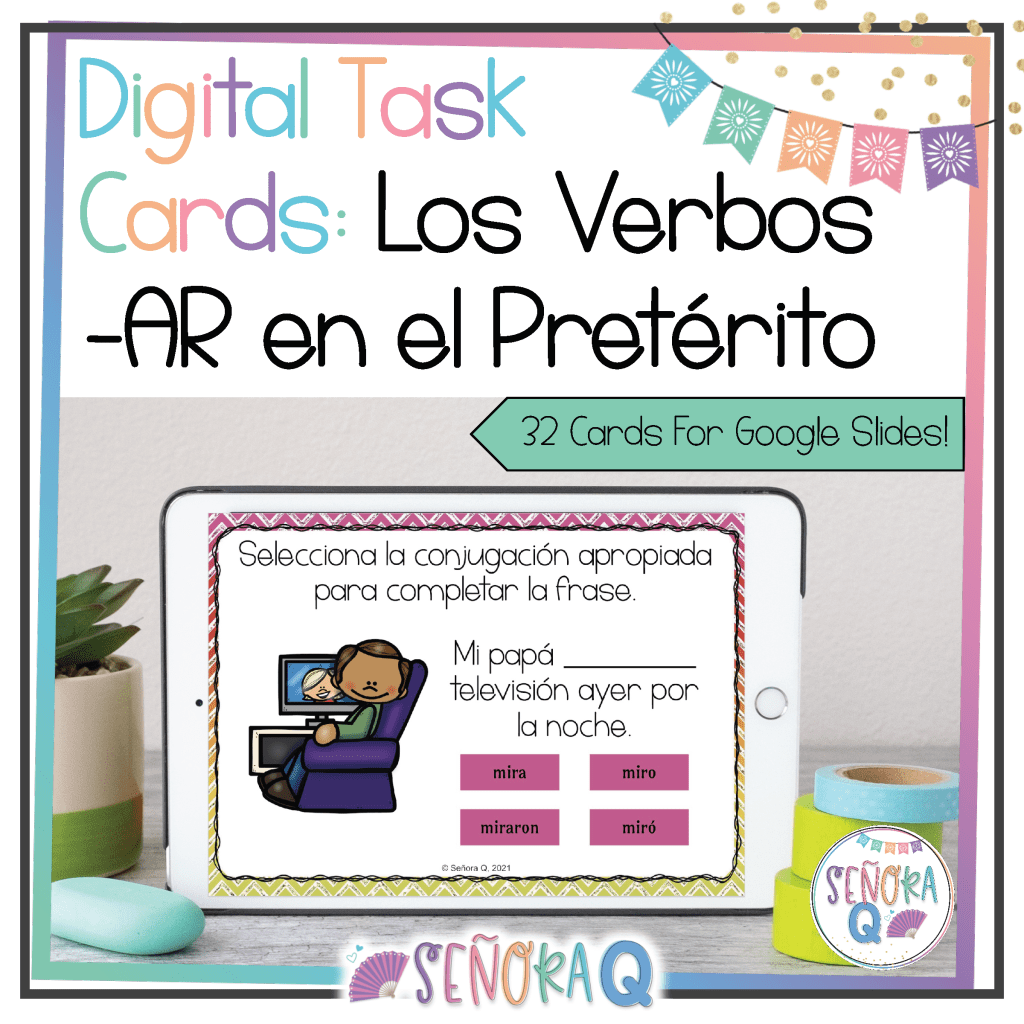
If you prefer digital activities, you can grab these Boom Cards and digital task cards for Google Slides and provide your students with the same great review, just in a different format, including this FREE set on weather and seasons!


Part 2: Midterms/Finals Options
If you’re wondering what options you have to assess your students’ knowledge and skills as the semester comes to a close, here are 4 that you may want to use:
Traditional Exam
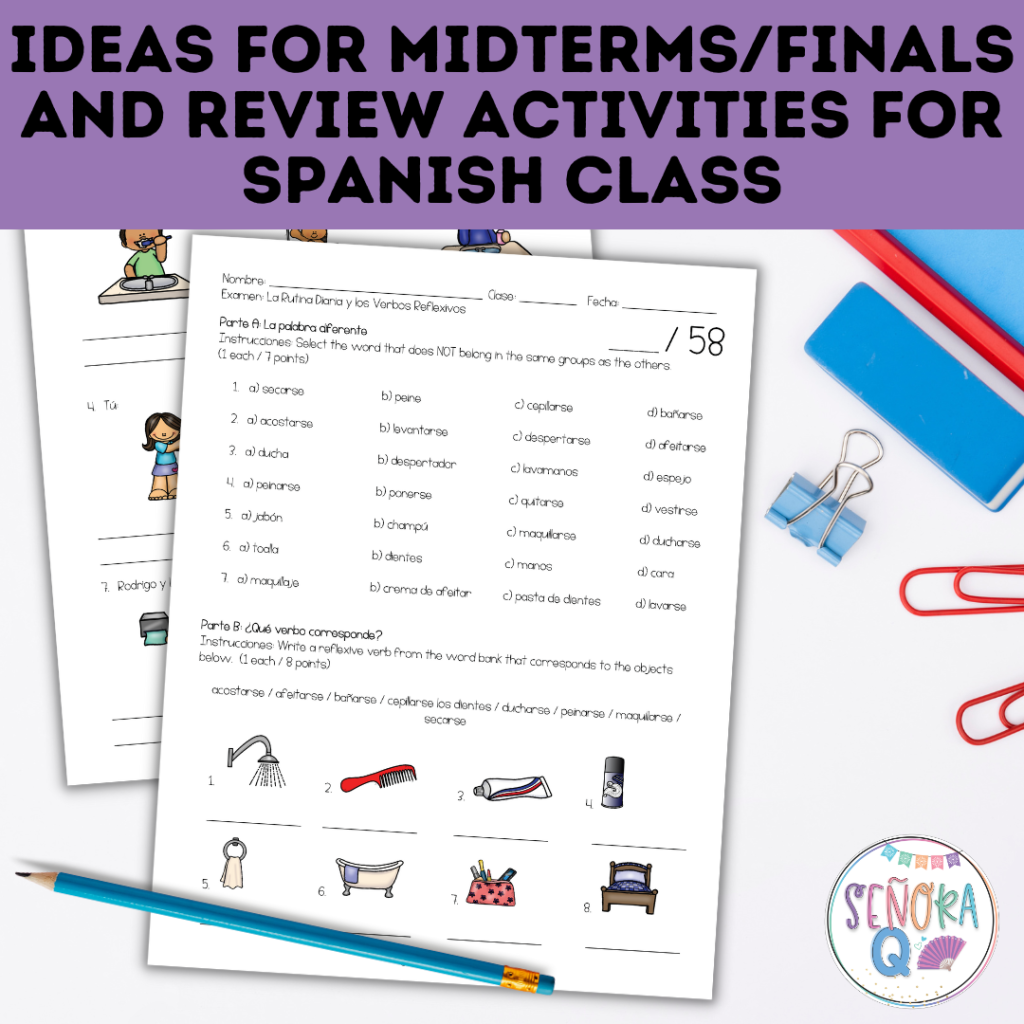
If your students are familiar with traditional vocabulary and grammar quizzes, you may want to stick with that for your midterm/final, at least in part! Here are some sections that I like to include on my traditional exams:
- Select the word/phrase that doesn’t belong
- Lógico/ilógico
- Fill-in-the-blanks sentences
- Write a sentence/story with picture prompts
- Preguntas personales
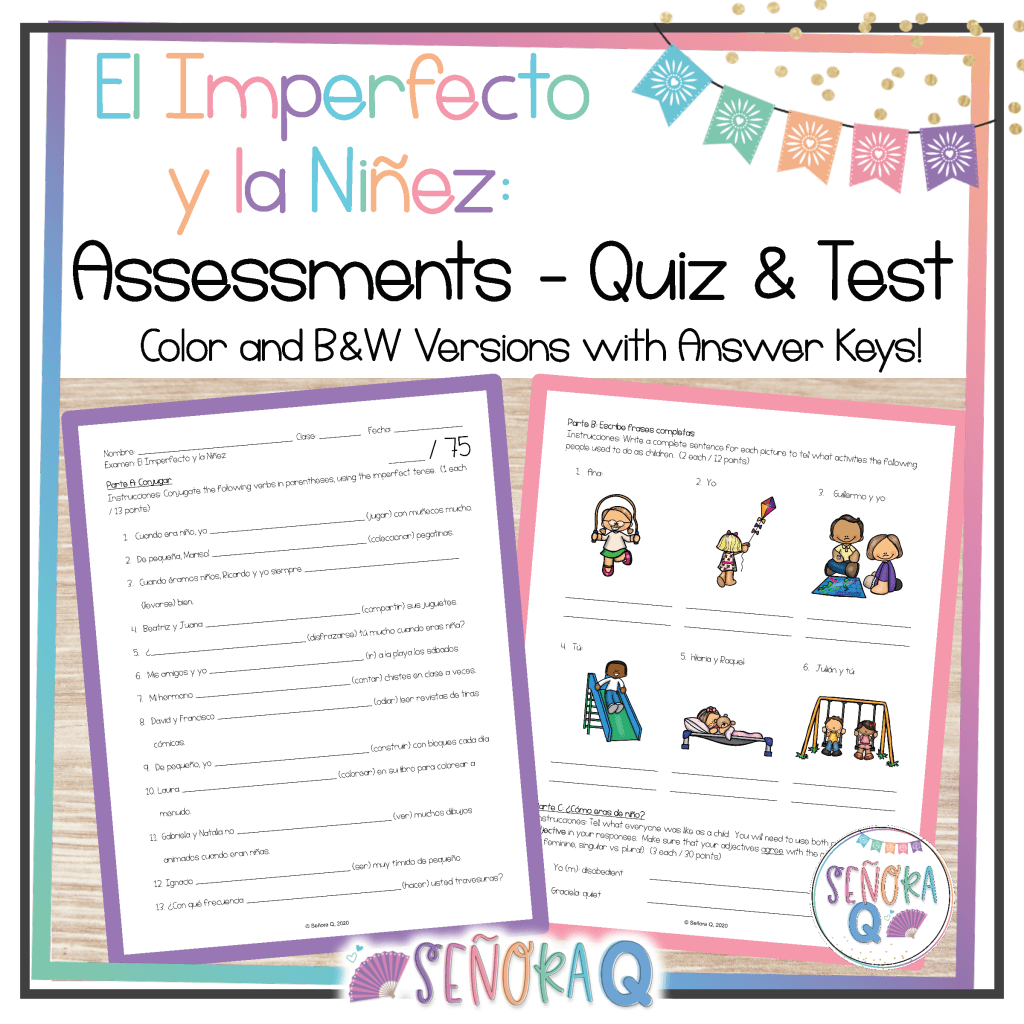
I get it, profe – writing midterm and final exams can be stressful and time-consuming, but I can help! If you studied any of these topics in your classes this year, grab these assessments and use them for your midterm/final exams!




Projects
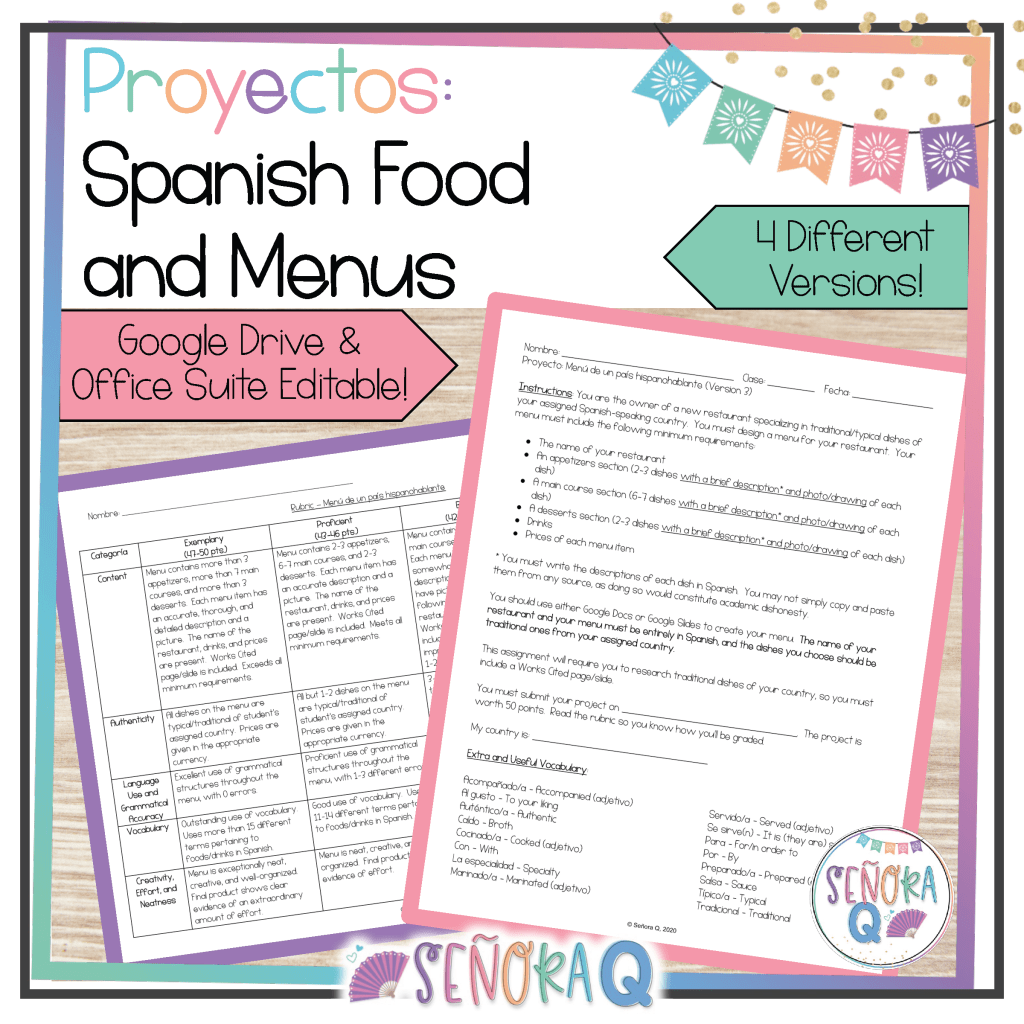
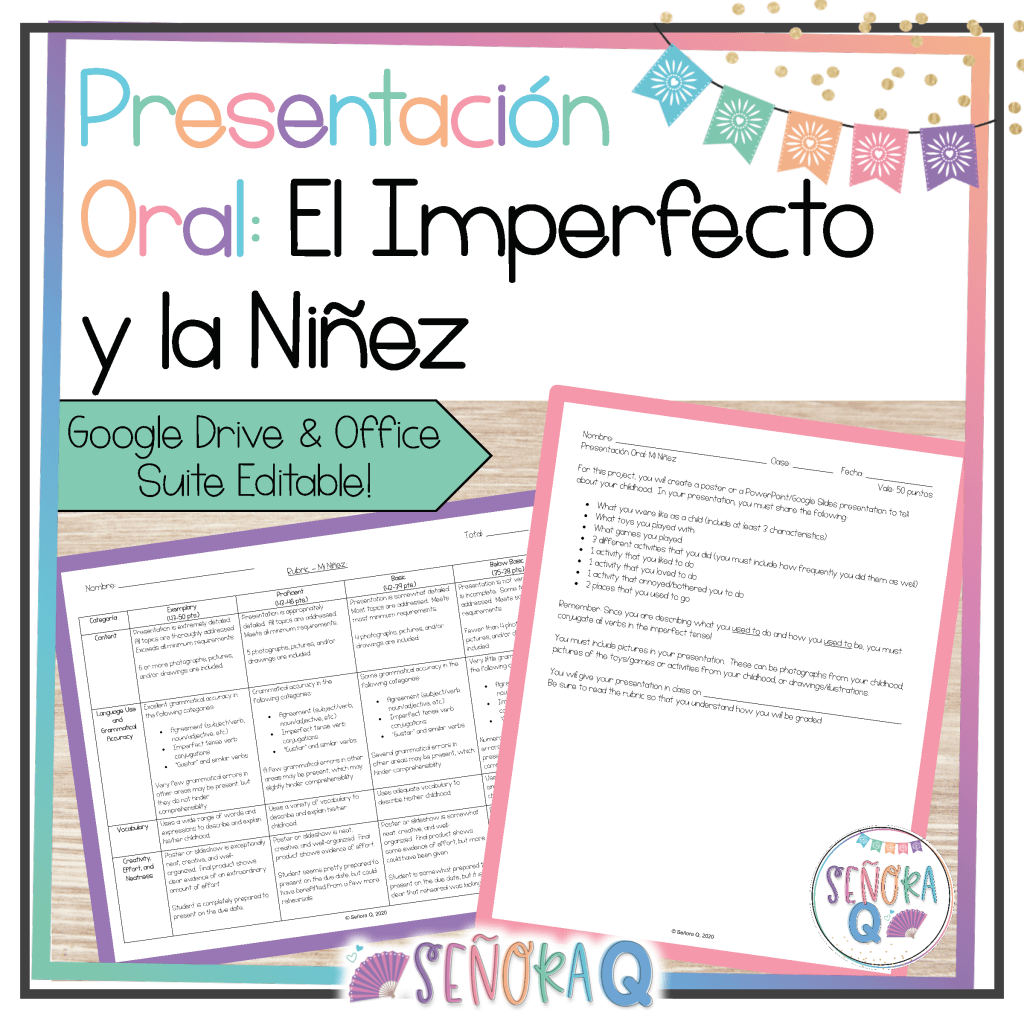
My students LOVE to be creative, and assigning projects in place of a traditional midterm or final exam can be a great way to provide these opportunities for them. I have found that students like being in control of how they want to use the language, and some of their best work has been while completing a project!
Note: I do not assign projects outside of class time. This is because I want my students to turn to me with questions, not Google, their older sibling who took my class three years ago, or their neighbor who takes college-level Spanish. I have found that making projects in-class-only assignments has produced the best, most authentic, and most original results.
So, what do you need for a good project? The good news is that it’s not a lot: just a set of instructions outlining what you want your students to do, and a rubric or checklist that tells students how you are going to assess them. Once you have these in place, the students will do the heavy lifting!
If you’re interested, here is a FREE project on family that would be great for Spanish 1 students!
You can find my favorite projects (with rubrics!) here – save time and energy while still providing your students with the opportunity to be creative and show what they have learned this semester!


Performance Tasks
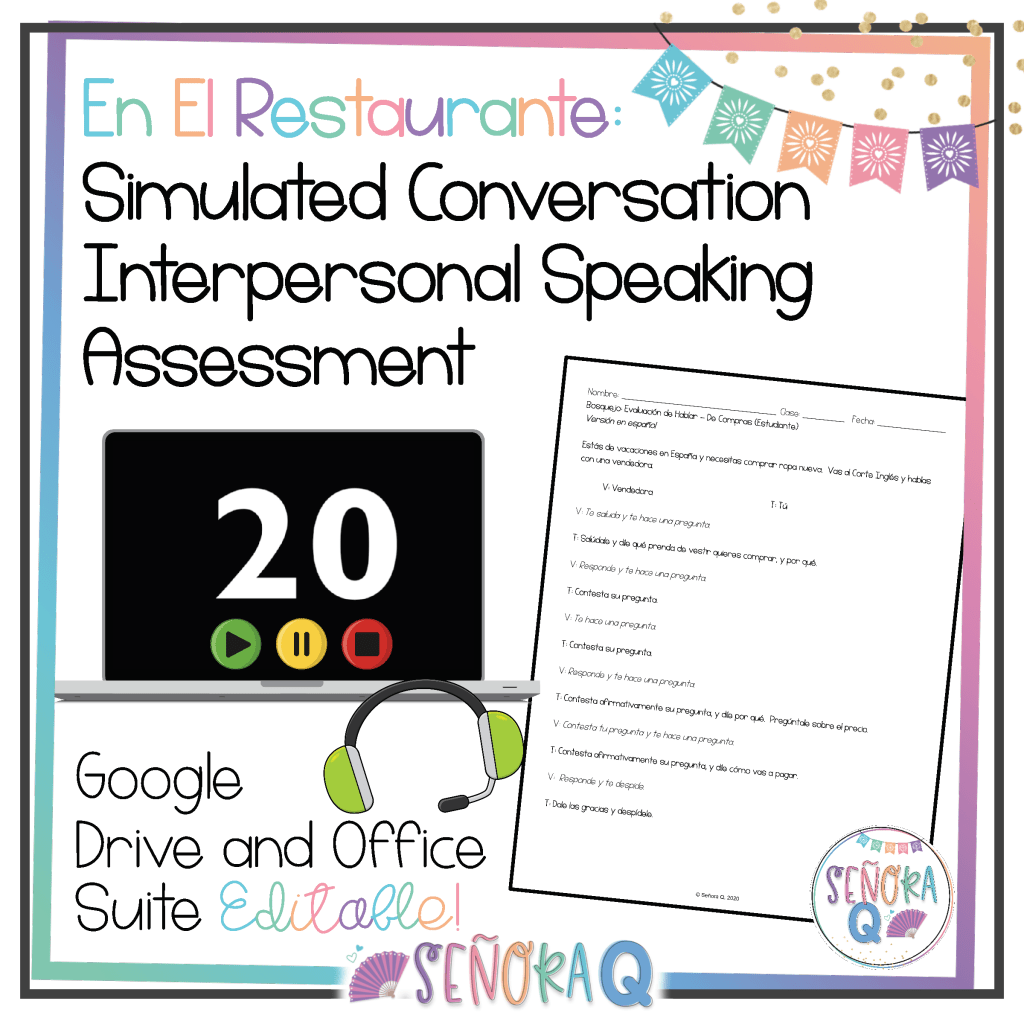
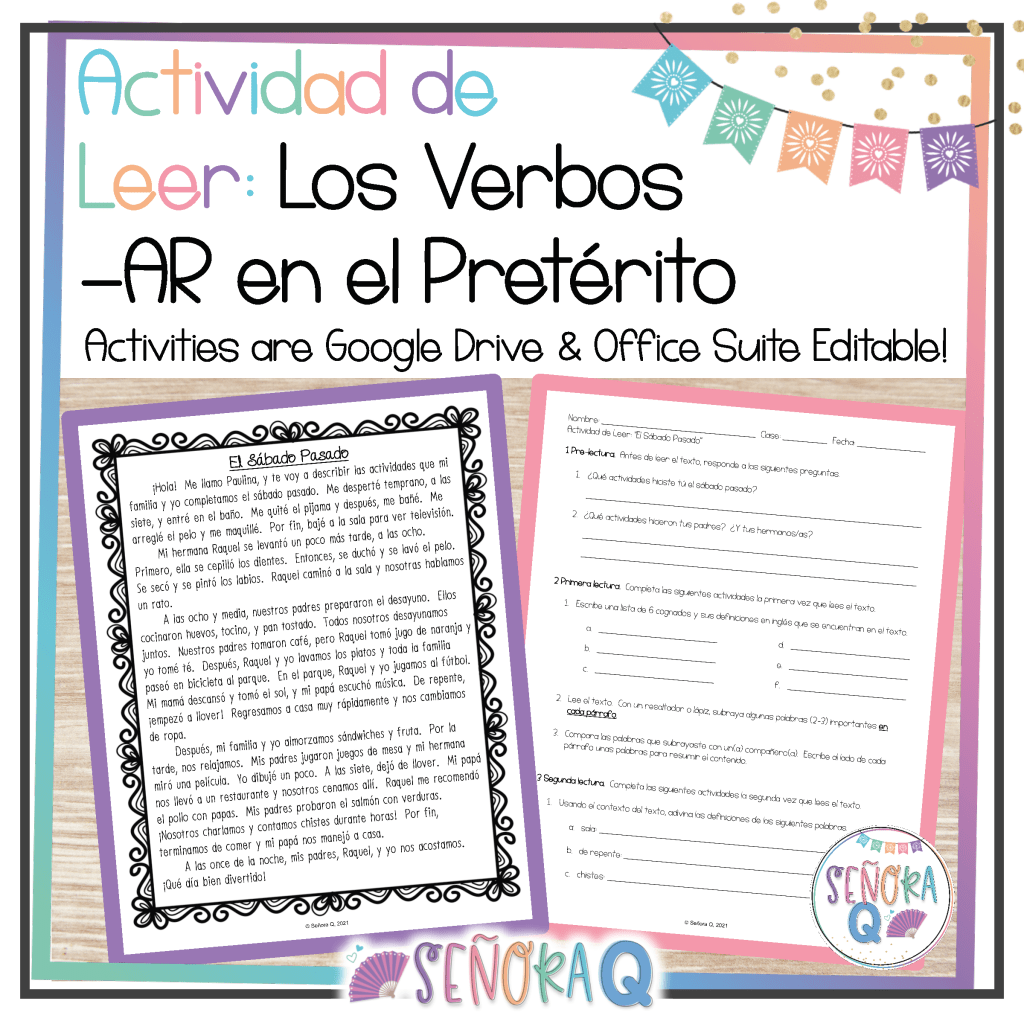
You could also assign your students a performance task to complete. Ideally, this performance task would focus on one (or more) modes of communication (interpretive, interpersonal, or presentational) and would mimic a real-world task. This would allow you to assess students’ abilities to use the language in authentic situations.
Here are some performance tasks that you could use as your midterms or finals. Click the links to see more about how they work!
- Simulated conversations
- Email replies
- Listening to authentic audios/videos and completing comprehension activities
- Reading authentic articles and completing comprehension activities
Here are some of my favorite performance tasks that you could use for your midterms or finals:



Portfolios
What were your objectives, learning targets, or can-do statements you wanted your students to meet over the course of the semester? Compile a list of them and ask your students to find samples of their work in which they demonstrate that they met those objectives, learning targets, or can-do statements! You can also have your students provide an explanation or rationale in which they detail how their work meets your course standards.
Alternatively, if students do not feel as if they can find a work sample that meets the objectives, learning targets, or can-do statements, they could re-do an assignment (or two) and fix them so that they now DO meet the course standards.
If desired, you could have your students present their portfolios to you as well!
I hope this was helpful and that you got some ideas you can use in your classroom! If you have any questions, please feel free to leave a comment or send me an email. Have a wonderful week, profe!
 Señora Q