


¡Hola profes! How are you doing? Hopefully you and your students have settled into a nice groove and all is going smoothly!
This week, I’m going to continue my series on how to introduce AP Spanish Language and Culture exam tasks to lower-level students. I firmly believe that preparing students for AP success begins in Spanish 1. The more students practice the tasks in the years leading up to AP, the more they’ll feel like second nature to students. They will know what to expect from the test, and what the test will expect from them.
In my last two posts, I talked about how to scaffold the email reply and how to scaffold the simulated conversation, and this week, I wanted to share tips for preparing lower-level students for the interpretive reading sections of the AP exam. There are two sections on the AP exam in which students will have to interpret written texts. In the first section, students have 40 minutes to respond to 30 multiple-choice questions that correspond to various printed text sources. In the second section, students use both text and audio sources to answer multiple-choice questions.
In lower-level classes, I have found it’s really helpful to regularly practice reading comprehensible, but challenging, texts. While it may be our first instinct to provide our lower-level students with easier texts where they will know every single word, this isn’t going to benefit students in the long run. It would be very unlikely for students to know all of the words they encounter in all of the printed sources on the AP exam. However, incorporating the following into your lower-level courses can help develop your students’ abilities to accurately interpret text without knowing every single word, and will increase your students’ confidence levels in their abilities as a result!
#1: Teach and practice reading strategies with every reading activity you do in class.
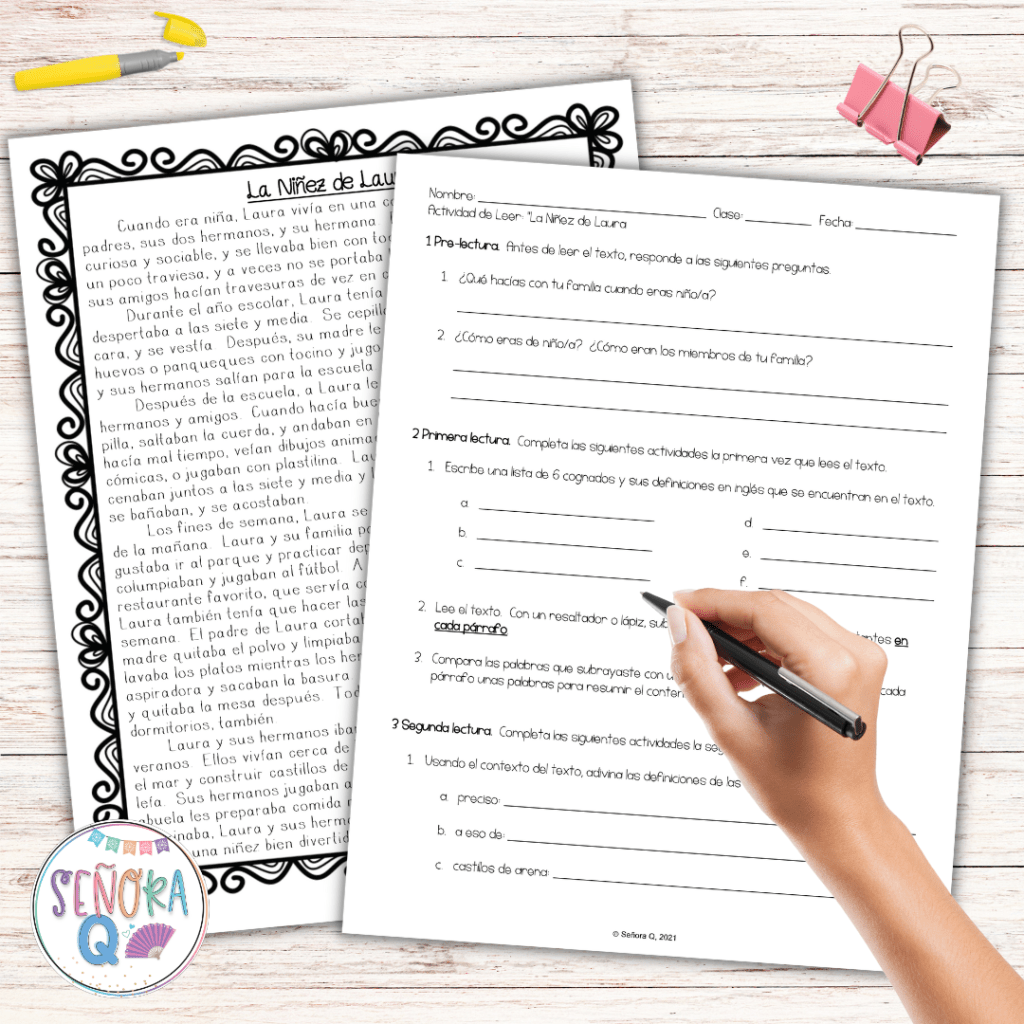
Teaching reading strategies with students to help them understand the main idea of a text and build their confidence with reading! With regular practice, students will begin to use these reading strategies subconsciously without needing any prompting from you! Here are some strategies that you can use with any text to help increase students’ reading comprehension abilities and, therefore, help prepare students for the interpretive reading tasks on the AP exam:
- Prior to reading the text, have students look at the title and any images and use them to make predictions about what they are going to read. This can help students figure out the context of the text and give them ideas about what some new words might mean. Visual cues from images may also help set the appropriate tone for students!
- Identify cognates. You can have your students make a list of cognates they recognize, with their English equivalents. As a follow-up activity, you can make a master list on the board so that the whole class has the same list to help them comprehend the text. Identifying cognates is a great strategy to help students understand any text in Spanish! Plus, picking out cognates is a HUGE confidence-booster for students because they see that they CAN recognize words in Spanish and that they DO understand some of what they are reading. This is great to point out to students if they get frustrated that they do not understand every single word of the text.
- Highlight 3-4 key words per paragraph. If students can identify the most important words in a paragraph, they can likely gather the main idea of the text. This also prevents students from feeling the need to know what each word means, if they only need to pick out the most important ones.
- Write a one-sentence summary of each paragraph. Being able to summarize information, especially in longer texts, will help keep students from getting bogged down with details that might be causing them stress or confusion.
- Use context clues to guess the meanings of unfamiliar words. You might ask students if they know a word that looks similar or is part of the same word family (i.e., amar, el amor). Can they identify the part of speech (noun, verb, adjective, etc.)? What surrounding words might help them make an educated guess? Students may find this activity challenging at first, but with regular practice, they get so much better!
#2: Incorporate different types of comprehension questions to scaffold for your students as needed.
After you start incorporating reading activities into your lower-level classes, you’ll likely notice that some of your students are picking it up faster than others. Some might find reading in Spanish to be really challenging. To help provide appropriately challenging activities for all, you can include different types of comprehension questions and activities.
You may be thinking that it sounds like a lot of work to make different sets of questions for different students, but I promise it’s not too time-consuming to do! I usually modify the way in which I have students answer questions.
For example: Let’s say students read a passage about a student named Mateo describing his typical day, and he states that he wakes up at 7:00 AM. I might pose a question about that information to my students in three different ways:
- Identification question: Underline the sentence of the text that says what time Mateo wakes up every day.
- Multiple-choice question: ¿A qué hora se despierta Mateo? A) A las 6. B) A las 7. C) A las 8.
- True/false question: Mateo se despierta a las seis. ¿Cierto o falso?
- Open-ended question: ¿A qué hora se despierta Mateo? ____________
Here are the different types of reading comprehension activities I typically use with my lower-level classes:
- Identification questions. Give students true statements about the text in English, and ask them to identify where in the text that information is found. I have found that this is a great activity for students who are having difficulty with reading and could use some extra support. It is easy for students to find success with this activity, and it boosts their confidence levels. If your students need more of a challenge, word your English statement so that it is not identical to the statement given in the text, and would require more interpretation on your students’ part!
- True/False questions. To make these questions more challenging for students, you could have them correct false statements!
- Multiple-choice questions. For struggling students, you may want to provide three choices. For students who need more of a challenge, four questions is a great number! Additionally, since the interpretive reading sections of the AP exam utilize multiple-choice questions, students should get used to answering these so that they are well-prepared!
- Open-ended comprehension questions. These are ideal for students who are at higher proficiency levels or need more of a challenge. Having students write complete sentences adds in a writing component to practice those skills as well!
#3: Practice reading different types of printed texts.
The AP Spanish Language and Culture exam includes a variety of different printed texts, including news articles, advertisements, infographics, and more. It’s a great idea to practice reading different types of printed sources in Spanish! The good news is that there are SO MANY printed texts you can find online. Do a Google Search of your current unit theme and tons of articles will pop up! A Google Image search will pull up infographics that you can utilize. Social media is also a great place to find printed text sources!
Regardless of the type of printed text you’re using, you can employ the same reading strategies and types of comprehension questions mentioned above!
Final takeaway: It can seem daunting to try reading challenging texts with lower-level students. Believe me, I was SO skeptical when I first started, too. But I promise that, with the proper scaffolding and support, your students absolutely can do it!
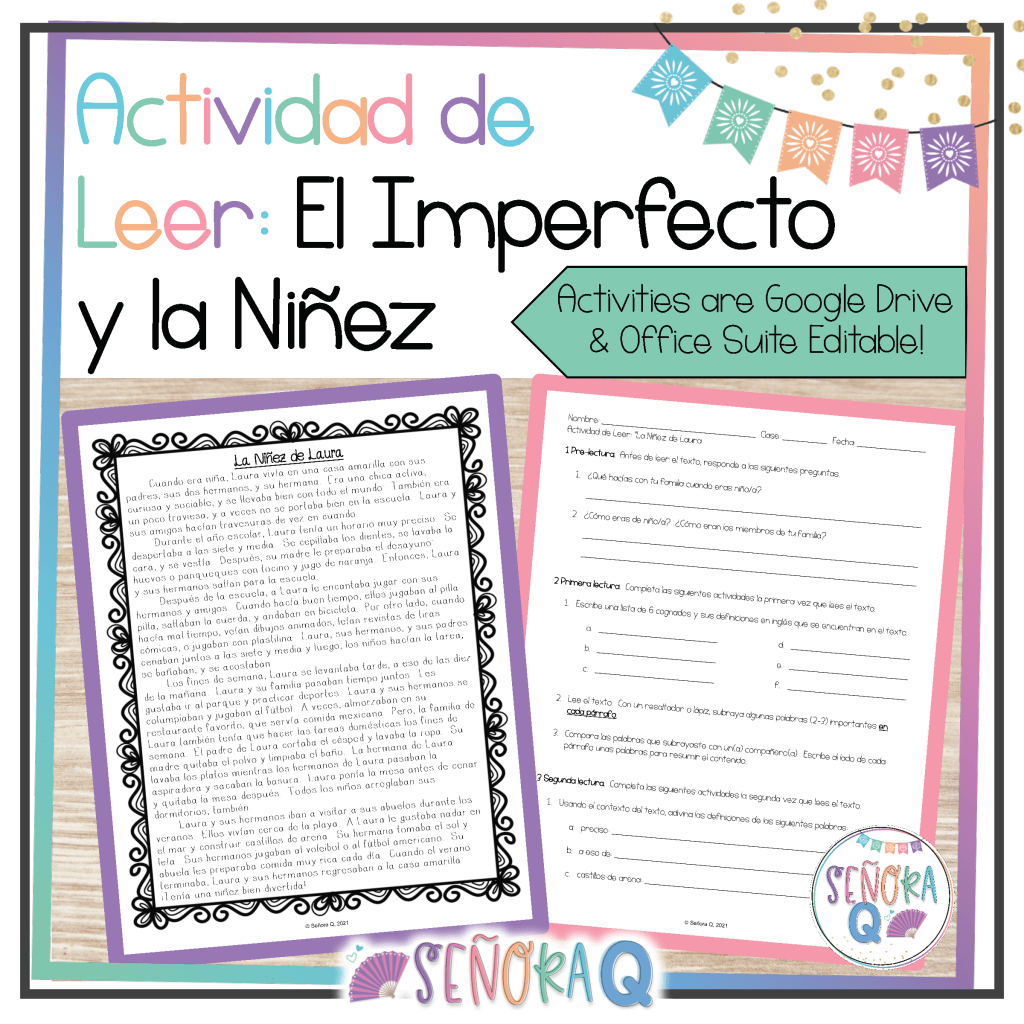
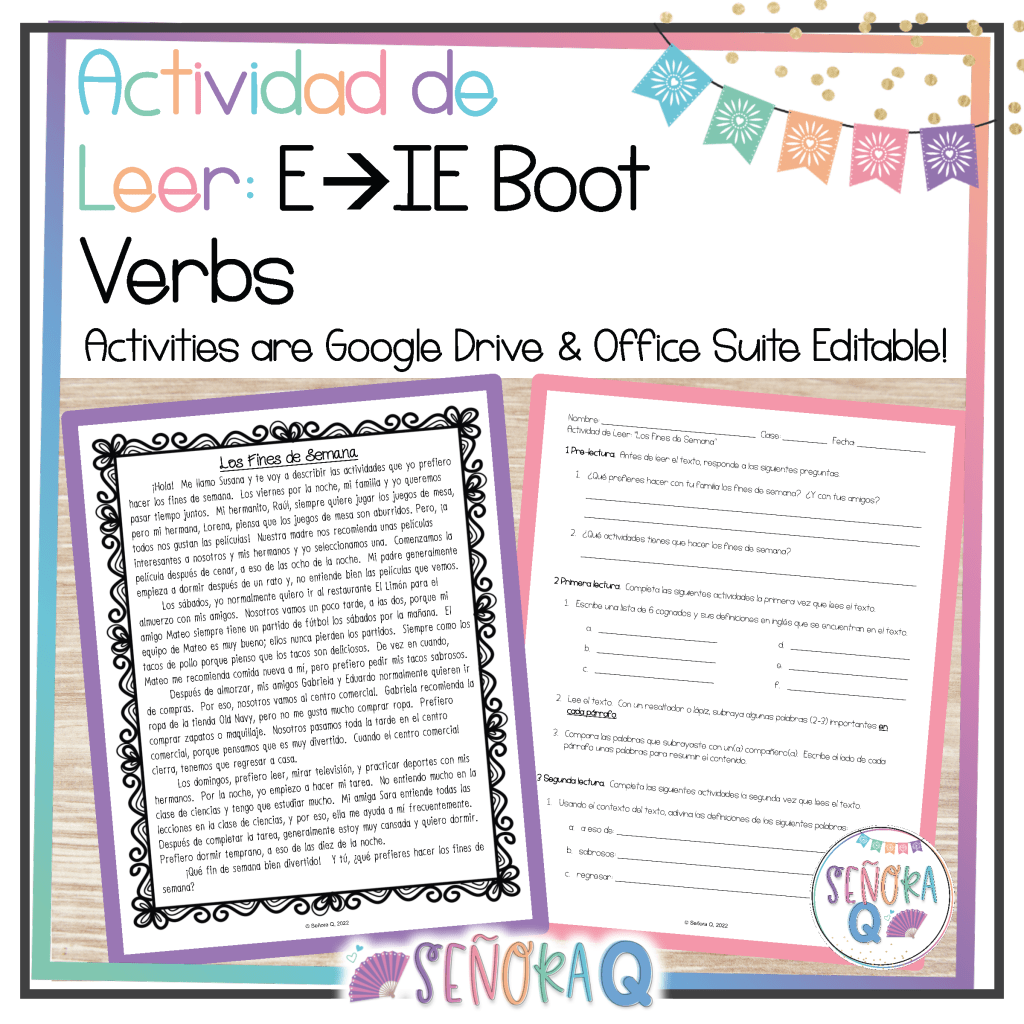
If you’re looking for print text sources (with reading strategies and comprehension activities!) that you can utilize in your lower-level classes, here are some of my favorites:

I hope this was helpful! Please feel free to leave me a comment or send me a message if you have any questions about getting started with preparing your students to interpret printed texts! Have a wonderful week, profe!
 Señora Q