
¡Hola profe! How is everything going? I don’t know about you, but I feel like September is just flying by!
Last week, I talked about activity ideas for one of my favorite units, la rutina diaria, and this week, I want to talk about activity ideas for another unit that I love: la niñez! Like with daily routine, I love this unit because it’s one that all students can relate to personally as they talk about their childhoods and the childhoods of their friends/family members. This unit also provides a fantastic opportunity to teach and practice grammar (i.e., the imperfect tense, frequency terms, etc.) in a natural context!
Here are some of the activities that I like to use in my childhood unit:
Introductory/Practice Activities:
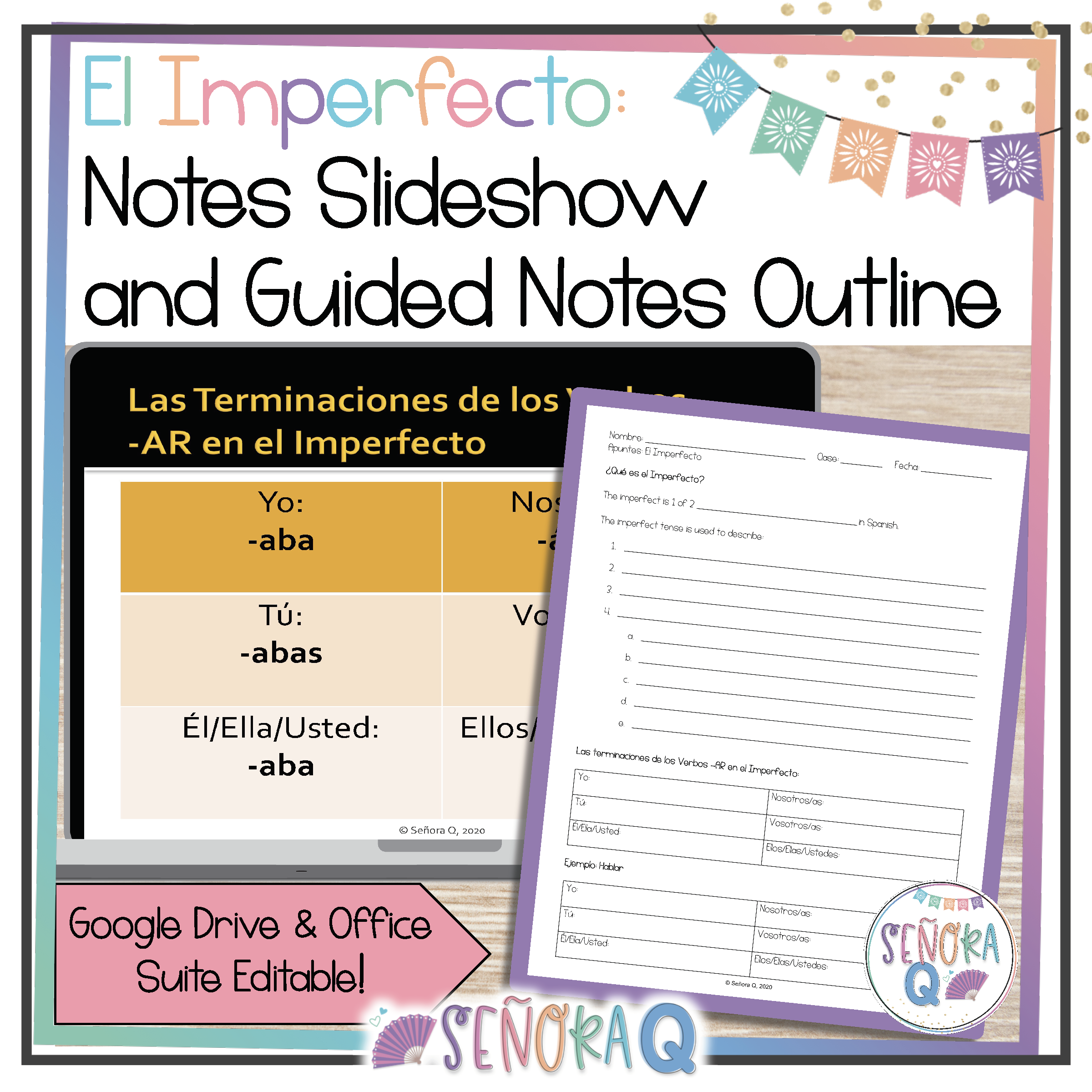 Notes Slideshow with Guided Notes Outline. If you like to use PowerPoint, Google Slides, etc. to present information to your students, I highly recommend providing your students with an accompanying notes outline for them to complete as you go over the presentation! I like to type up the notes and remove some key pieces, leaving blank spaces on the outline paper. As I present, students fill in what’s missing. It keeps them following along and paying attention! Grab a ready-to-use notes slideshow and guided notes outline here!
 Practice Worksheets. If you’re looking for quick exercises to reinforce the content or to check your students’ understanding, short worksheets are a great option! You can use them for warm-ups, exit tickets, or even quick quizzes. Grab 5 ready-to-print worksheets here!
 Information Gap Speaking Activity. If you want to get your students speaking while practicing and reinforcing childhood vocabulary and the imperfect tense, an information gap activity will help you accomplish all of that! Divide students into pairs and give each partner a half-complete paper. Put some questions at the top, and some images at the bottom. Students then ask the questions that they have to their partners, who will use the images on their papers to give a response. Students then switch roles. You can get a ready-to-use childhood and the imperfect information gap activity here!
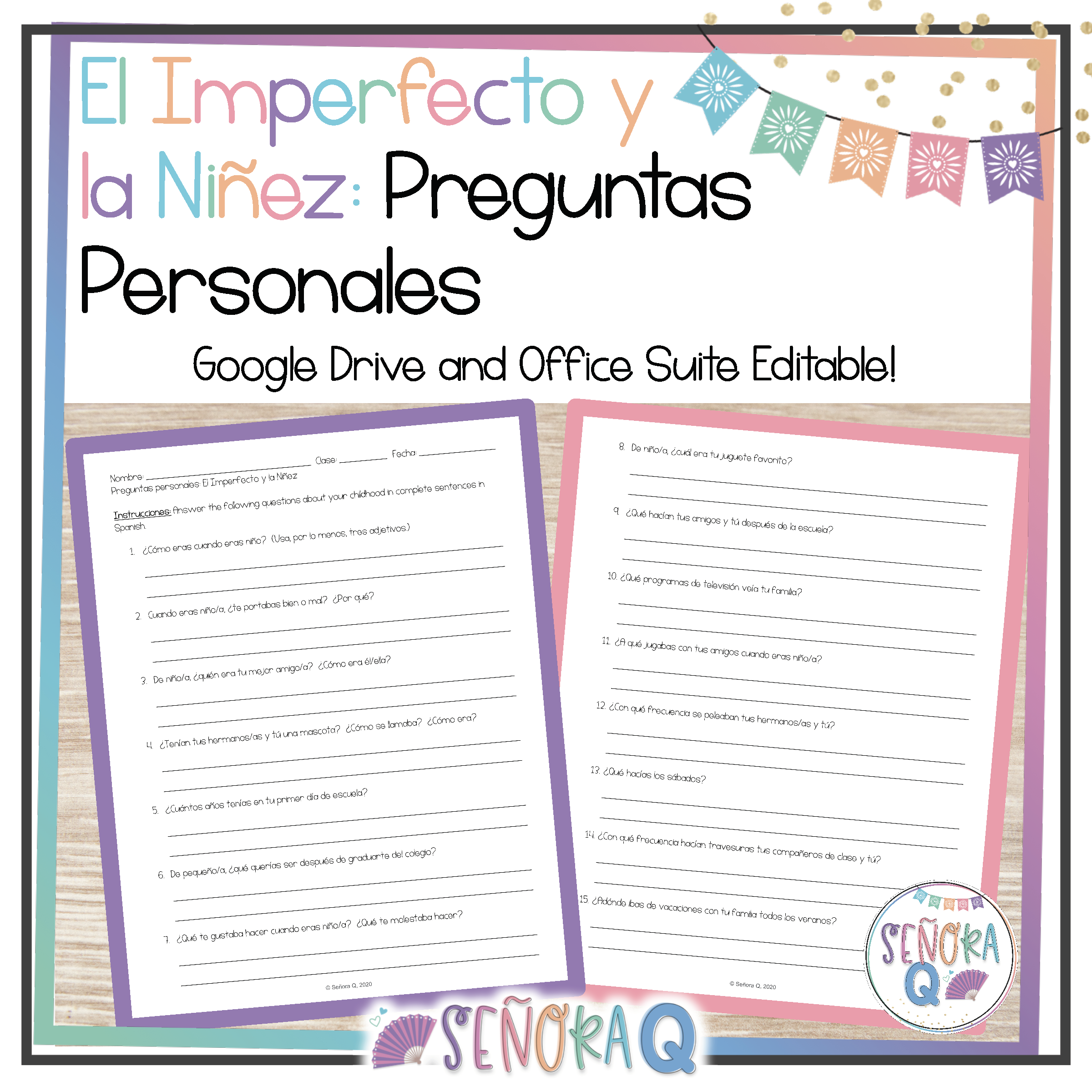 Preguntas Personales. This is an easy yet effective way to practice childhood vocabulary and the imperfect tense! Post 2-3 questions on the board or give each student a slip of paper with the questions. For example, ¿Con qué frecuencia ibas de vacaciones con tu familia cuando eras niño/a? or ¿Qué hacían tus amigos y tú? I like to vary the subjects of the questions. You could also have students use the questions to interview a partner! Here’s a list of 15 editable preguntas personales on childhood and the imperfect tense for you!
Games/Hands-On Activities:
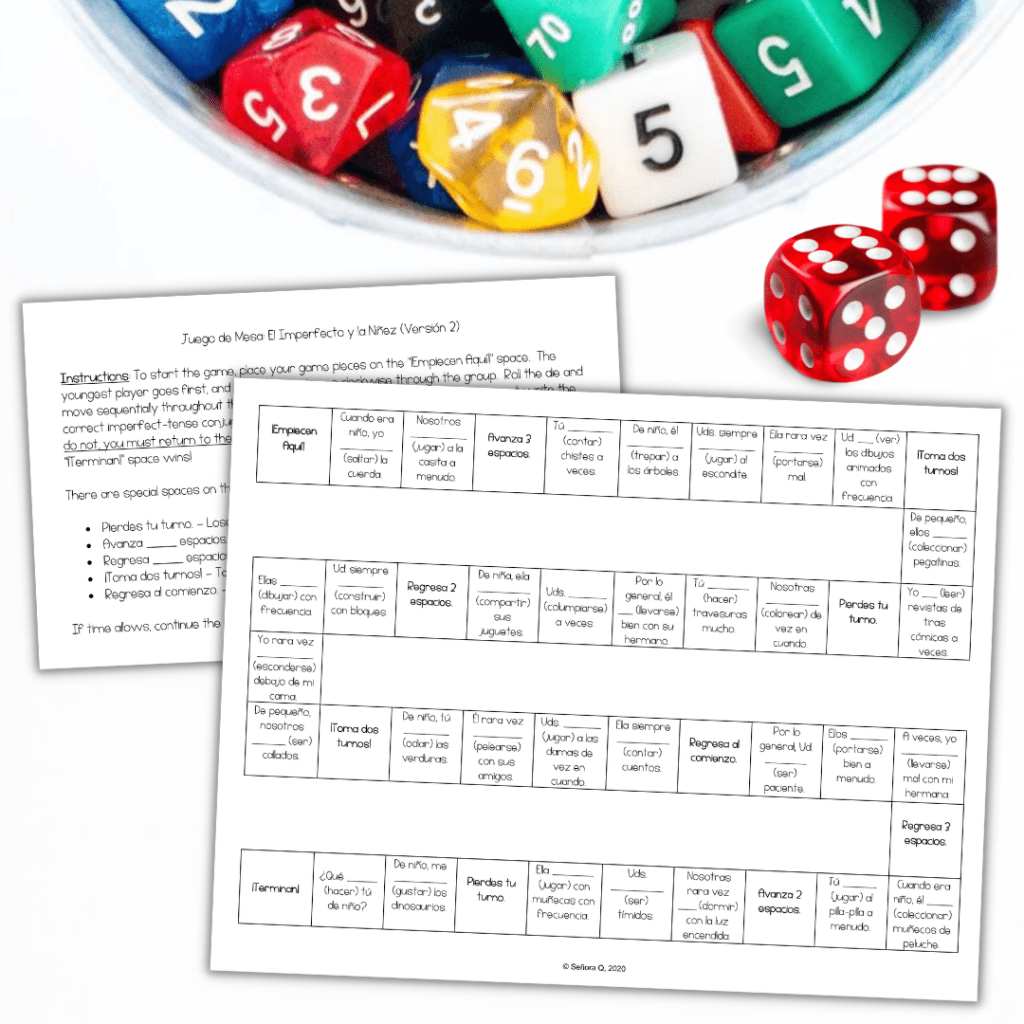
 Board Game. This is a fun and engaging way to practice or to review! Make a game board template (or you can get one online), and fill in the spaces with questions/prompts pertaining to childhood vocabulary and the imperfect tense! Once you’ve made your game, you can use it for years to come! If you’d like to play a board game, but would prefer NOT to make it yourself, I’ve got you! Here’s a ready-to-print board game that you can use in your classroom today!
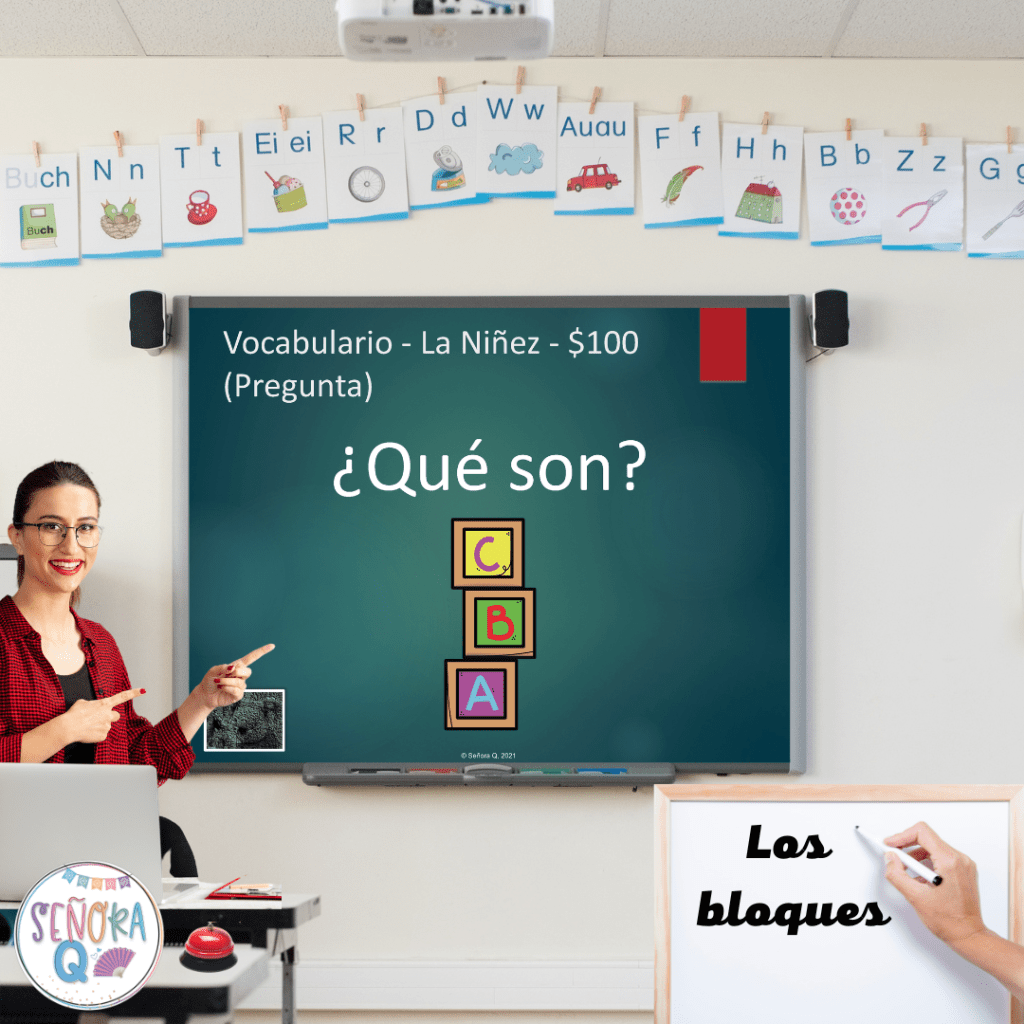
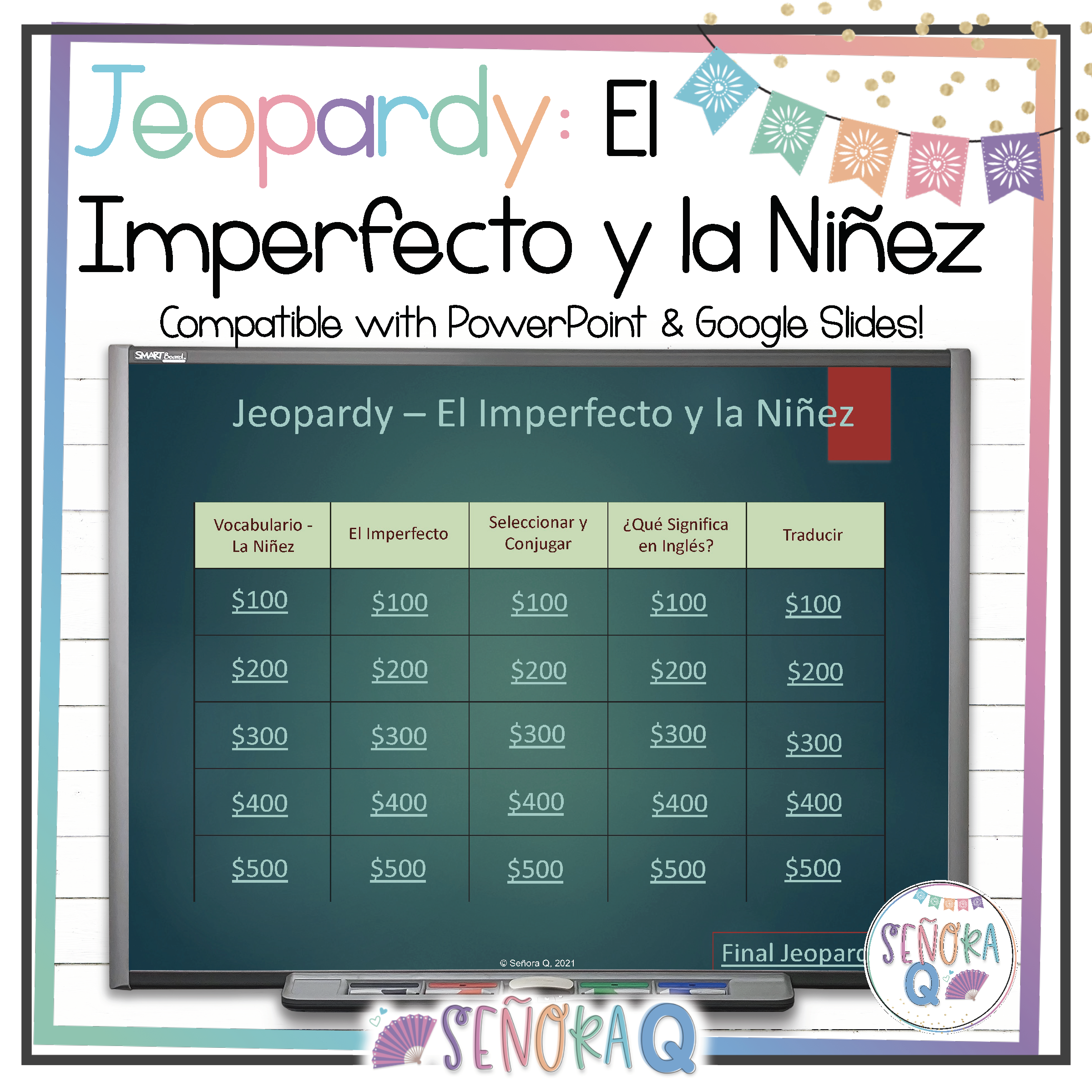 Jeopardy Game. Jeopardy is a wonderful review game, and students get into it SO MUCH. You can find lots of Jeopardy templates for PowerPoint or Google slides online, and then you simply insert your questions into the template, present the slideshow, and play! If you’re interested in a ready-to-play childhood Jeopardy game, here’s one for you!
 Scrambled Sentences Puzzle. This is a great hands-on activity to help your students practice vocabulary and logical sentence structure. Type up 6-9 sentences pertaining to childhood and the imperfect in large font, and print several sets. (I recommend printing each set on a different color paper, and laminating them.) Then, cut out each individual word of each sentence, scramble up the words, and put them into an envelope or plastic baggie. When you’re ready to do the activity, put your students into groups of 2-4, give each group an envelope or baggie with the words, and have them put the sentences back in logical order. Students really enjoy this activity! You can check out a ready-to-print scrambled sentences activity here – just print, cut, and go!
 Task Cards. On an index card, write a question/prompt pertaining to childhood and the imperfect tense. You can number the cards if you like, or include images! There are SO MANY uses for task cards, but my favorite is to post them around my classroom or in the hallway just outside my room and have my students move around to answer the questions. Students really enjoy being able to move around as well! If you’re interested, you can save time and grab these ready-made task cards on childhood and the imperfect, complete with a student answer sheet, and can use them ASAP!
Assessments/Projects:
 Traditional Test/Quiz. I like to give a smaller quiz to check for student understanding about halfway through my unit. I use this as a formative assessment and do not use it as a formal grade. However, at the end of the unit, I will give a summative assessment to see what students know! Here are the ones that I use in my classroom!
 My Childhood Project. Have students present about their childhoods – what they were like, what they used to do, and how often! They can make a visual aid, like a poster or PowerPoint/Google Slides presentation, to help them! This is a great way to assess their understanding of the topic at the end of your unit. Grab project directions and a scoring rubric here!
Performance/Skills-Based Activities:
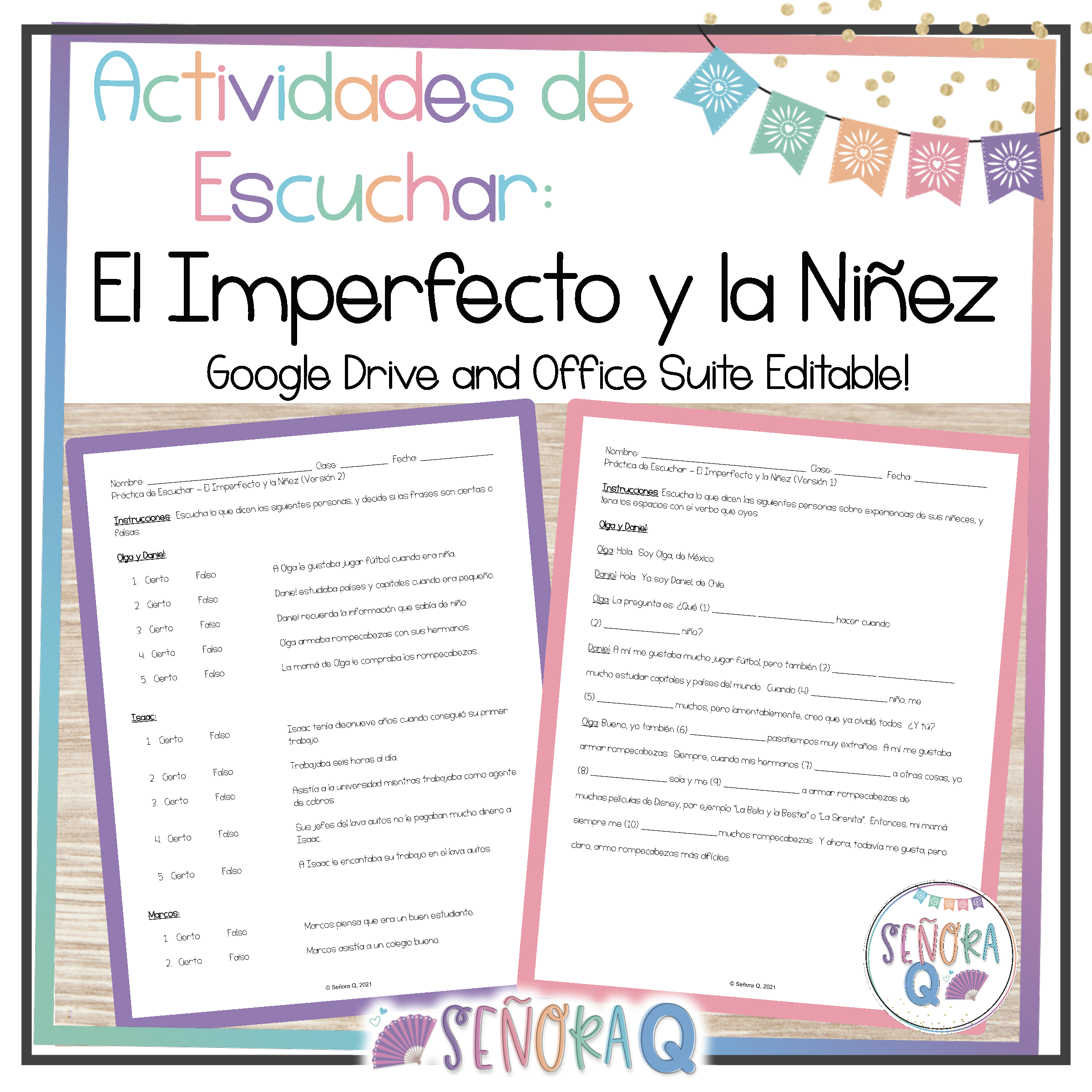 Listening Activities. Listening Activities. Find audios/videos of Spanish-speakers describing their childhoods, and write some comprehension questions for students. If you’d rather not scour the Internet looking for audio/video files or spend your time writing questions, no worries – I’ve done it for you! Check out this set of listening activities that you can use in your classroom immediately!
 Interpersonal Writing (Email Reply) Activity. For this activity, write an email message on the topic of childhood and have your students write responses! This is a great way to strengthen writing abilities and is wonderful practice for students who will eventually go on to take the AP Spanish Language and Culture exam! You can get a ready-to-use email reply on childhood and the imperfect here!
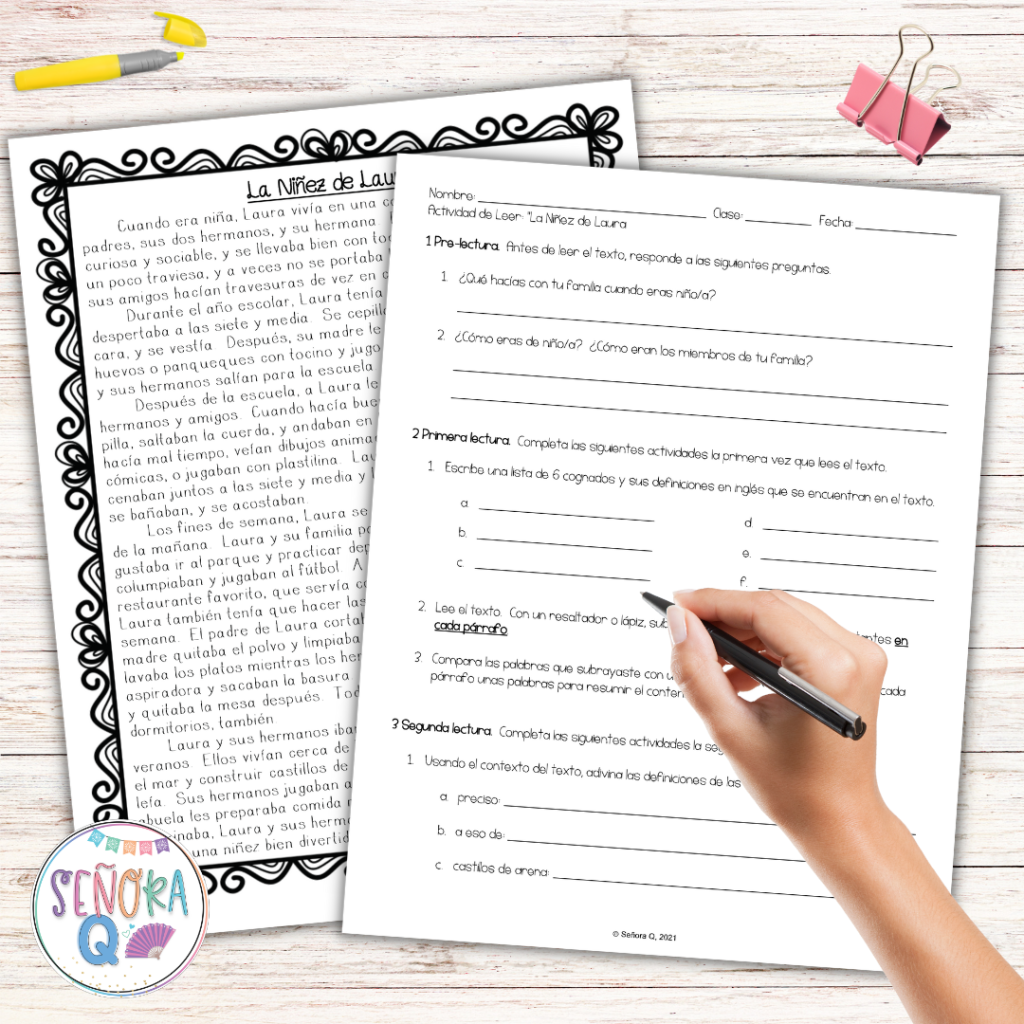
 Reading Activity. Write a comprehensible story about your childhood or the childhood of a fictional person. Then, write some corresponding activities, like pre-reading questions, identifying cognates, using context clues to guess definitions of unfamiliar words, comprehension questions, and/or a comparison writing activity. Grab an original, ready-to-to print text with corresponding activities here!
 Interpersonal Speaking (Simulated Conversation) Activity. In this activity, students participate in a pre-recorded conversation and respond to questions/prompts on their childhoods! First, write your script – what questions/prompts are students going to listen and respond to? Then, make your recording, making sure to leave some time (20-30 seconds or so) between each question/prompt so that students can answer. When I’m ready to do this activity in my classroom, I always provide my students with a conversation outline (but not a transcript) to guide them through the activity. Then, I have my students record the conversation. This is a fantastic way to assess students’ abilities to hold a conversation on a familiar topic in Spanish!
- If you like the idea of this activity, but the creation aspect of it seems like a lot, I’ve got you covered! This resource contains pre-recorded audio prompts in multiple formats, teacher script, guiding outline for students, and editable scoring rubric! Check it out and use it in your classroom today!
Homework/Sub Work Options:
If students are going to complete work independently for homework or if you are out of the classroom and students are with a substitute, these are great activities:
- Practice Worksheets. Worksheets are easy to assign for both homework and as an assignment for a substitute! Just print, distribute, and go! Grab some here!
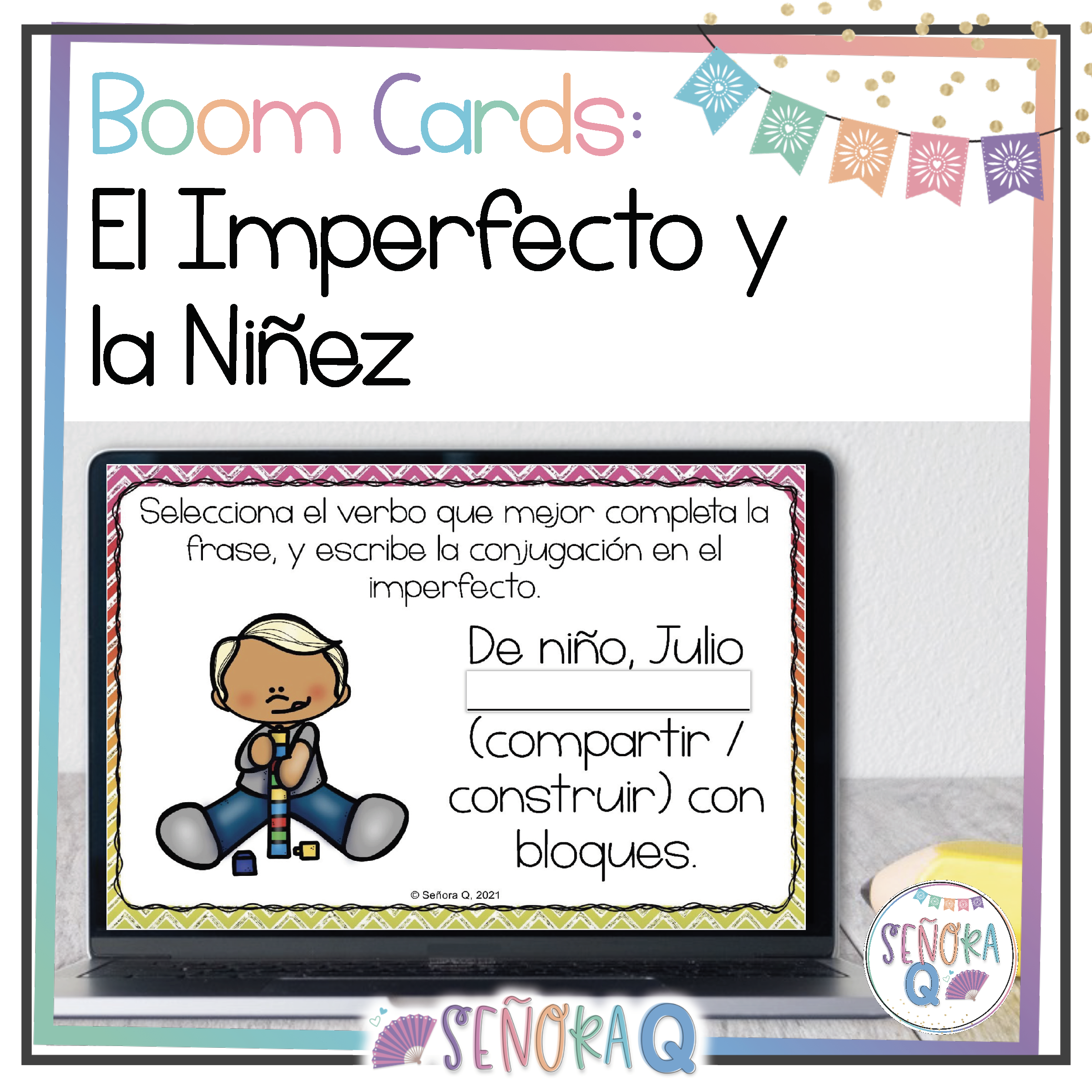 Boom Cards. Boom Cards are self-checking digital task cards that you can easily assign to students to have them practice at home or in class when you’re not there! The really nice thing about Boom Cards is that students receive immediate feedback about how they’re doing. You don’t need a paid account to assign Boom Cards, but there are some nice features available with an upgraded account, such as detailed student reports! If you’re interested in trying Boom Cards, here’s a deck on childhood and the imperfect!
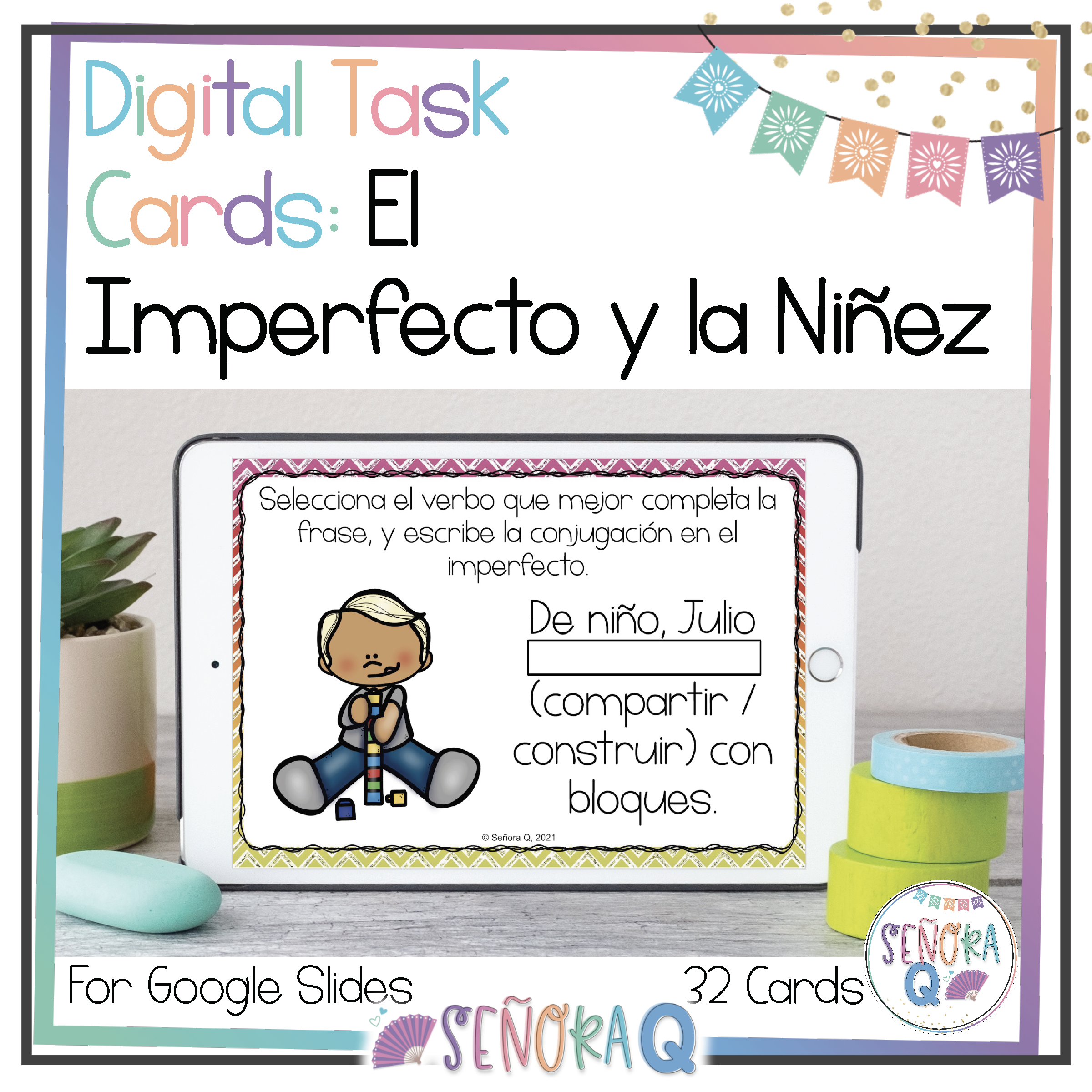 Digital Task Cards for Google Slides. You can have your students complete task cards at home, or during the school day when you’re not there by using digital versions! You can make task cards using Google Slides, typing up one question/prompt per slide. The nice thing about digital task cards is that you can easily add images! Here’s a set of digital task cards on childhood and the imperfect for you!
- Digital Scrambled Sentences Puzzle for Google Slides. You don’t have to scrap your scrambled sentences activity just because you’re out sick! On Google Slides, type up each word of your sentences in an individual text box. Scramble the text boxes and have your students put them back in a logical order! You can put as few or as many sentences together on each slide as you like! The more sentences per slide, the more challenging the activity will be for students, so you can use this as a way to provide scaffolding or additional challenges to students who would benefit from them! Did you know that my scrambled sentences activity comes with both print AND digital versions? Be prepared for any scenario and check out the resource here!
 I hope this gave you some ideas, profe! If you liked all of these activities (and then some), check out my Imperfecto y la Niñez Mega Bundle here! Save time, money, and get a ton of resources to help your students master the childhood unit – win, win, win!
I hope this was helpful! Please feel free to leave me a comment or send me an email if you have any questions! Have a wonderful week, profe!
 Señora Q