
¡Hola profe! Last week, I wrote about getting started using proficiency-based activities in your Spanish classes. As a follow-up to that, I wanted to talk about grading options to help make using proficiency-based activities as painless as possible for both you and your students!
#1: Rubrics
When you’re grading your students proficiency levels (novice high, intermediate mid, advanced low, etc.), rubrics are a great way to place your students into the appropriate categories. If you’re not sure about what the markers are for the different proficiency levels, check out ACTFL’s proficiency guidelines, with examples, here!
When creating your rubrics, you’ll first need to determine the target proficiency level that you want your students to meet. This is the typical breakdown in my school, for example:
- Spanish 1: Novice Low – Novice High
- Spanish 2: Intermediate Low
- Spanish 3: Intermediate Mid
- Spanish 4: Intermediate High
- Spanish 5/AP: Advanced Low
Personally, when I create a rubric, I like to put the target proficiency level as the second highest category on the rubric. For example, if the target proficiency level is Intermediate Low, my 4 categories on the rubric would be Intermediate Mid, Intermediate Low, Novice High, and Novice Mid. This is because some students will usually score above the target proficiency level, and in my opinion, they deserve an A+. Students within the target proficiency level typically earn a grade in the B+ to A range. But, the beauty of a rubric is that you can customize it however you want!
If you want to see some examples of rubrics you can use, this site has some great examples!
So, how do you convert proficiency levels like Intermediate Low to a points value that you can put into your gradebook? I use a grade scale like this:

As you can see, if students complete the task as asked, they do not score lower than a 70%. I have found that this helps my students feel calmer and more receptive to completing proficiency-based activities and assessments. However, students who do not complete the task by answering in English or by providing answers that are off-topic do receive scores lower than a 70%.
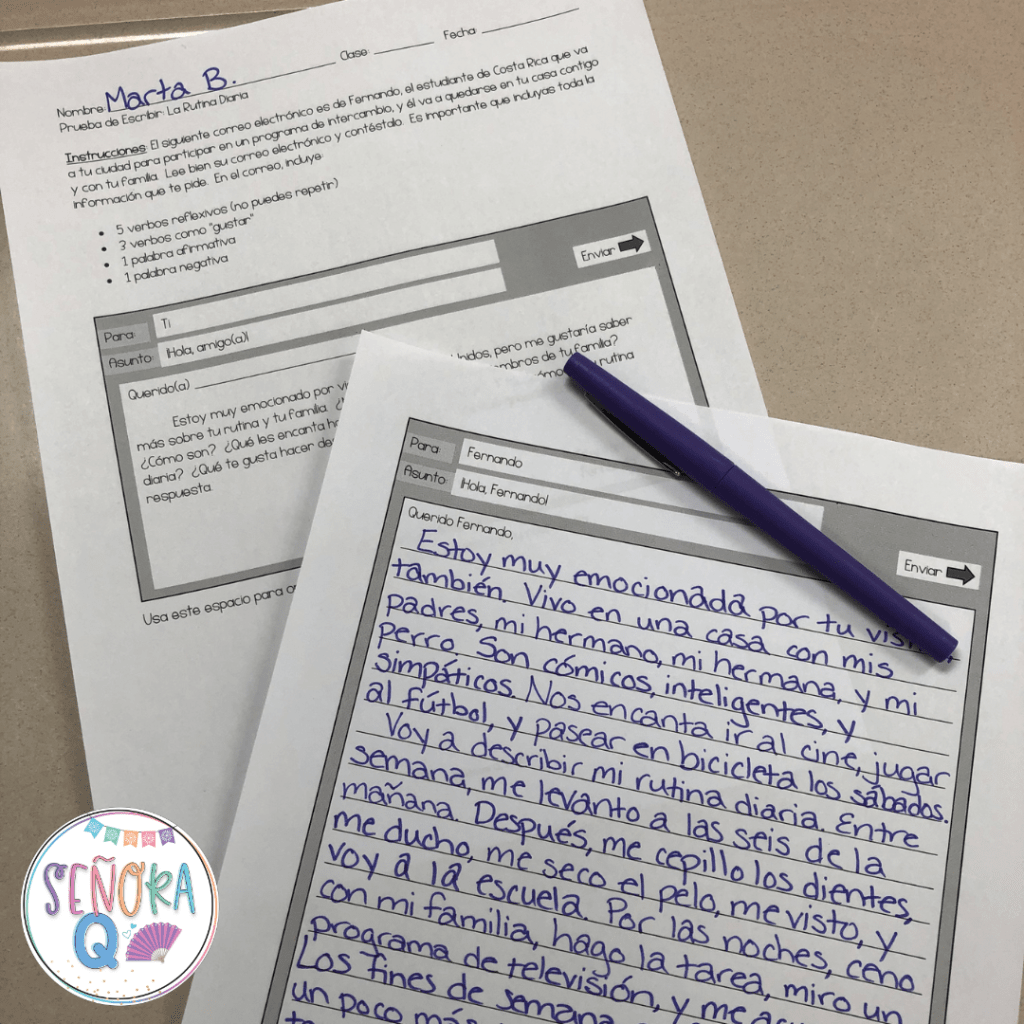
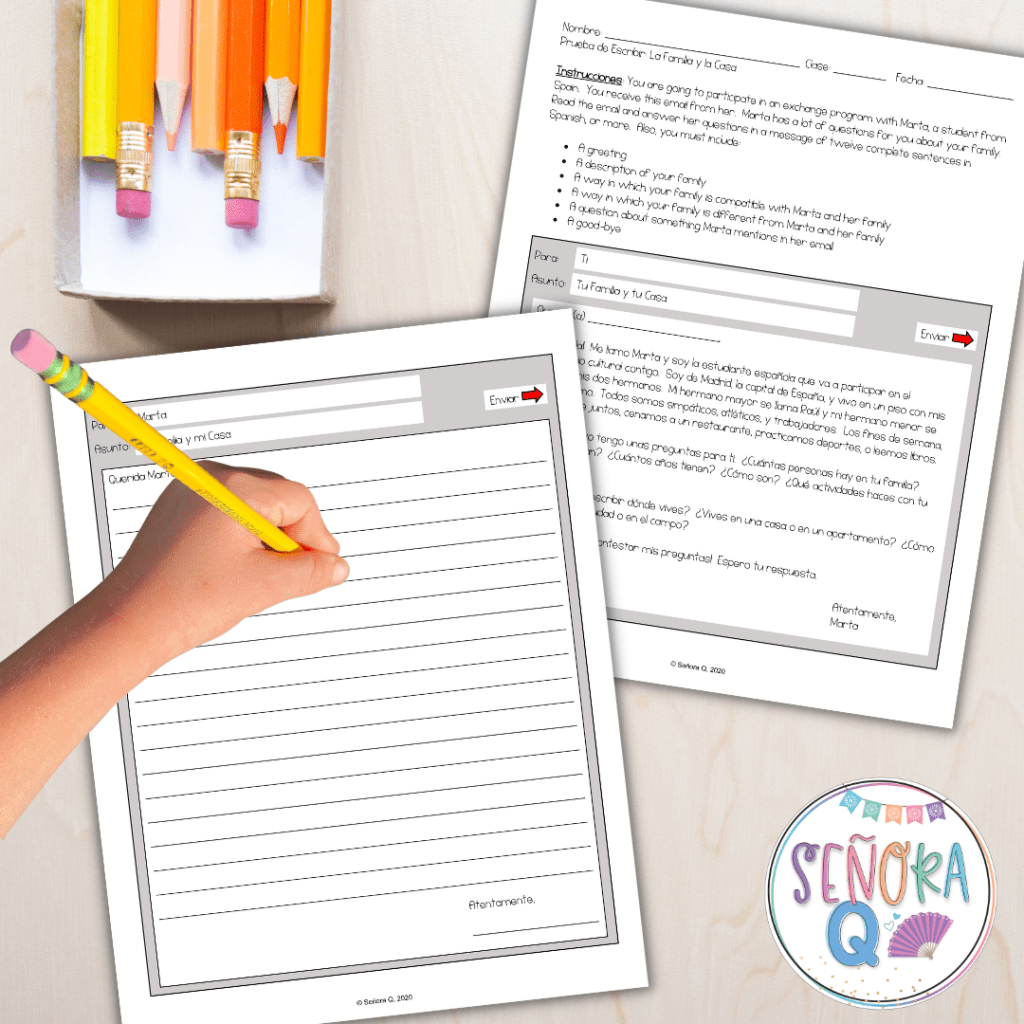
If you want to try a proficiency-based interpersonal writing activity with rubric for FREE, check this out:
Try it Free!
Sign up below to receive a FREE email reply on family life that your Spanish 1 students can totally rock!
If you want to try more proficiency-based interpersonal writing activities, I have several to choose from here!
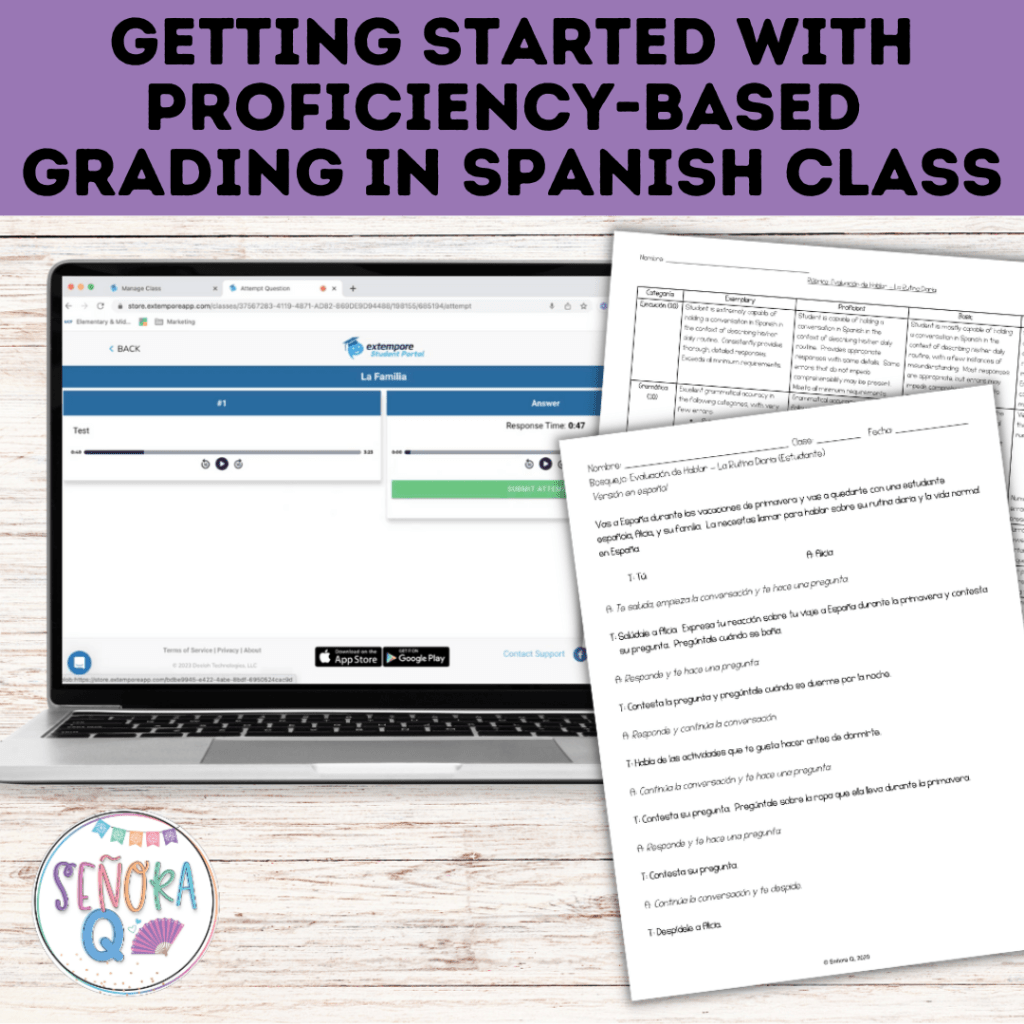
Looking for interpersonal speaking activities? I’ve got you covered! Check out my ready-to-use simulated conversation activities here!
#2: Sliding Scales
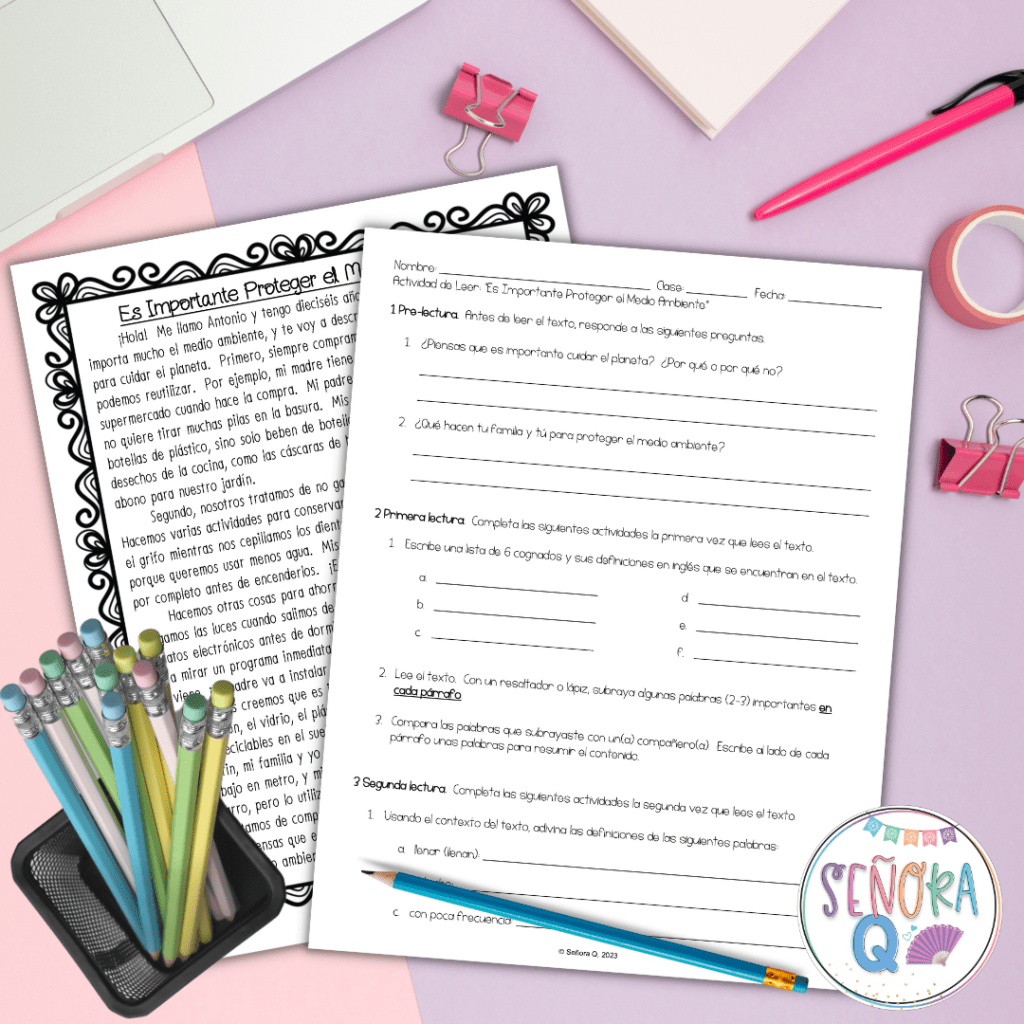
Do you ever hesitate presenting your students with authentic texts or audios because you worry they’ll be too challenging for students? I totally get it, and I’ve been there. But did you know that on the AP Spanish Language and Culture exam, students WILL pass with a 3 if they answer only 50% of the multiple-choice interpretive listening/reading questions correctly?
Honestly, if that’s the standard for the College Board, that’s good enough for me!
After I learned that, my views on grading interpretive reading and listening questions totally shifted! Instead of deducting points for each individual incorrect answer, I like to utilize a sliding scale. Below is an example of a sliding scale that I have used for a Spanish 4 authentic listening activity. To accompany the audio file, students had 7 multiple-choice comprehension questions to answer. Here is how I scored my students:
| Number of Questions Correct (Out of 7) | Grade (Out of 14) |
| 7 | 14 (100%) |
| 6 | 13 (93%) |
| 5 | 12 (86%) |
| 4 | 11.5 (82%) |
| 3 | 10.5 (75%) |
| 2 | 9.5 (68%) |
| 1 | 8.5 (61%) |
I like sliding scales because, like rubrics, they keep my students from feeling overwhelmed by authentic texts and audios, and they don’t worry that these tasks are going to completely ruin their grades. The sliding scale is enough for students to take the activities seriously and try their best, but it is much more forgiving than simply giving students 2 points for every correct answer. Furthermore, students DO appreciate the generosity of the sliding scale and know that you are trying to challenge them without failing them. Even if they don’t say it to you, students will be grateful for this!
#3 Reflection and Remediation
To help my students understand their own proficiency levels and how to improve in the future, I often have my students complete reflections and/or complete remediation.
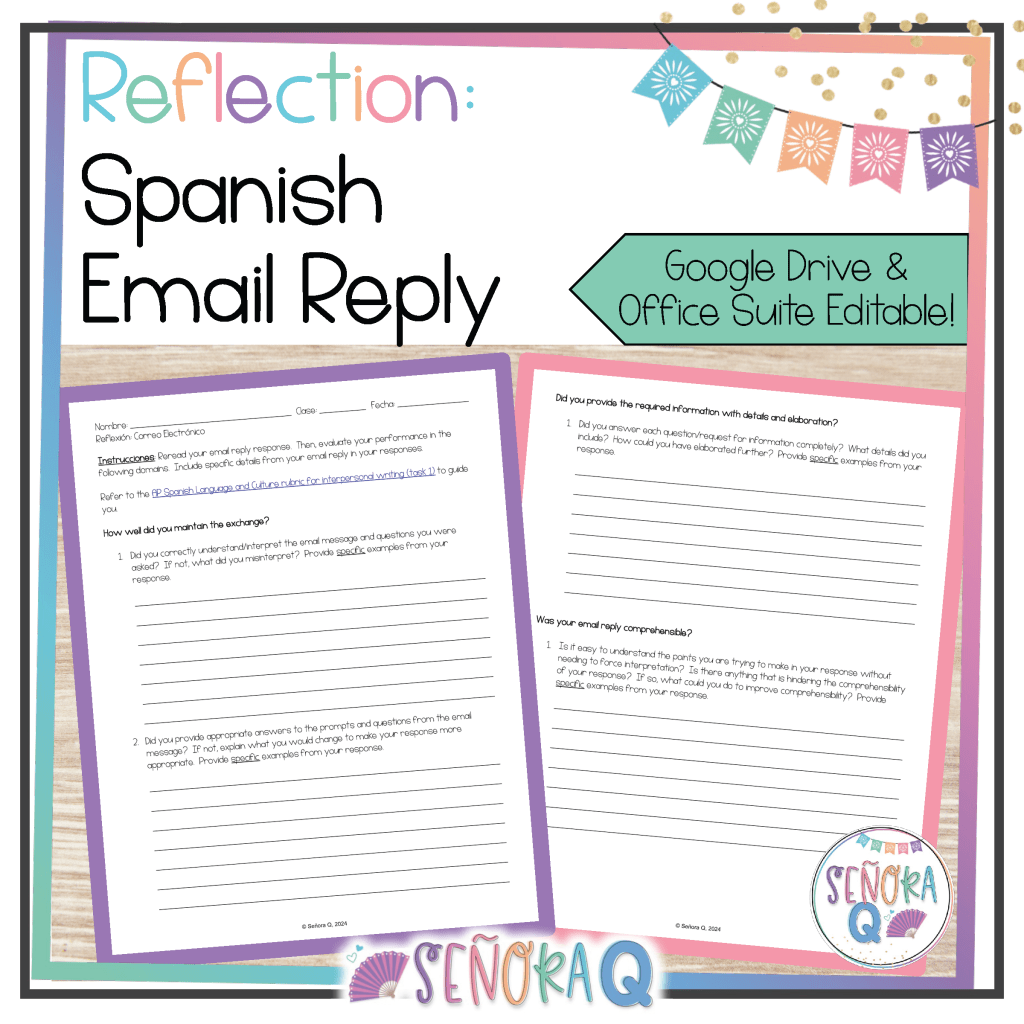
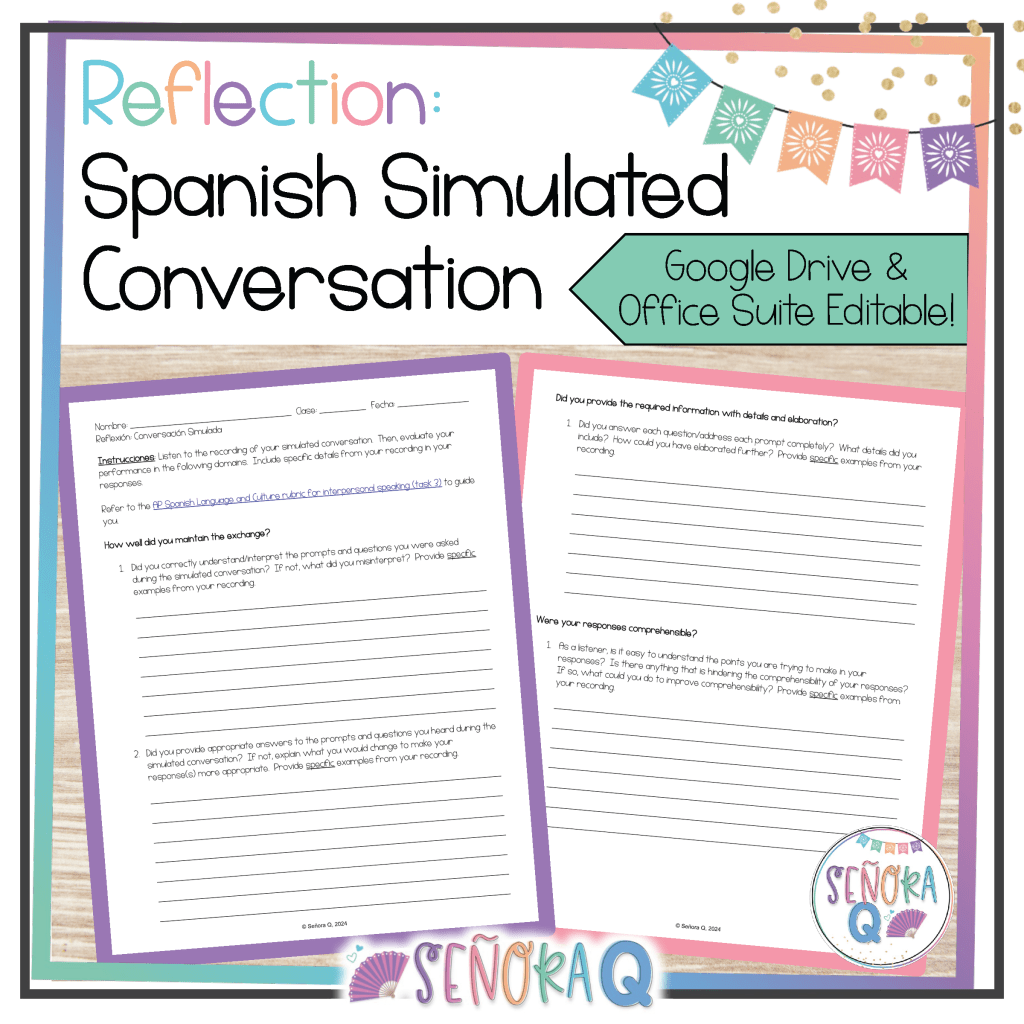
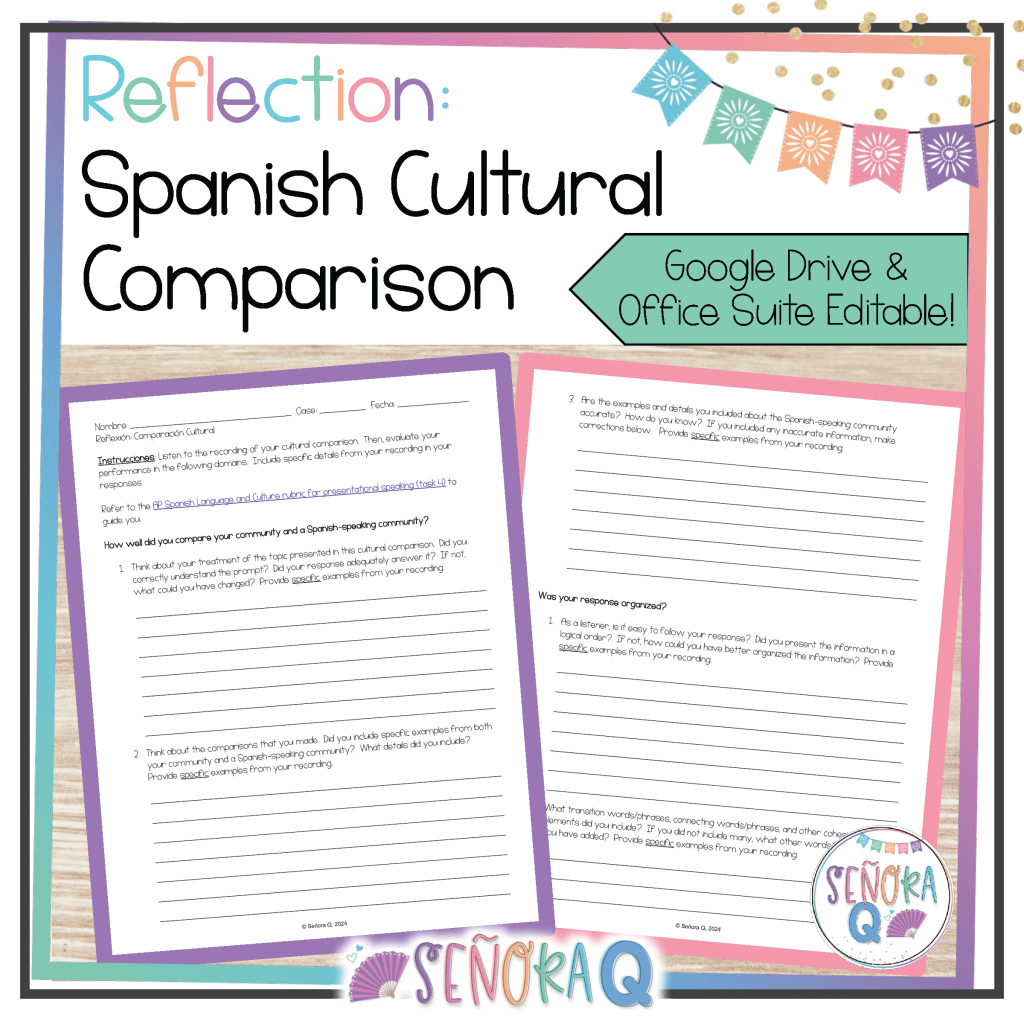
When students complete their reflections, I have them discuss their abilities to use the language. In my experience, reflections are most beneficial for writing and speaking activities. To complete their reflections, students supply evidence from their own responses to respond to questions about how well they used their Spanish to complete the task.
I like to give students a separate grade for completing their reflections. Alternatively, if your students are comfortable with the idea, you could have students provide feedback to each other using these questions. Getting a third perspective can be really valuable for students!
Interested in having your students complete reflections this year? I’ve got you covered! Check out these editable reflection forms you can use in your classroom this year!
For reading and writing tasks, I usually offer remediation opportunities for students who scored below a certain threshold (usually below 70%). I’ll ask students to come see me outside of class time and will give them the opportunity to review the text or the audio and to see their responses to the questions. Then, I’ll have students try to correct their answers or complete an error log in which they explain why their original response was incorrect and why they selected the new answer. If students do well on their remediations, I allow them to earn up to a C-.
You can certainly have ALL your students remediate, regardless of their scores! There are also other ways you could choose to score your students’ remediations. Here are some possible options:
- Offer a separate class work score for the remediations. Nothing huge – maybe 5 or 10 points.
- Have a quarterly rubric for students’ completion of remediations throughout the marking period, and have the rubric be its own grade in your grade book.
I hope this was helpful! Please feel free to leave me a comment or send me an email if you have any questions! Have a wonderful week, profe!
 Señora Q