
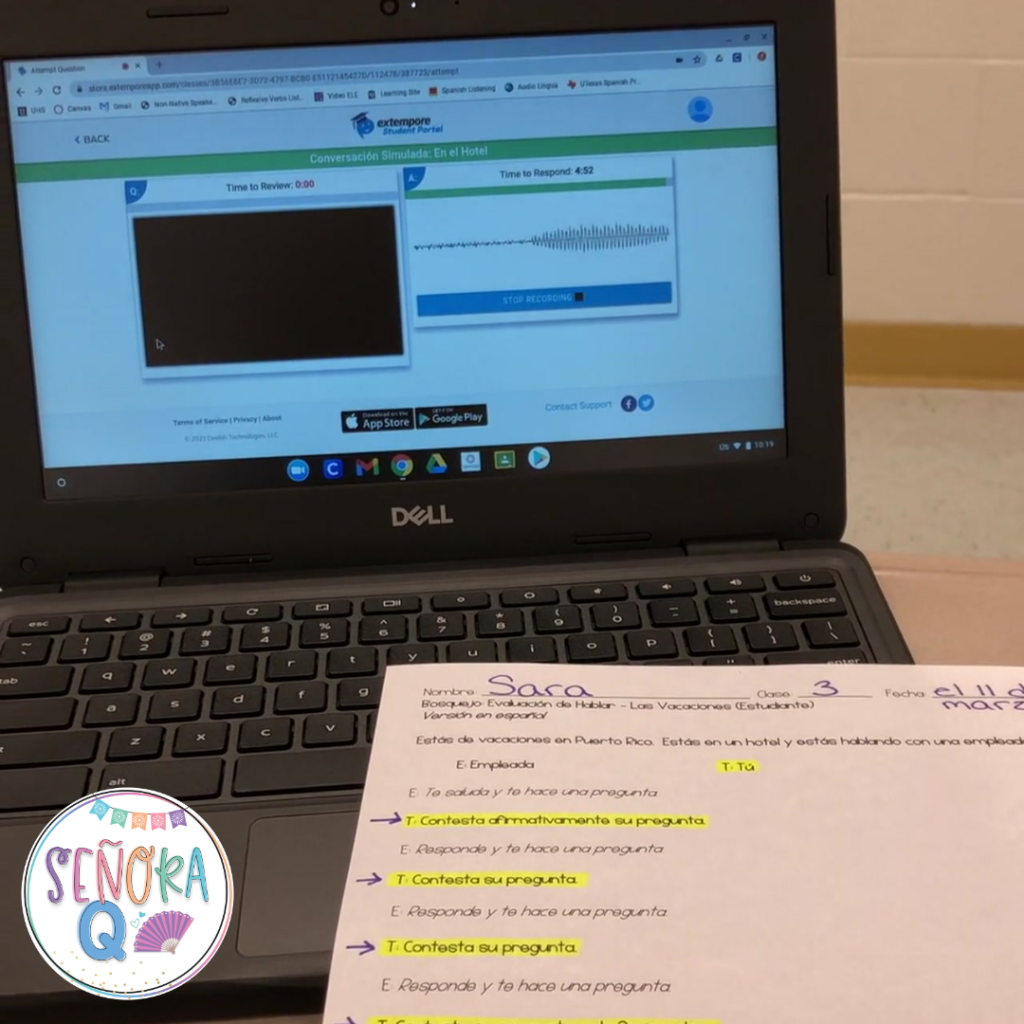


¡Hola profe! Let me ask you a question: Think about the students that you’ll have coming into your classes this coming year. When the year is done, what do you want these students to be able to do?
If your answer is something like, “I want my students to be able to understand Spanish that they see and hear in the community” or “I want my students to be able to hold a (level-appropriate) conversation in Spanish,” then let’s talk about how proficiency-based activities and grading can help you meet that goal!
If you’re not super familiar with the ACTFL proficiency guidelines, you can check them out (with examples) here! This can help you understand what criteria to look for to accurately rate your own students!
When you’re focusing on proficiency in your classroom, the major focus is how well can students understand and/or communicate a message in Spanish as opposed to knowledge about the language, such as vocabulary terms and grammatical concepts outside of a communicative context. (Now, I believe that knowledge of vocabulary in Spanish and basic grammatical competence are necessary to communicate successfully in Spanish, but proficiency-based activities and grading are concerned with the application of this knowledge.) Since students will need to apply their knowledge when they use Spanish in real-world scenarios, incorporating proficiency-based activities and grading this coming school year can help ensure that your students are able to function in Spanish once they leave your classroom!
Please note that you do NOT need to overhaul your entire curriculum or grading system to incorporate proficiency-based activities. You can add them to what you’re already doing and it WILL benefit your students!
Here are some activities that you can add into your units to give your students the practice needed to be able to understand and use Spanish in real-world situations:
#1: Have students listen to authentic audios and videos in Spanish.
Audio files from textbook companies can give your students awesome practice with the topics of your curriculum. Definitely use them! However, adding audio files featuring native speakers from a variety of Spanish-speaking countries is really going to benefit your students! Less-than-perfect audios have their uses too – with regular practice, students can learn to tune out background noise and other imperfections in the audio files. This is great for helping your students understand Spanish they hear in real-life situations!
So, where can you get these audio files? There are certain free websites out there, such as the University of Texas site and Spanish Listening that allow you to choose audios based on topic or students’ proficiency level, which is great! However, you can use more complex audios and modify the task you want your students to complete. For example, have your Spanish 1 students listen to a short news clip. How did the hosts greet each other? Did they mention the day or the date? You will likely be able to pick out something your students should understand. Focus on that!
What kinds of activities should you create to accompany the audios? Here are some great choices to help develop students’ listening skills are:
- Have students listen once or twice and make a list of the words they understand, then share with a partner.
- Provide true/false questions (possible extension: correct the false statement)
- Have students fill in the blanks of the transcript with missing words
- Have students respond to multiple-choice comprehension questions
- Have students respond to open-ended comprehension questions
- Have students illustrate what they heard
- After listening a few times, ask students to give a one-sentence summary or the main idea of what they heard
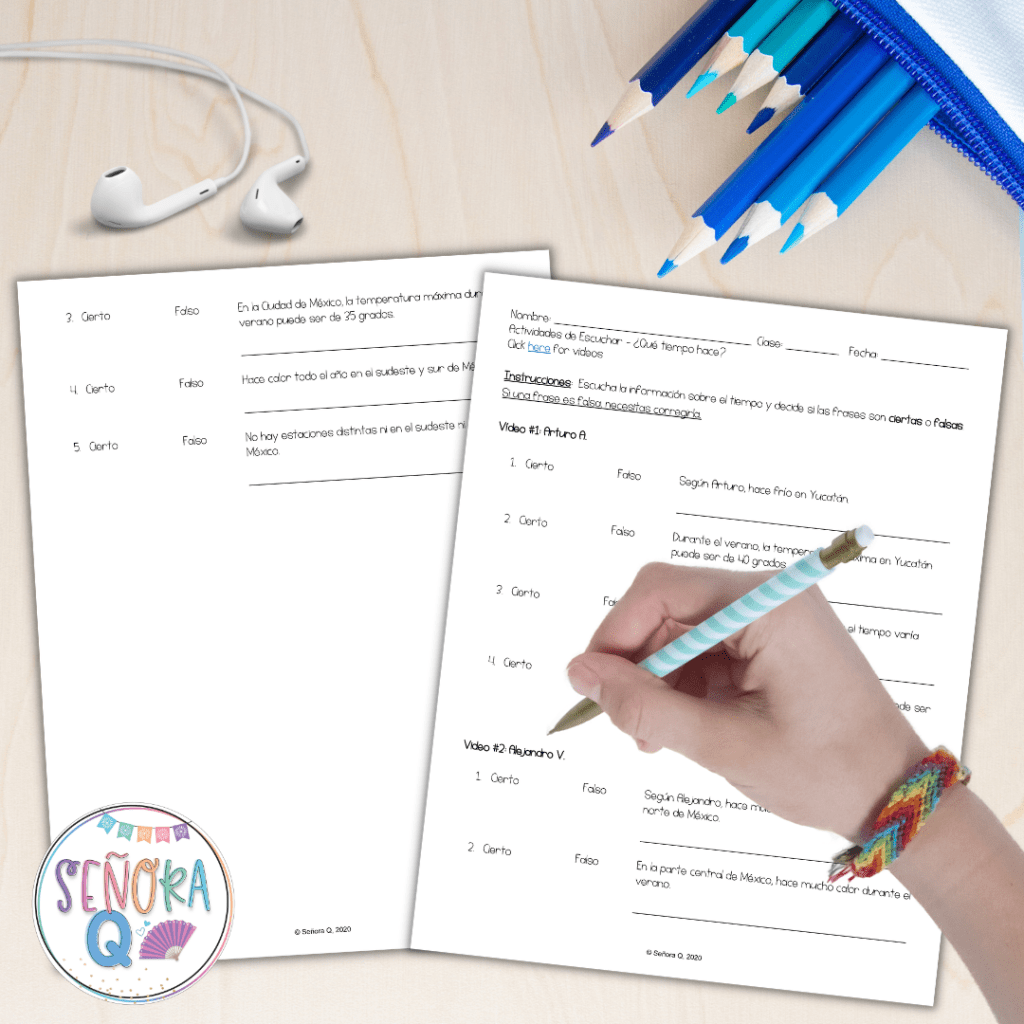
You might be thinking, “I don’t have time to go through the entire Internet to find audio files that work for me!” Don’t worry, I’ve got you! Try a FREE Spanish weather listening activity featuring two different native Spanish-speakers here!
Try it Free!
Sign up below to receive a FREE Spanish weather listening activity featuring two different native Spanish-speakers!
If you’d like to see more, browse ALL my listening activities here!
#2: Have students read authentic texts in Spanish.
Literally anything with Spanish words on it can be used as a reading activity! Posters, brochures/pamphlets, children’s books, advertisements – all of these are great! If you’re not sure where to start, pull up Google and search for the topic you’re studying. Personally, I like to browse Spanish-language news sites like El Pais and BBC Mundo, but the world (or, in this case, the Internet) is your oyster. Social media posts are great too!
One thing to keep in mind: reading authentic resources in Spanish can be TOUGH for students. Having students practice reading strategies is really beneficial. Some of my favorites are:
- Identifying cognates
- Highlight topic sentences
- Summarize main ideas of paragraphs (this can be done in as little as a few words or a sentence)
- Use context clues to guess definitions of new words that appear in the text
Train your students to complete these activities every time they read something in Spanish, and over time, it will become a habit and students will use these strategies without even realizing they are doing so!
As far as comprehension activities, I utilize a variety of question types, but my favorites are multiple-choice questions, true/false questions (correcting any false statements), and open-ended questions. I will also sometimes provide my students with true information from the text (in English), and will ask them to identify where that information is given in the text in Spanish.
Regular reading, practicing reading comprehension strategies, and answering comprehension questions will set your students up to successfully read for comprehension in Spanish!
If you’re interested, check out my ready-to-print reading activities on a variety of topics here!
#3: Have students practice holding conversations in Spanish.
If students are going to be able to converse in Spanish outside of the classroom, they have to practice doing so inside the classroom. Have students talk to their classmates – you could have them role-play a situation, or simply give them a topic to discuss, start a timer, and tell them they have to talk for x number of minutes. I generally find that students try harder when they record themselves and submit their recordings (whether you issue a formal grade for it or not).
You can also have your students participate in simulated conversations. The simulated conversation is an AP Spanish Language and Culture test task, but I promise that it’s doable even in Spanish 1! You can include a simulated conversation in your very first unit! Have your students pretend they are introducing themselves to a classmate. They can exchange names, ages, how they are doing, where they are from, and so on!
The first thing you’ll need for a simulated conversation is a script. What questions/prompts are your students going to listen and respond to? Once you have your script, I recommend making a recording of you or a colleague reading it. Make sure to leave time between each question/prompt for your students to answer! (I usually leave 20-30 seconds.) A recording will be necessary if you plan to use technology to have students complete the simulated conversation! See this blog post for tips on how you can use technology for simulated conversations!
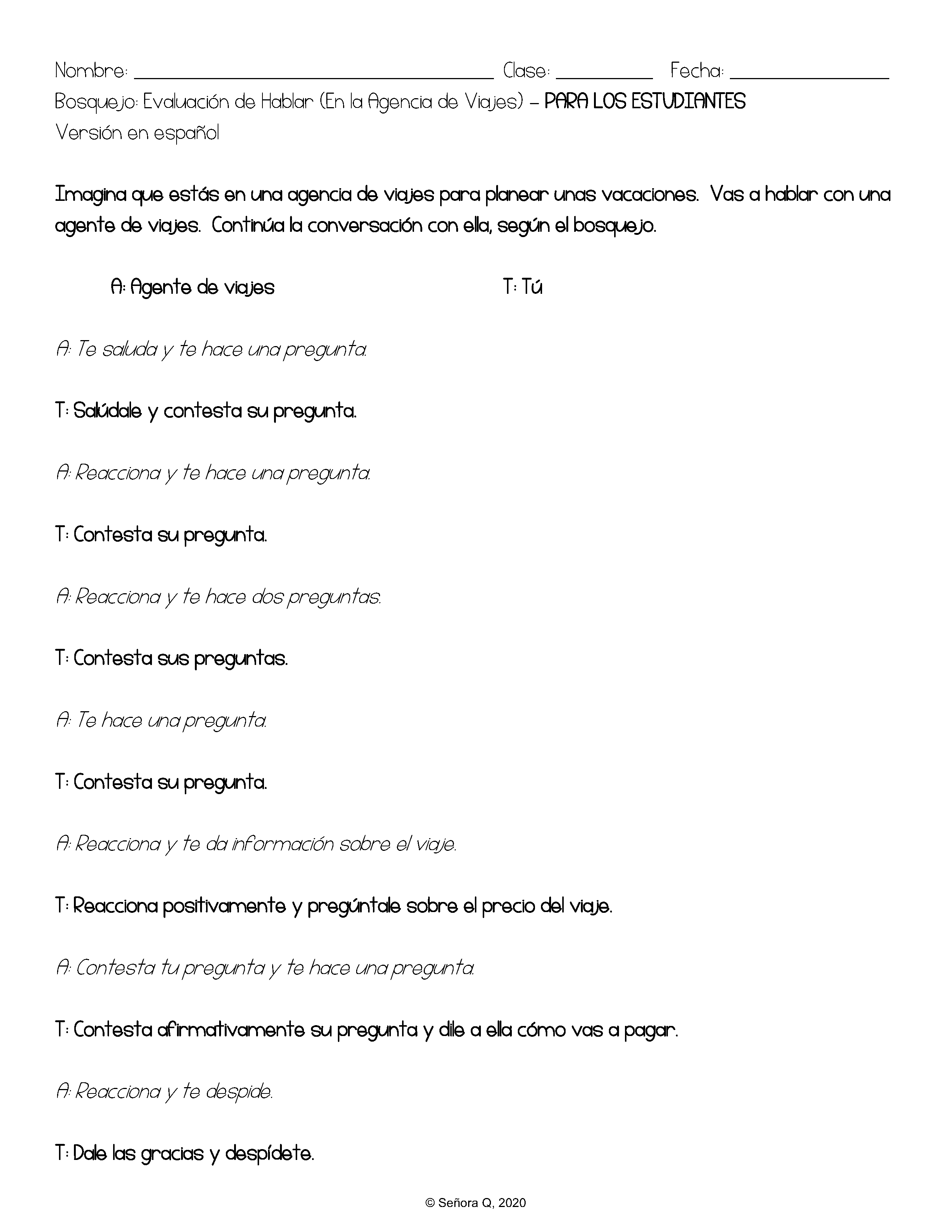
The next thing I recommend creating is a conversation outline to help guide students through the conversation. At the top, briefly describe the scenario so that students have some context for the conversation. Then, provide them with prompts (but not a transcript) to help students complete the task. Here’s an example of what one of my conversation outlines looks like:
Want to try some simulated conversations? Save time and energy by grabbing one of these ready-to-use simulated conversation activities here!
#4: Have students practice writing to others in Spanish.
Having students write and respond to others in Spanish will enable them to do so successfully in real-world situations once they leave your classroom! You can have your students write shorter, text-message length messages to each other. It is quite possible that students would need to communicate in this way in authentic scenarios!
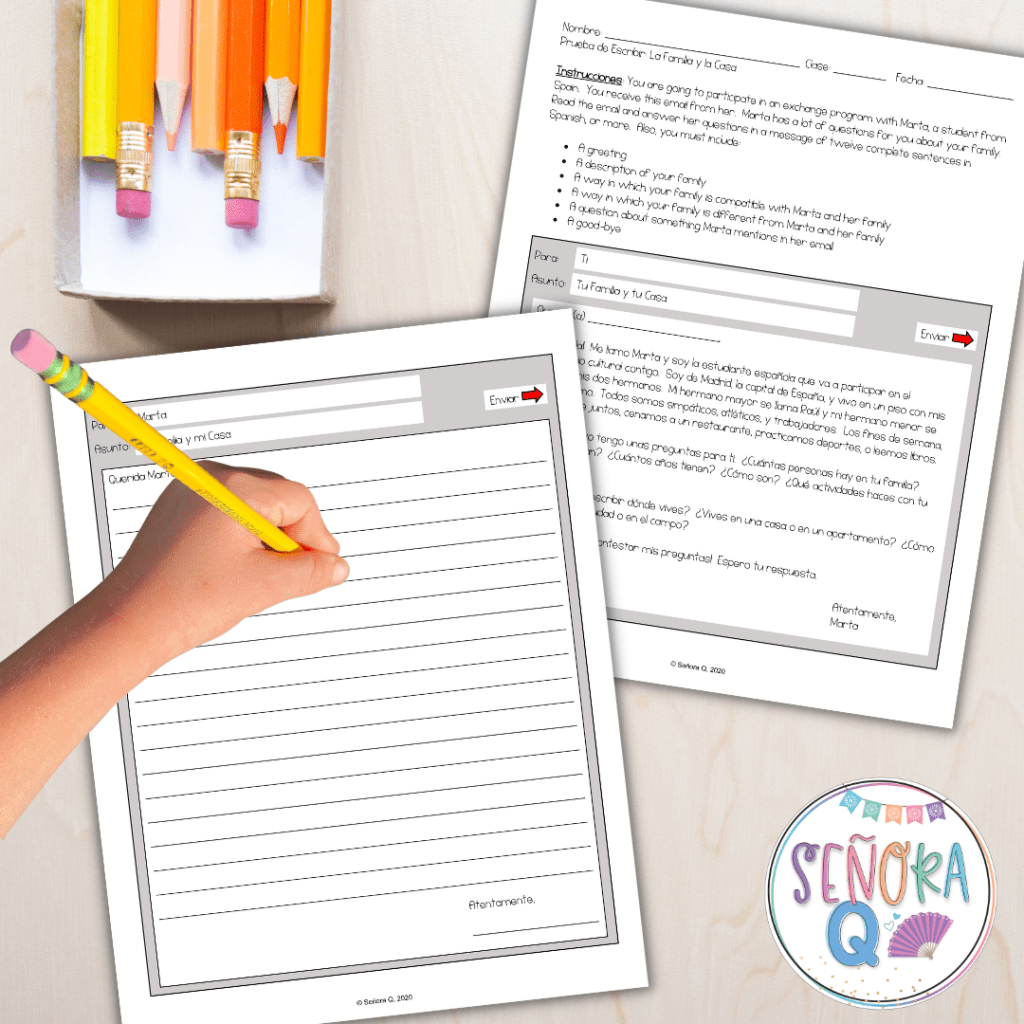
Another, longer option is the email reply. This is also an AP Spanish Language and Culture exam task, but one that has real-world applications. To complete this task, write an email message, using language that your students will understand. Then, give the email to your students and have them write a reply! The possibilities are endless – you can write an email on virtually any topic you’re studying. For example, write an email as an exchange student who is asking for introductory information from their host. You can ask students their names, how they are doing, where they are from, what they like to do, and other questions that novice-level students would be able to answer. Also, have your students ask follow-up or additional questions in their replies!
Want to try a FREE email reply on family life? Grab it below!
Try it Free!
Sign up below to receive a FREE email reply on family life that your Spanish 1 students can totally rock!
You can browse ALL my ready-made email reply activities here!
I hope this was helpful! Next week, I’ll talk about options for grading proficiency-based activities, so stay tuned! Have a wonderful week, profe!
 Señora Q