



¡Hola profe! I hope your summer is going great and that you’ve had some time to relax and recharge your batteries a bit!
If you’re like me, it can be nearly impossible to keep school completely off the brain, even during the summer. I spend a lot of time over the summer reflecting on the previous school year and thinking about what I’ll keep the same and what I’ll change when August comes around again. Some of my best ideas and insights come to me over the summer when I’m more relaxed and have the time to really think through all my options!
This week, I’ve been reflecting on hybrid teaching. In my district, hybrid classes meet face-to-face every other day, and on the off-day, students complete asynchronous assignments. These courses became much more popular at my school over the past two years, after students had the opportunity to experience different learning environments in the wake of the COVID-19 pandemic.
I taught a hybrid course last year for the first time, and I definitely learned a lot! If you are teaching one this year or might possibly ever teach one in the future, I wanted to share the top three tips that I’d give anyone going into this type of teaching environment to ensure that everyone has the most successful year possible!
#1: Decide what you want your synchronous and asynchronous days to look like.
What kinds of lessons and activities do you want to do with your students face-to-face, and what lessons and activities would you prefer to have your students do on their own?
You may decide to use the flipped classroom model with their hybrid classes, meaning that they have their students go through introductory and certain practice activities during asynchronous class periods, and other tasks that might traditionally be homework or out-of-class assignments during synchronous class periods. Technology can certainly help you if you choose to go this route! Tech tools like EdPuzzle, Nearpod, and your LMS can make it easy to post notes, educational videos, and self-checking practice activities that your students can complete on their own! The benefit of this is that you can spend more time assisting students in communicative and project-based learning tasks when you meet face-to-face. As Spanish teachers, this can help cut down on translator use and ensure that students are producing language themselves.
Personally, I like to use synchronous days to introduce new concepts or units with my students. This is because if I introduce a topic on an asynchronous day and students have any questions, I am able to answer them in person. So, I typically take the first synchronous class period of a unit to introduce the new topic and answer any questions that students may have. At the end, I do a quick formative assessment, usually in the form of an exit ticket, to ensure that students have understood the topic. This helps me choose the activities for the asynchronous period the next day.
After a topic has been introduced, I usually reserve synchronous class periods for communicative activities, particularly interpersonal and presentational speaking and writing activities. I have found that, if I am looking for a true representation of students’ abilities in these areas, it is better to conduct these activities during face-to-face classes. On the asynchronous days, I tend to assign digital practice activities that reinforce the concepts we’re studying. I routinely use Nearpod, EdPuzzle, Boom Cards, and my LMS, Canvas, to do so. I like self-correcting activities because students get valuable feedback right away about their own understanding – are they getting the majority of the answers correct? If so, they know that they are understanding the topics well. If not, they know that they need some extra help or clarification.
I also like to assign interpretive reading and listening activities on asynchronous days. This is because I find that it is beneficial for students to work on these activities at their own paces – some need less time to read or listen and comprehend, while others need more. Using asynchronous class periods for these activities allows students to take the time they need to comprehend the input!
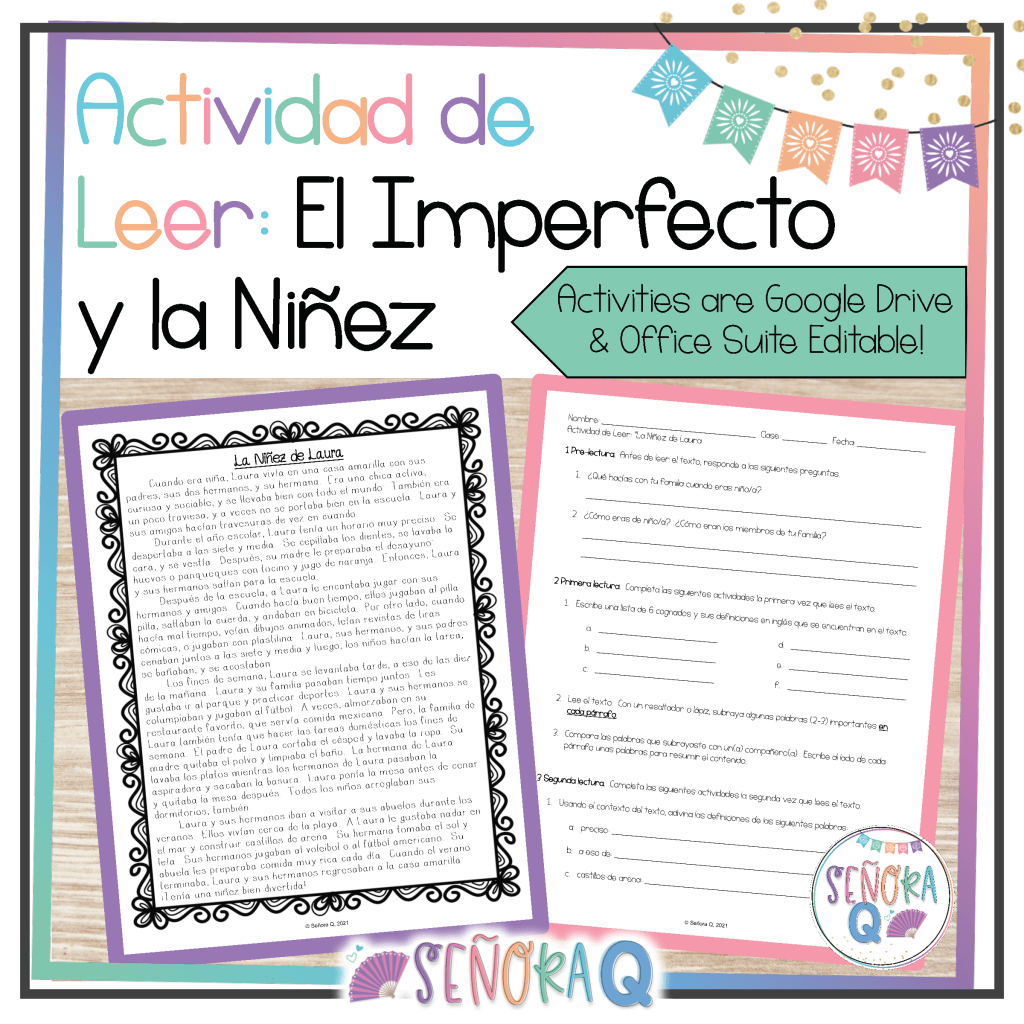
Here are some reading activities I have assigned to students on asynchronous days:


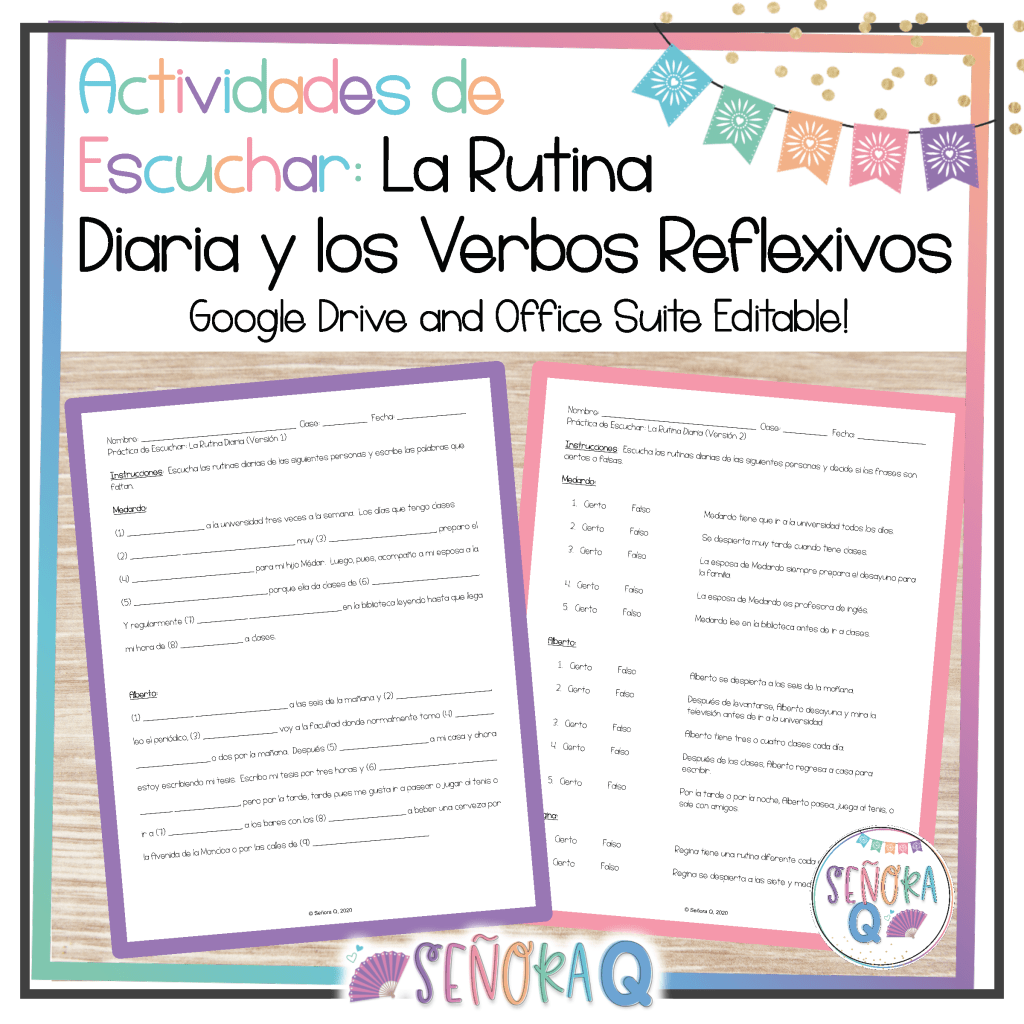
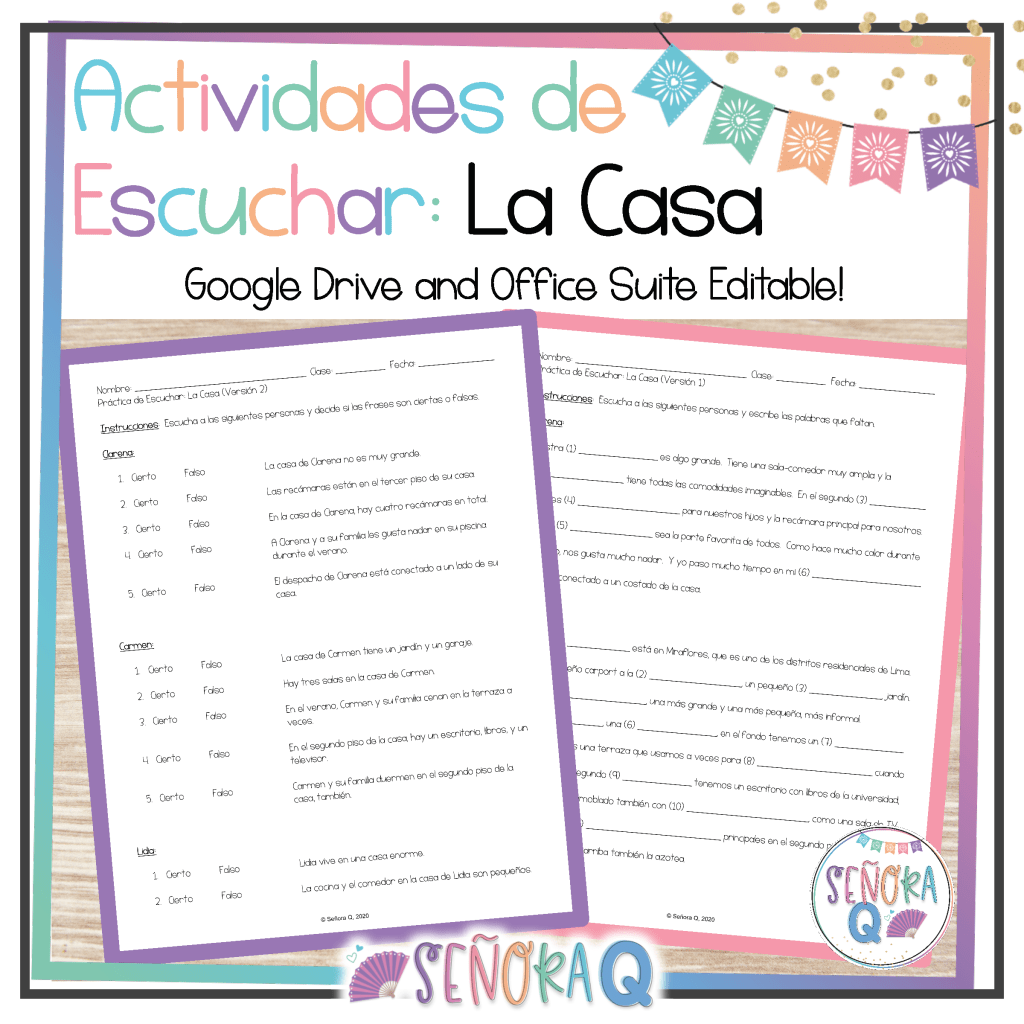
Here are some listening activities I have assigned to students on asynchronous days:

#2: Establish clear and consistent communication procedures.
When you are not meeting with your students face-to-face every day, it’s crucial that you are clearly communicating your assignments, expectations, and due dates with students. I use my LMS, Canvas, for this. For example, I post an announcement every day (for both synchronous and asynchronous classes), detailing what we will complete that day. If there are any digital links for students, I post those directly in the announcement, along with due dates and deadlines. That way, students know that they can go to one place and find everything they’ll need for class that day.
It’s also a good idea to let students know what to do if they have a question during an asynchronous class period – should they email you? If so, when can they expect a reply? Can they come to your classroom at any point in the day to discuss with you? Do you offer office hours where you answer students’ questions? You can post these procedures in your course syllabus, on your LMS, in your announcements, on your classroom door – anywhere and everywhere your students might go to look for them!
One of the most important lessons I learned in teaching a hybrid course this past year was the need to establish clear time boundaries. Our school policy indicates that students enrolled in hybrid courses do not need to complete class activities during school hours. Therefore, I would sometimes get emails very late at night from students who had questions. I had to tell students that I would not be able to answer emails after a certain time in the evening. It may feel like you have to be available 24/7 if you have students completing work asynchronously, but you absolutely don’t have to be! Let your students know from day 1 what your time boundaries are so students know what to expect from you and to help you keep a sense of work/life balance!
#3: Think about your system for keeping students accountable for asynchronous assignments.
One of the biggest concerns I had about teaching a hybrid course was making sure students completed their asynchronous assignments. I mean, it’s one thing when you can see your students and monitor what they’re doing, but when they have to be responsible for working on their own time, that’s a different story!
There are a couple ways to keep students accountable for their asynchronous work! Here are a few options you may want to consider:
- Assign grades for asynchronous work. This doesn’t have to be every assignment. You could grade assignments (or parts of assignments) at random. This is personally what I did and it worked very well! I usually entered one asynchronous assignment per week as a formal grade in the grade book. Alternatively, you could also create an asynchronous class participation rubric and assign it as its own grade at the end of the grading period. If you don’t want to assign tons of points, your online grade book may have “Complete/Incomplete” or “Submitted/Not Submitted” options – sometimes having those visually laid out in the grade book is a motivator for students, and provides valuable data for you, parents, and administrators!
- Establish make-up procedures for students who consistently do not complete asynchronous work. If students have several missing asynchronous assignments, you could require that they come make up those assignments outside of class, perhaps during a students’ study hall, during the asynchronous class periods, after school, or during lunch as you are able. Once students realize that you are serious about having them complete the asynchronous assignments and that they’ll have to come and make them up with you, they will be motivated to work harder to meet the asynchronous deadlines!
- Have students briefly present/share their asynchronous work at the beginning of the following day’s synchronous class. If students know that they will be expected to share their work with others, this can provide additional motivation to ensure that they come to their synchronous classes with their asynchronous work completed! If students are hesitant to present/share in front of the whole class, you could always have them share/present to just you as time allows!
I hope this was helpful! If you’ve taught a hybrid class before, leave a comment below with any advice you would add! Have a wonderful week, profe!
 Señora Q