


¡Hola profe! How many days do you have left in the school year? I’m still in school until the middle of June, but hopefully you’re out way before me!
Even though I’ve still got a little more than a month left in the year, I’ve begun thinking about final exams. We are required to give a test or a project at the end of the school year, and it is worth 10% of our students’ final grades in our courses. Is this the case for you, too?
Fortunately, my administrators give a decent amount of freedom to teachers as we design our finals. As long as it pertains to the material studied in the second semester, the final doesn’t have to follow any one specific format. My finals for my courses have looked different over the years, and if you are wondering what alternatives you could use in place of a traditional final exam, here are 3 ideas that have worked for me!
#1: Assign a Project
My students LOVE to be creative, and assigning projects in place of a traditional final exam has been a great way to provide these opportunities for them. I have found that students like being in control of how they want to use the language, and some of their best work has been while completing a project!
Note: I do not assign projects outside of class time. This is because I want my students to turn to me with questions, not Google, their older sibling who took my class three years ago, or their neighbor who takes college-level Spanish. I have found that making projects in-class-only assignments has produced the best, most authentic, and most original results.
So, what do you need for a good project? The good news is that it’s not a lot: just a set of instructions outlining what you want your students to do, and a rubric or checklist that tells students how you are going to assess them. Once you have these in place, the students will do the heavy lifting!
When coming up with my ideas for my projects, I ask myself how my students would use course material in a real-life scenario, and try to create a project that gives students the chance to use Spanish in a similar way. For example, when my classes study the preterite vs. the imperfect, I have my students write a children’s story in which they will use these two tenses to narrate past events. In real-world settings, students would have to understand the difference between these tenses when telling a story to others, and so this project mimics this task and helps improve students’ abilities to use these tenses to communicate outside of the classroom.
I also look for ways to make the projects personal, so that students will connect with them. When we study the imperfect tense, I have my students create a slideshow about their childhoods: what they used to be like, what they used to do, etc. Students really enjoy reminiscing about the things they used to do, the toys they used to play with, and the places they used to go. During the presentations, students love seeing their classmates’ baby pictures or seeing the similarities and differences between themselves and their peers.
What should you include in your rubric? Well, that’s totally up to you! Ask yourself what you really want your students to show you by completing this project, and put those points on the rubric. Do you want them to use certain themed vocabulary? Add it to the rubric! How about checking for a grammar point you’re studying? Make it another category! How about comprehensibility or fluidity of language? Category #3! Task completion or group processes (if applicable)? Definitely! You could also use proficiency-based rubrics for presentational speaking and/or writing, depending on your project – I think the AP rubrics are worded well, and they can be used in all levels. All you have to do is remember that “appropriate” looks different in Spanish I vs. Spanish III vs. AP Spanish, and with that in mind, the AP rubrics can be used across the board – but that’s another post for another day!
Here is a FREE project on family that you can use in your classroom immediately – just print and go!

Try it Free!
Sign up below to receive a FREE project on family that is PERFECT for Spanish 1 students!
You can find some of my favorite projects (with rubrics!) below – save time and energy while still providing your students with the opportunity to be creative and show what they have learned this semester!


#2: Assign a Performance Task
Rather than a traditional final exam, you can assign your students a performance task to complete. Ideally, this performance task would focus on one (or more) modes of communication (interpretive, interpersonal, or presentational) and would mimic a real-world task. This would allow you to assess students’ abilities to use the language in authentic situations.
Some performance tasks that you could use as your final could include:
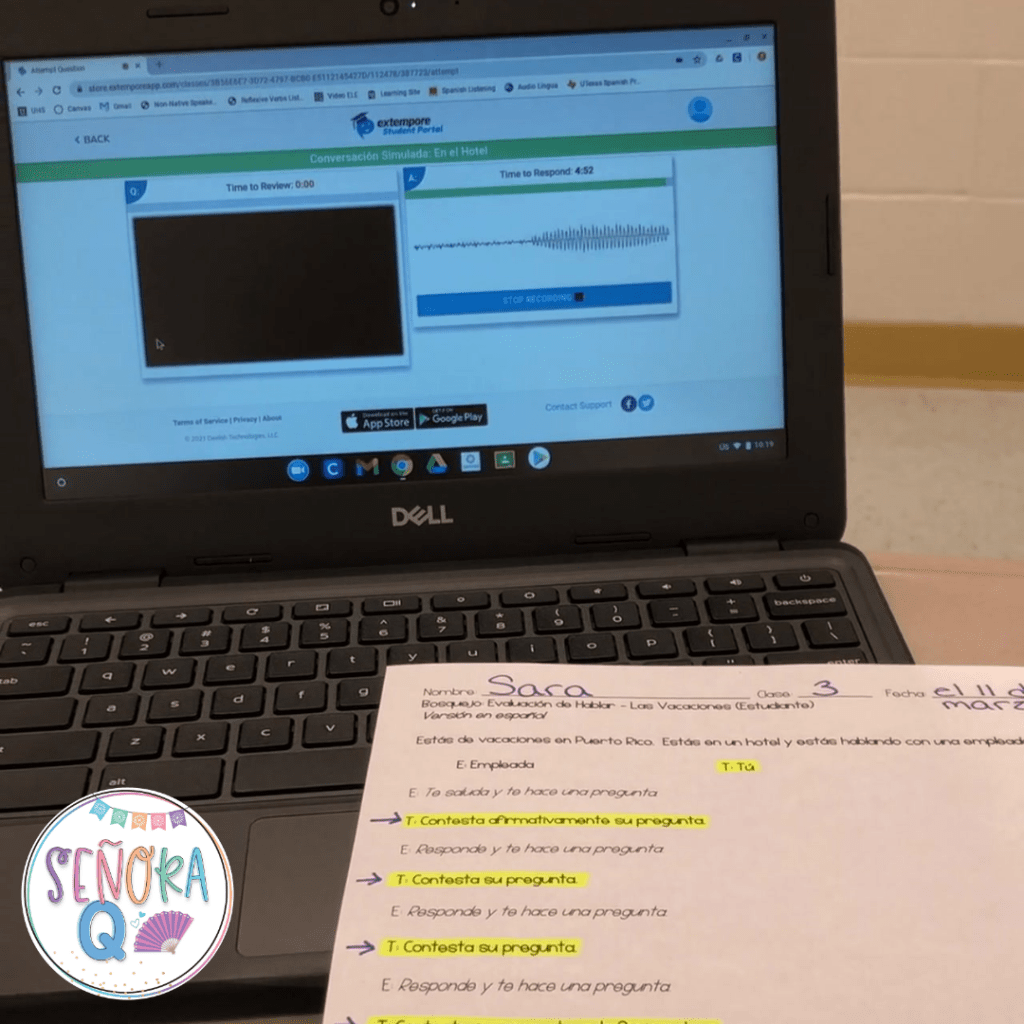
- Simulated conversation. Provide your students with a scenario (i.e., they are eating at a restaurant and are ordering food from the waiter, they are giving directions to someone who is lost in their city or town, etc.). Begin the conversation and have your students respond. I think 4-5 back-and-forth exchanges is a great amount! I find it best to provide students with a conversation outline to guide them through this process (this is not a transcript, but rather tells them what to expect – for example, “The waiter greets you and asks you a question.”) Check out this blog post to see how I conduct simulated conversations in my classroom, and check out this one for tech resources that can help make conducting simulated conversations as seamless as possible!
- Email reply. Write an email message using language that your students will understand. Then, give the email to your students and have them respond! The possibilities are endless – you can write an email on virtually any topic you’re studying. For example, write an email as an exchange student who is asking for introductory information from their host. You can ask students their names, how they are doing, where they are from, what they like to do, and other questions that your students would be able to answer. Also, have your students ask follow-up or additional questions in their replies! If you’re interested, grab a FREE email reply on family life here!
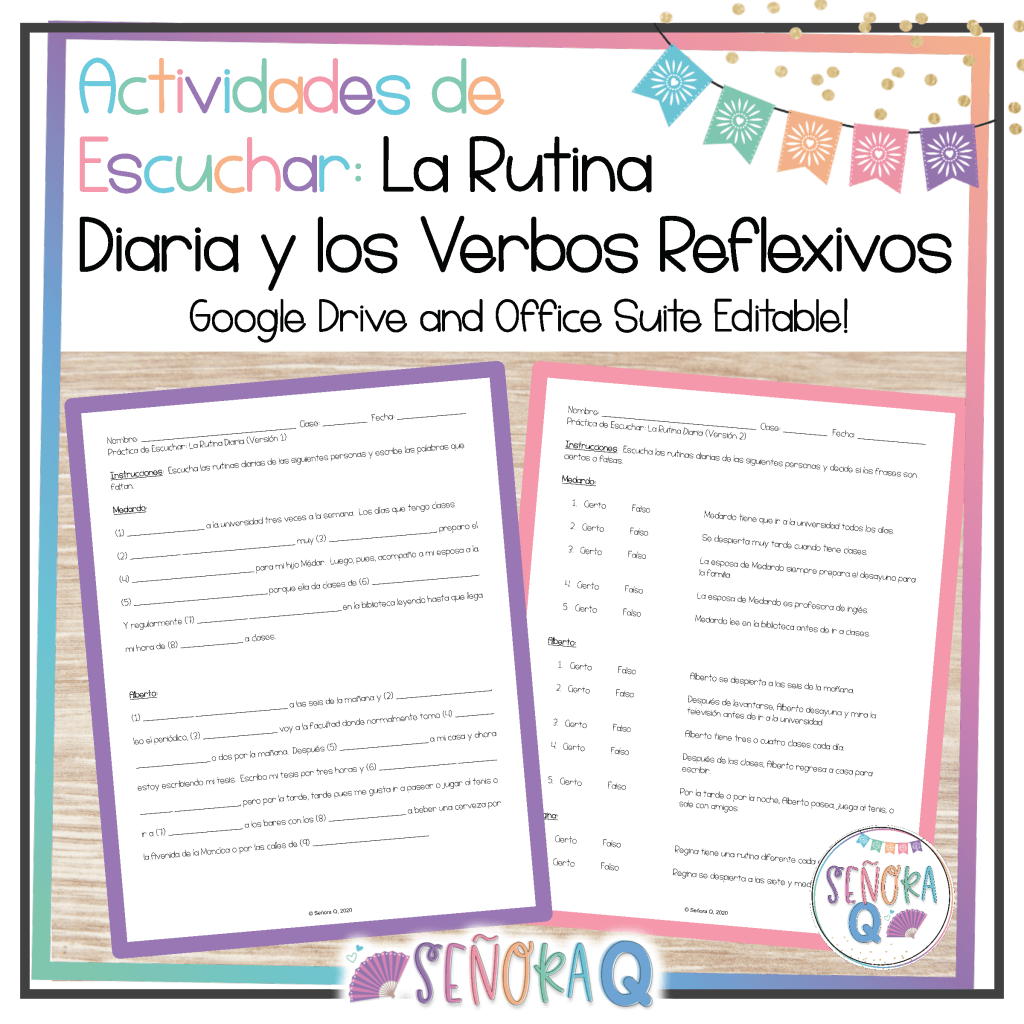
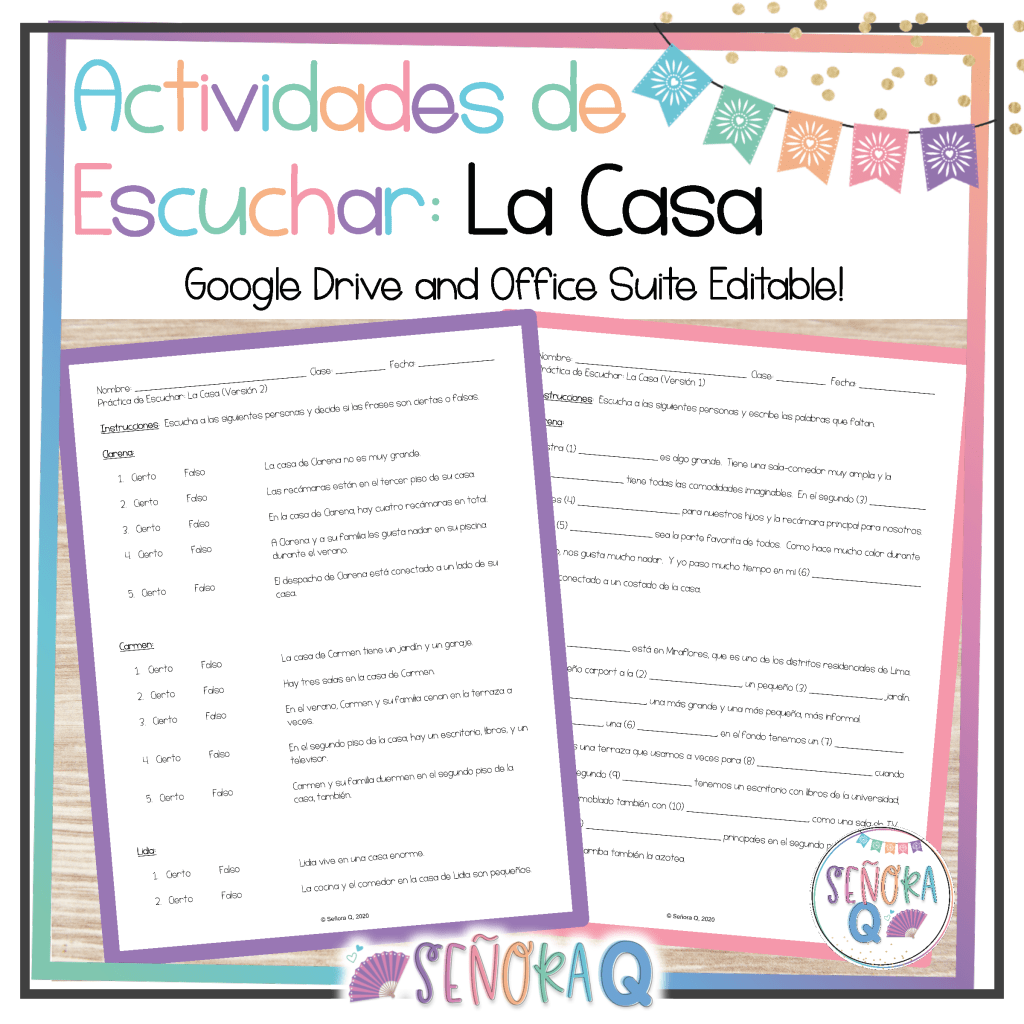
- Listening to authentic audios/videos and completing comprehension activities. Audio files from textbook companies can give your students awesome practice with the topics of your curriculum. Definitely use them! However, adding audio files featuring native speakers from a variety of Spanish-speaking countries is really going to benefit your students! Less-than-perfect audios have their uses too – with regular practice, students can learn to tune out background noise and other imperfections in the audio files. This is great for helping your students understand Spanish they hear in real-life situations! So, where can you get these audio files? There are certain free websites out there, such as the University of Texas site and Spanish Listening that allow you to choose audios based on topic or students’ proficiency level, which is great! Click here to browse my favorite audio activities that could be used for this type of performance assessment!
- Reading authentic articles and completing comprehension activities. Literally anything with Spanish words on it can be used as a reading activity! Posters, brochures/pamphlets, children’s books, advertisements – all of these are great! If you’re not sure where to start, pull up Google and search for the topic you’re studying. Personally, I like to browse Spanish-language news sites like El Pais and BBC Mundo, but the world (or, in this case, the Internet) is your oyster. Social media posts work well too! I also like to have my students answer multiple-choice questions, true/false questions, correcting any false statements and open-ended questions. I will also sometimes provide my students with true information from the text (in English), and will ask them to identify where that information is given in the text in Spanish. Here are some reading activities that would be PERFECT for a final performance assessment – save time, energy, and stress; just print and go!

#3: Have Students Create a Final Portfolio
What were your objectives, learning targets, or can-do statements you wanted your students to meet over the course of the semester? Compile a list of them and ask your students to find samples of their work in which they demonstrate that they met those objectives, learning targets, or can-do statements! You can also have your students provide an explanation or rationale in which they detail how their work meets your course standards.
Alternatively, if students do not feel as if they can find a work sample that meets the objectives, learning targets, or can-do statements, they could re-do an assignment (or two) and fix them so that they now DO meet the course standards.
If desired, you could have your students present their portfolios to you as well!
I hope these ideas can be useful to you as the school year starts to wind down! But, if you are required to give a traditional exam, or simply prefer it, I’ve got some assessments you can use as a part (or all!) of your final! Here are some of my most popular ones:


Thank you so much for reading and have a wonderful week, profe!
 Señora Q