

¡Hola profes! Has this ever happened to you? You find the perfect text that goes with your unit. After reading it, you make some comprehension questions for students to answer. It’s all set and ready to go! But then, you give your students the passage and…it doesn’t go well. Maybe your students are struggling to understand what they’re reading. Perhaps they are feeling frustrated by the comprehension questions. Or, worse yet, they’re looking up every other word from the text on a translator site.
I’ve been there too, and I totally get how disheartening it can be. It can make you feel like never trying a reading activity again! But, deep down, we know as language teachers that reading in the target language has so many benefits, chief among being that it is a fantastic way to acquire new vocabulary. Furthermore, being able to read for comprehension in Spanish is a skill that will enable our students to successfully use Spanish in real-world settings once they leave our classrooms. What Spanish teacher wouldn’t want their students to have these skills?
But, while we understand how beneficial reading in Spanish is for our students, the truth of the matter is that it can be TOUGH for kids, especially when presented with more challenging texts, like authentic newspaper or magazine articles. While it may be our first instinct is to provide easier texts where students will know every single word or to abandon reading altogether, this isn’t going to benefit students in the long run. How will students be able to read Spanish that they encounter in real-world situations if they do not practice these skills?
Good news, profes! We can employ reading strategies t with our students to help them understand the main idea of a text and build their confidence with reading! Better still, giving students these tools to comprehend what they read means they won’t feel they have to resort to a translator immediately when they don’t recognize a word. Here are some strategies that you can use with any text to help increase students’ comprehension of the passage:
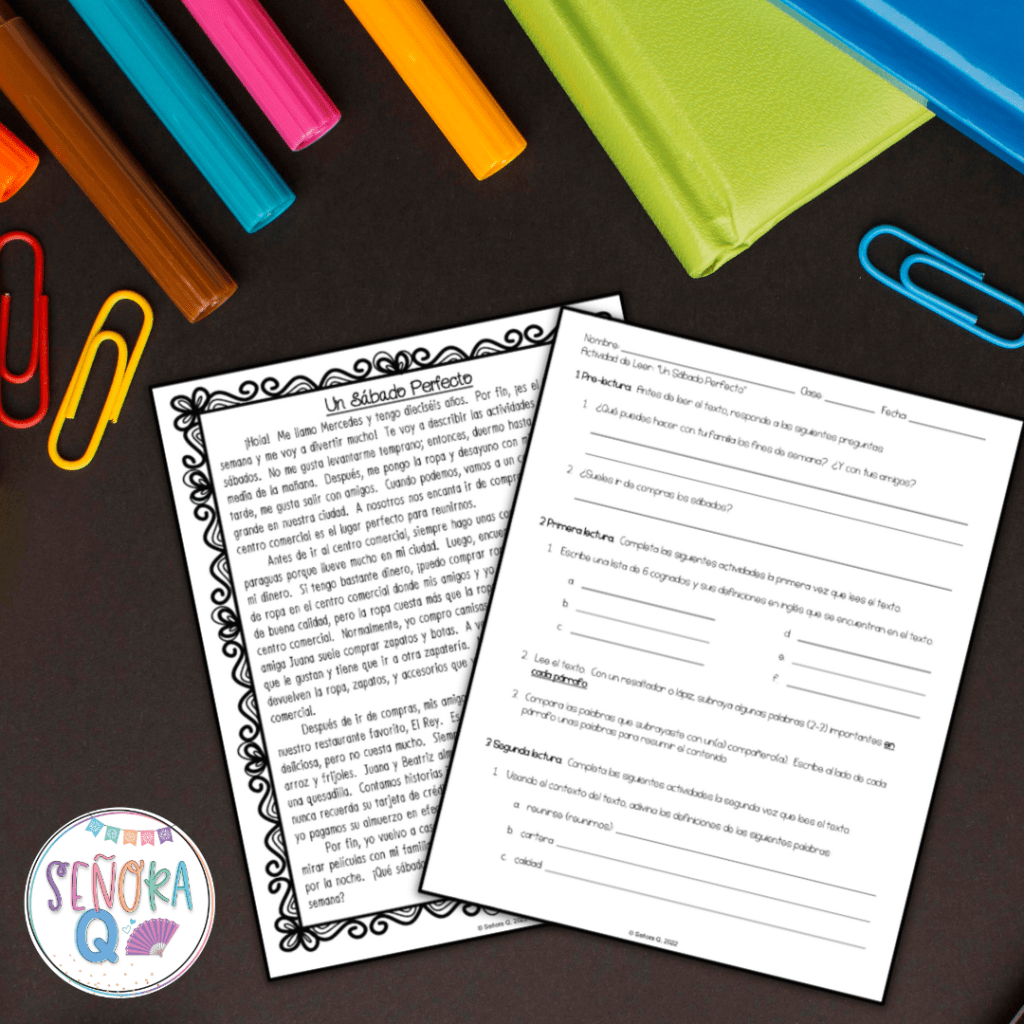
- Prior to reading the passage, have students look at the title and any images and use them to make predictions about what they are going to read. This can help students figure out the context of the text and give them ideas about what some new words might mean. Visual cues from images may also help set the appropriate tone for students!
- Identify cognates. You can have your students make a list of all the cognates they recognize, with their English equivalents, or have them pick out a certain number. As a follow-up activity, you can make a master list on the board so that the whole class has the same list to help them comprehend the text. Picking out cognates is a HUGE confidence-booster for students because they see that they CAN recognize words in Spanish and that they DO understand some of what they are reading. This is great to point out to students if they get frustrated that they do not understand every single word of the text.
- Highlight 3-4 key words per paragraph. If students can identify the most important words in a paragraph, they can likely gather the main idea of the text. This also prevents students from feeling the need to know what each word means, if they only need to pick out the most important ones.
- Write a one-sentence summary of each paragraph. Being able to summarize information, especially in longer texts, will help keep students from getting bogged down with details that might be causing them stress or confusion.
- Use context clues to guess the meanings of unfamiliar words. You might ask students if they know a word that looks similar or is part of the same word family (i.e., amar, el amor). Can they identify the part of speech (noun, verb, adjective, etc.)? What surrounding words might help them make an educated guess? Students may find this activity challenging at first, but with regular practice, they get so much better!
While this is not a strategy per se, I like to remind my students that thy need to keep their expectations realistic when reading a text. Are they going to know every single word? That’s highly unlikely. Can they understand enough to gather meaning and get the main idea? Absolutely. Have them focus on what they DO know and can figure out rather than what they don’t. Helping my students understand that this is normal for their proficiency levels has helped their motivation immensely, because they don’t feel as though they are behind if they don’t understand it all.
Once you have your students go through the text using the reading strategies, they should read it again and complete any comprehension exercises you have prepared for them. You can certainly scaffold your activities as well, to help students who are struggling and students who need an additional challenge. There are some of my go-to reading comprehension activities:
- Give students true statements about the text in English, and ask them to identify where in the text that information is found. I have found that this is a great activity for students who are having difficulty with reading and could use some extra support. It is easy for students to find success with this activity, and it boosts their confidence levels. If your students need more of a challenge, word your English statement so that it is not identical to the statement given in the text, and would require more interpretation on your students’ part!
- True/False questions. To make these questions more challenging for students, you could have them correct false statements!
- Multiple-choice questions. For struggling students, you may want to provide three choices. For students who need more of a challenge, four questions is a great number! Additionally, if you have students who will go on to take the AP Spanish Language and Culture exam, they should get used to multiple-choice comprehension questions so that they are more prepared for the interpretive reading section of that test.
- Open-ended comprehension questions. These are ideal for students who are at higher proficiency levels or need more of a challenge. Having students write complete sentences adds in a writing component to practice those skills as well!
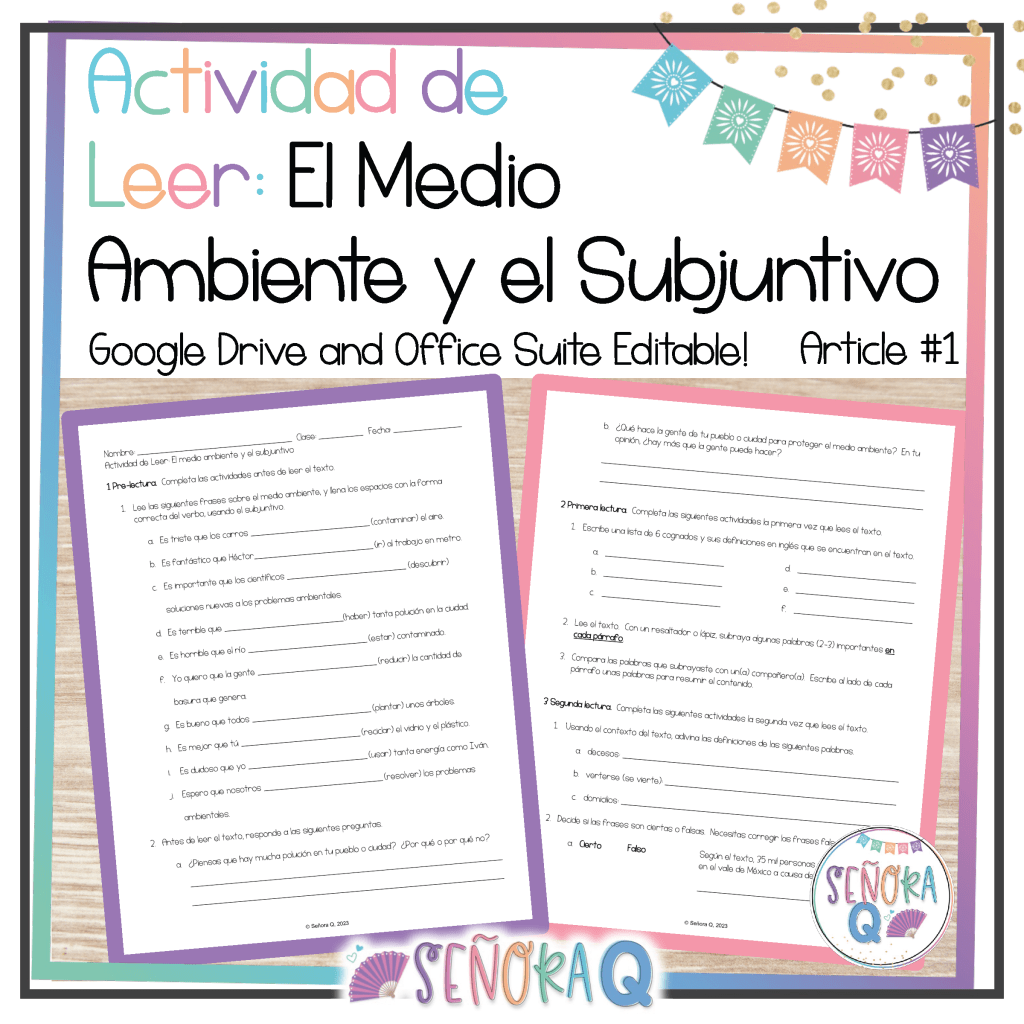
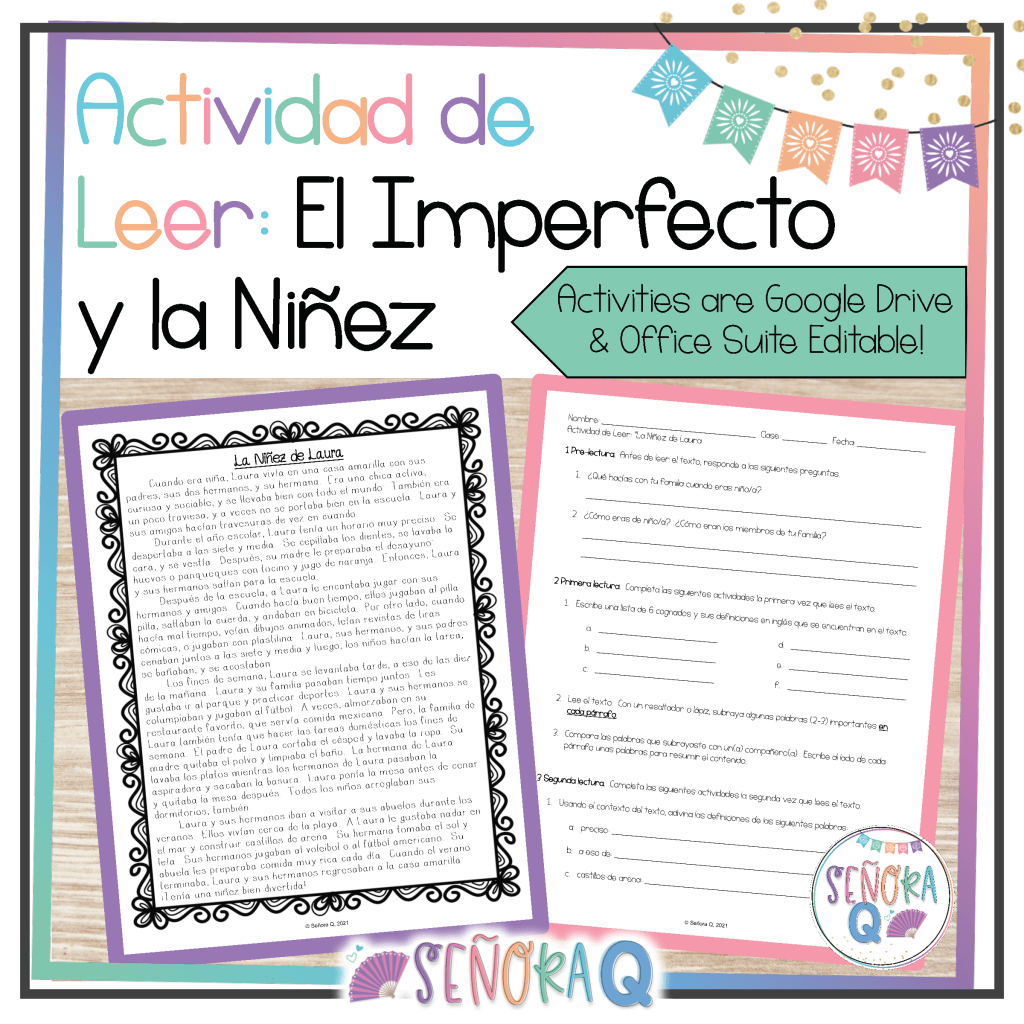
Do you want to try some of these activities with your students? Here are some of my favorites that I use in my classroom! They are ready-to-use and have a wide variety of reading strategies and comprehension activities to help your students successfully read a text in Spanish:

I hope this was helpful! Do you have any reading strategies or comprehension activities that you use in your classroom and would add to this list? Leave me a comment and let me know! Have a wonderful week, profes!
 Señora Q