
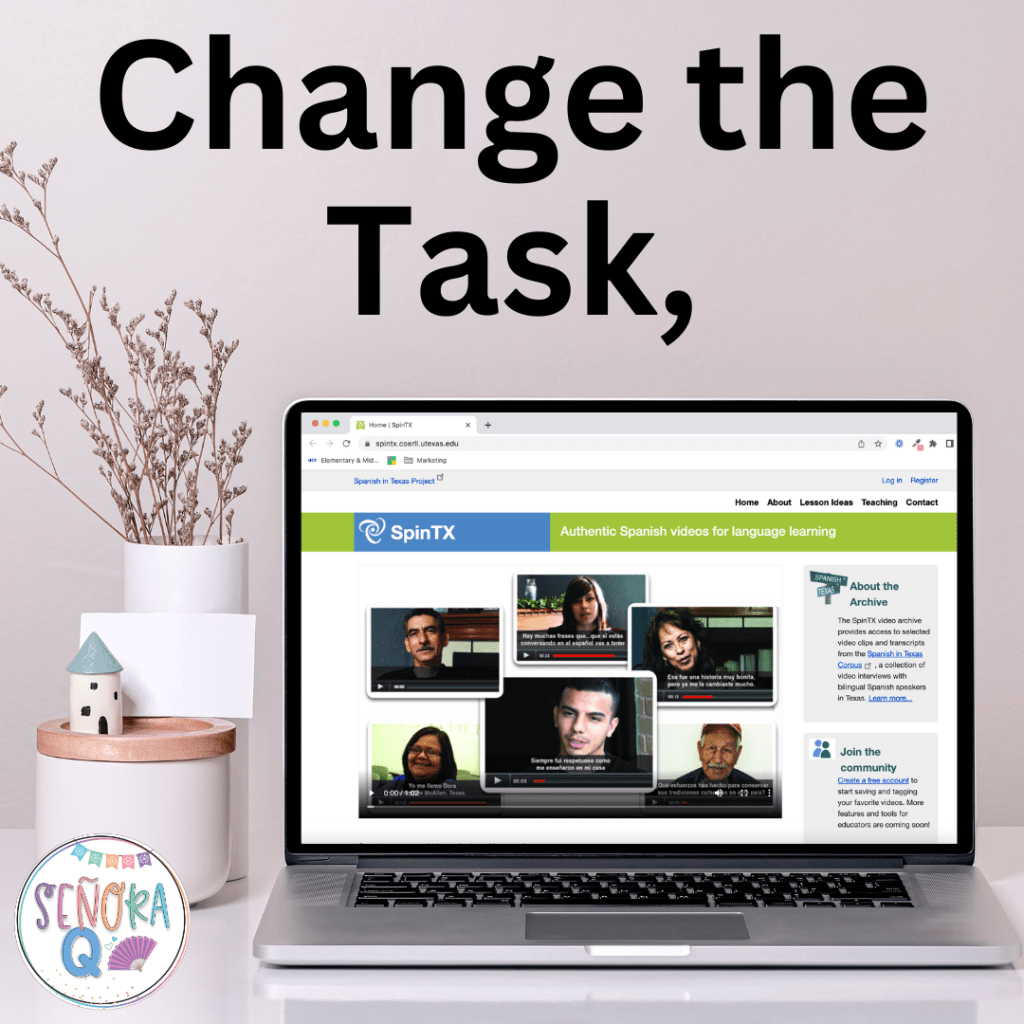


¡Hola profes! Has this ever happened in your classroom? You speak to your students in Spanish every day. Your students complete activities where they speak to each other in Spanish. If you have ancillary materials that go along with your textbook or curriculum, you make sure your students complete the audio activities. You think everything is going well, until…you try an activity where your students listen to a native Spanish-speaker. Your students become frustrated, complain about how difficult it is, struggle, and ultimately, disengage.
If this has happened to you in your classroom, I don’t need to tell you how disheartening it is. Our end goal is for students to be able to comprehend native Spanish-speakers, right? It might feel like we are failing when, after having our students listen to us, to each other, and to the audio materials provided by textbook companies, they have great difficulty understanding Spanish outside of these particular experiences.
But don’t lose hope! There is a way to help your students understand Spanish spoken by a native speaker and, more importantly, to show them that they can be successful in this area and as a result, increase their willingness to try.
The first, and most important, piece of advice that I have is, don’t stop exposing your students to native Spanish speakers. In fact, when my students are struggling a lot, I know that I need to increase the amount of listening we are doing to native speakers.
You might be thinking, “Why would I give my students MORE of what is frustrating them? How is that going to help?” and you might have a point. If students are struggling to complete an activity that is paired with an authentic audio, it’s time to modify the activity. A colleague of mine gave me some fantastic advice earlier on in my teaching career when it came to using authentic, and potentially challenging, materials:
CHANGE THE TASK, NOT THE SOURCE.
We need to ask ourselves what our students could reasonably understand from an authentic audio, and what tasks would be appropriate for their proficiency levels. That does NOT mean that students won’t be able to gather any meaning at all from the source.
For example, let’s say your Spanish I students are listening to a news broadcast. Based on what they have studied, you might logically expect students to be able to identify how the newscasters greet each other, what the weather conditions might be like that day, or to identify major/broad topics that are covered in the broadcast, such as sports, entertainment, technology, etc. Here are some tasks you could have your students complete:
- Make a list of all the words they can understand.
- Provide a few multiple-choice or true/false questions about these topics.
- For your students with higher proficiency levels, you may want to ask them to correct false statements, or give them an open-ended question or two.
- Remove certain words from the audio transcript that your students would know. Have them fill in the missing words as they listen.
Activities that correspond with students’ proficiency levels will get their confidence levels up by showing them they CAN be successful when listening to native Spanish-speakers! Students will be more engaged and less frustrated, but they will still be getting the practice they need to understand native speakers both in and beyond the classroom!
To briefly recap: Maybe students aren’t ready to write a paragraph-long summary of an audio featuring a native speaker. Maybe there are certain details that are too advanced for students’ current proficiency levels. That’s totally okay and, honestly, to be expected! It does NOT mean that students are incapable of understanding certain aspects of audios featuring native speakers. Change the task, not the source.

Want a free listening resource featuring native Spanish-speakers? Click here to grab two free activities on weather and give them a try in your classroom!
If you want to try to incorporate more native speakers, here are 4 awesome websites with free audio and video files that you can use in your classroom:
- Spanish Proficiency Exercises from the University of Texas. This site has videos featuring native Spanish-speakers that are appropriate for novice, intermediate, and advanced students on a wide range of topics! You can download the videos, or play them directly on the UTexas site. Transcripts are available on the site, as well!
- SpanishListening.org. Spanish Listening also provides videos that are suitable for students of all proficiency levels. This site features speakers from nearly every Spanish-speaking country, so you can help your students acclimate to different vocabulary terms and ways of pronouncing certain letters/words. Transcripts, follow-up questions, and even audio prompts are available for most videos, too! You cannot download videos, but you can embed them into your website or LMS!
- Audio-Lingua. Audio-Lingua has audio files in Spanish (as well as many other languages) that you can download or embed into your website or LMS. There are countless audio files available on a variety of topics. You can search the site by proficiency level or keyword to make finding the perfect audio a breeze!
- SpinTX. SpinTX also features videos of native Spanish-speakers on numerous topics. You can download the videos if you like, and transcripts are provided as well! You can sort the videos by speaker, topic, and grammatical concepts to help you find the right video to suit your needs.
If scouring the internet looking for audios or videos to use in your classroom is NOT your thing, no worries, because I’ve done it for you! Here are some of my most popular listening resources that are differentiated to meet your students’ varied learning needs and ready-to-use to save you time, energy, and sanity in your classroom:
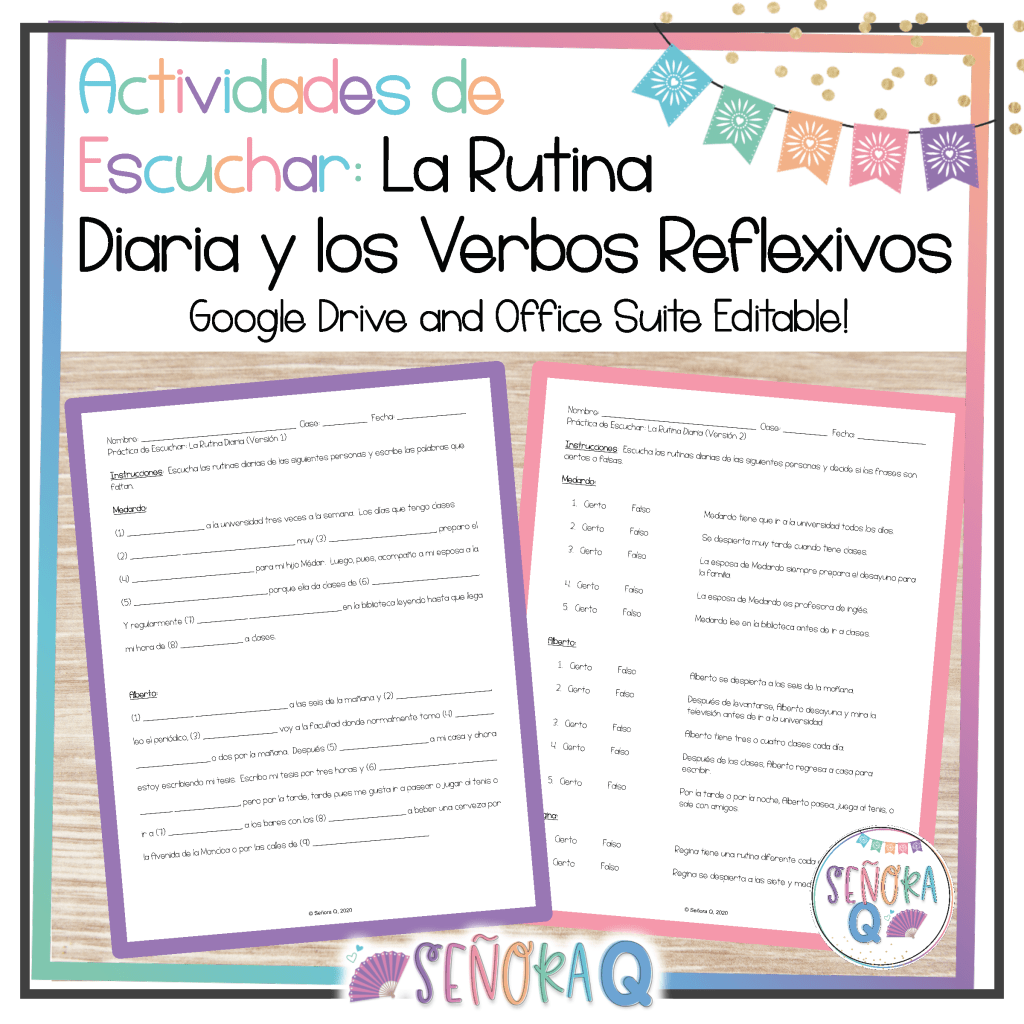
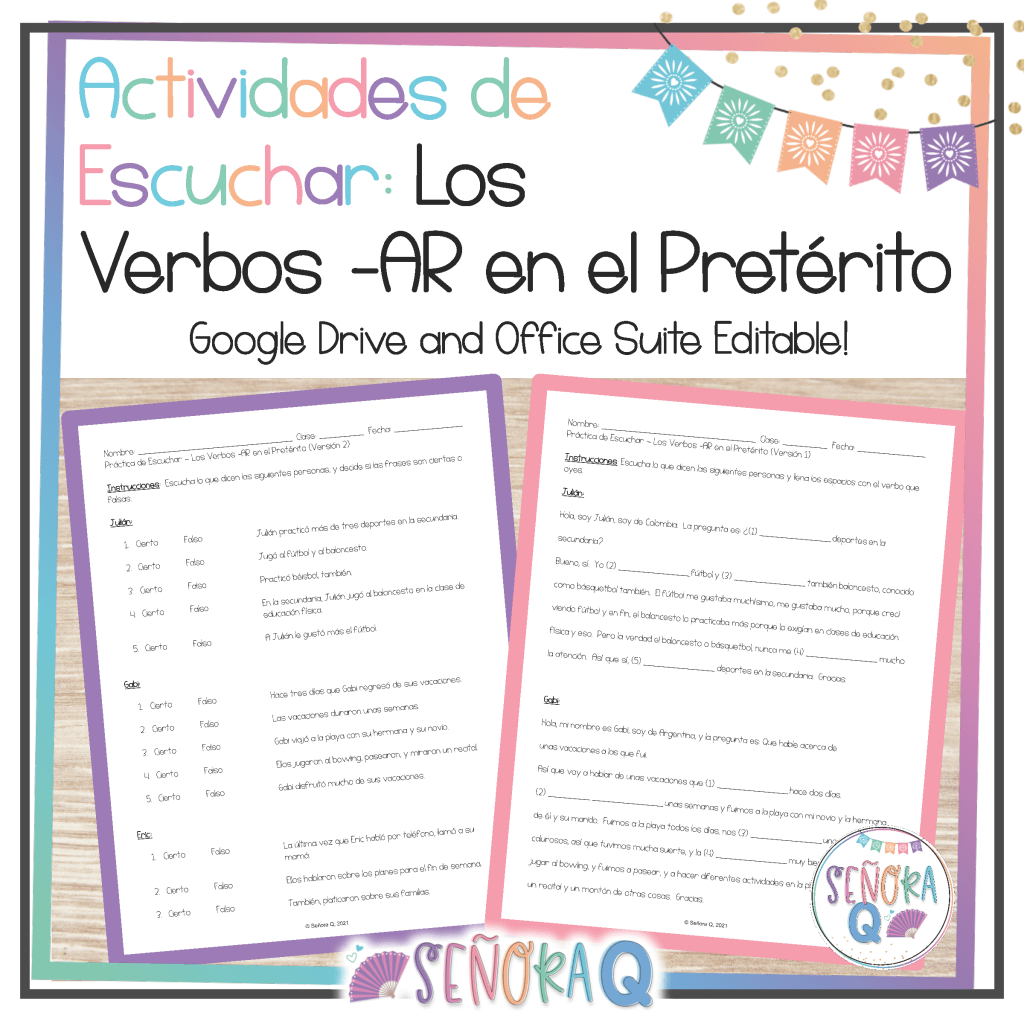
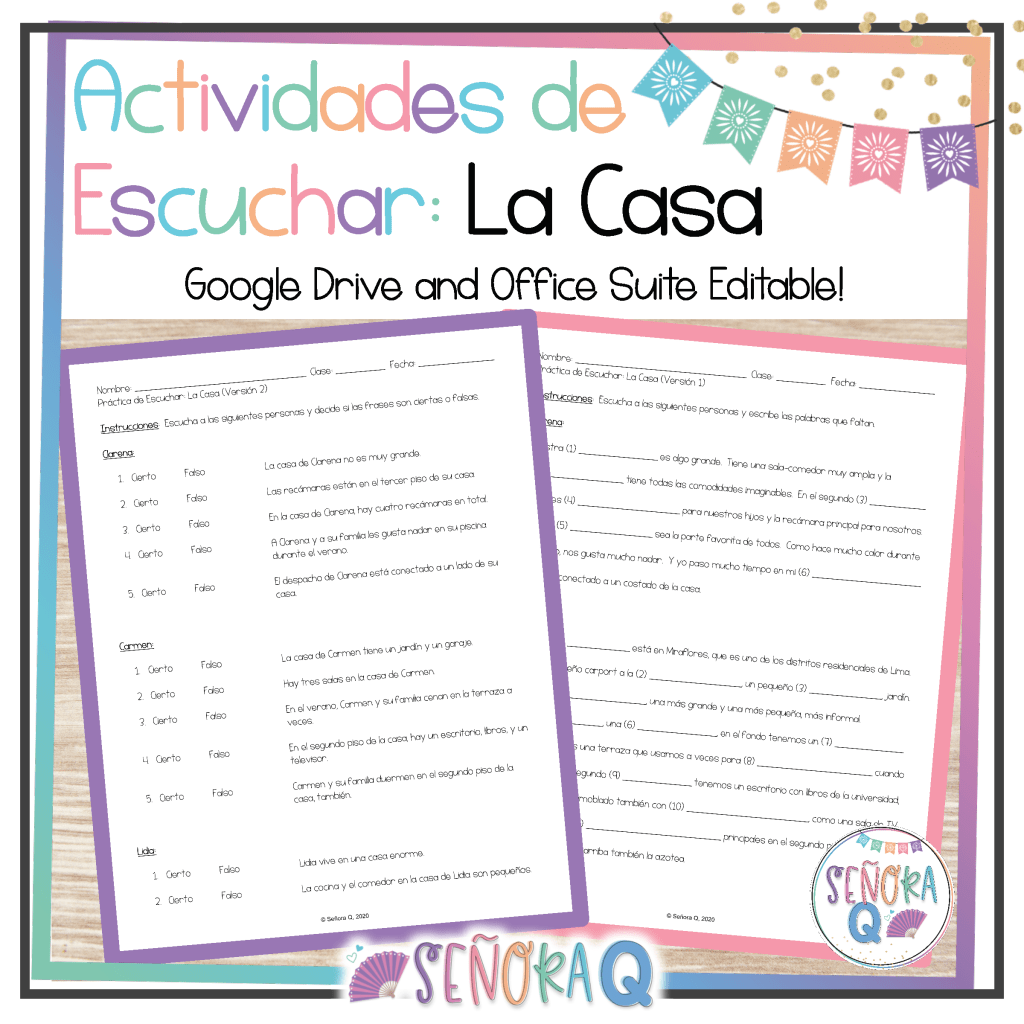


Thank you for reading, profe! I hope this was helpful! If there is anything I can do to support you with integrating more audios featuring native Spanish speakers into your classroom, please don’t hesitate to reach out to me. Have a fantastic week!
 Señora Q